Your front door is the point where apartment life gets busy. You may be carrying groceries, arriving home after a late shift, letting a dog walker in, or coordinating a delivery while away. An apartment smart lock replaces the daily key search with controlled, keyless access that can fit the way your household actually lives.
The right model does more than open a door with a fingerprint or PIN. It should suit your door, meet building rules, give you reliable backup entry, and make it easier to manage who can come and go. Here is what to consider before choosing one.
Start With Your Apartment Door and Building Rules
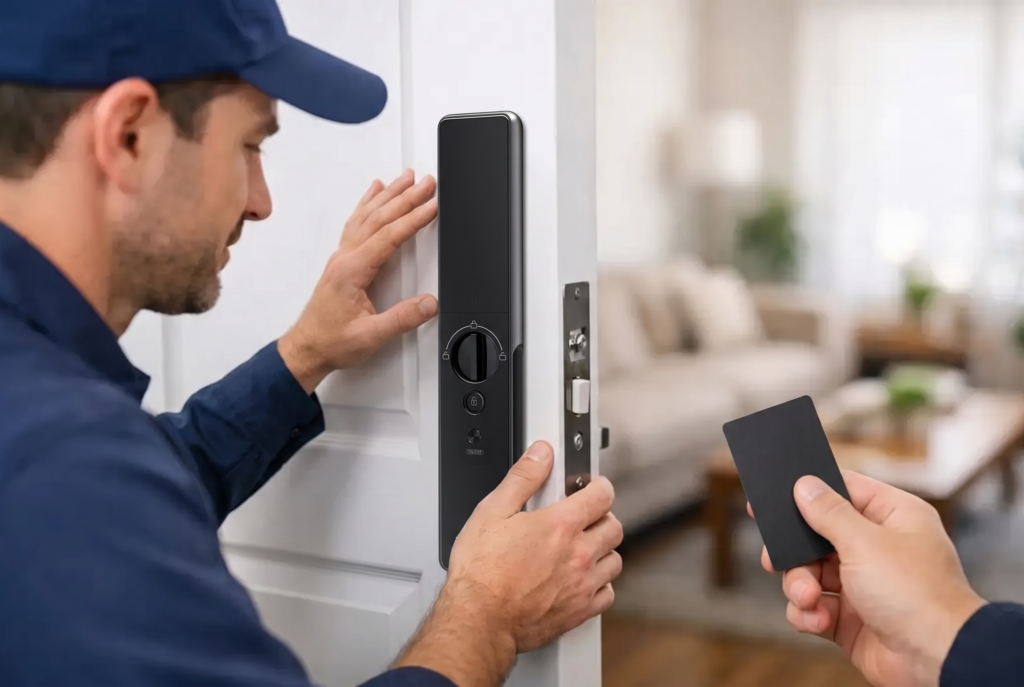
Apartment doors are not all prepared the same way. Before looking at biometric readers, mobile apps, or video features, confirm the basics: door thickness, lock type, handle position, backset, and the clearance between the door and its frame. A lock that looks excellent online can be the wrong fit if it interferes with an existing deadbolt, door viewer, security gate, or narrow frame.
If you rent, speak with your landlord before changing the lock. Many leases require approval because lock changes affect re-entry, maintenance access, and the condition of the property when you move out. Condo associations and apartment management teams may also have requirements for exterior hardware color, fire-rated doors, common-area access, or alterations to the door.
This does not mean a smart lock is out of reach for renters. Some models work with an existing interior deadbolt component, while others can be professionally installed with minimal visible changes. The best option depends on your lease terms and current door hardware. Get approval in writing and keep any original parts if you may need to restore the door later.
Choose Access Methods for Real Household Routines
The strongest apartment smart lock setup gives your household more than one way to enter. Fingerprint access is fast for everyday use and especially useful when family members do not want to carry keys. A PIN code works well for guests, older children, cleaners, and service professionals. Mobile app control adds visibility and remote management when you are away from the apartment.
A physical emergency key or other mechanical backup is still valuable. Batteries eventually need replacement, phones can be misplaced, and every household benefits from a dependable contingency plan. A quality lock should make battery status clear and provide an emergency power option, such as an external power connection, when batteries are depleted.
Think carefully about who needs regular access. A couple may only need two fingerprints and one backup code. A family with children, grandparents, or a caregiver may benefit from multiple user profiles. A landlord or property manager may need time-limited codes that expire after a tenant moves out or a contractor finishes work.
Avoid sharing one permanent PIN with everyone. Individual codes create better accountability and are easier to remove when circumstances change. If a housekeeper stops coming or a former roommate moves out, deleting one credential is much safer than changing access for the entire household.
Fingerprint, PIN, App, or Face Recognition?
There is no single best credential for every resident. Fingerprint recognition provides quick entry, but it can be less convenient when hands are wet, dusty, or covered by gloves. PIN codes are familiar and easy to share temporarily, though users should avoid obvious combinations such as birthdays or apartment numbers.
App-based entry can be highly convenient, particularly for checking lock activity or managing access from work. It also depends on the phone having power and, for remote functions, on the lock and home network being properly connected. Face-recognition access can feel particularly effortless at the door, but it is best chosen from a reputable system with clear security controls and suitable placement for your entryway.
For most apartments, combining fingerprint recognition, PIN access, and a backup method gives the best balance of convenience and resilience.
Decide How Connected You Need the Lock to Be
Not every smart lock needs full remote control. Bluetooth-enabled locks are often suitable for residents who mainly want keyless entry at the door. They can be simpler to manage and may use less power, but their functions are typically limited when you are away from home.
Wi-Fi-enabled models add remote access management, notifications, and activity records. This can be useful when a package delivery, cleaner, family member, or maintenance visit requires access while you are out. However, Wi-Fi features make dependable setup more important. Poor signal strength near the entry door may affect performance, and you should protect the associated app account with a strong, unique password and multi-factor authentication where available.
Consider whether you want your lock to work with a video doorbell viewer or connected door camera. Seeing who is at the door before granting entry adds a valuable layer of awareness for apartment residents. Two-way audio is useful for visitors and deliveries, while recording support can provide a clearer record of activity around your doorway. Building policies may limit where cameras can point, especially in shared hallways, so position devices responsibly.
Prioritize Security Beyond the Smart Features
Convenience should never be separated from physical security. A premium apartment smart lock should have a durable lock body, a reliable deadbolt or mortise mechanism where applicable, and protection against common tampering attempts. Features such as auto-locking, incorrect-entry alarms, privacy mode, and forced-entry alerts can strengthen daily protection.
Auto-locking is particularly helpful for busy households. It reduces the chance that someone leaves in a rush and forgets to secure the door. Set the timing with care, though. A very short delay can become frustrating when you are taking out trash or moving items between your car and apartment.
Privacy mode can prevent exterior authentication from operating while you are inside. This is useful at night or when you want additional control, but every adult resident should understand how the feature works and how to disable it in an emergency.
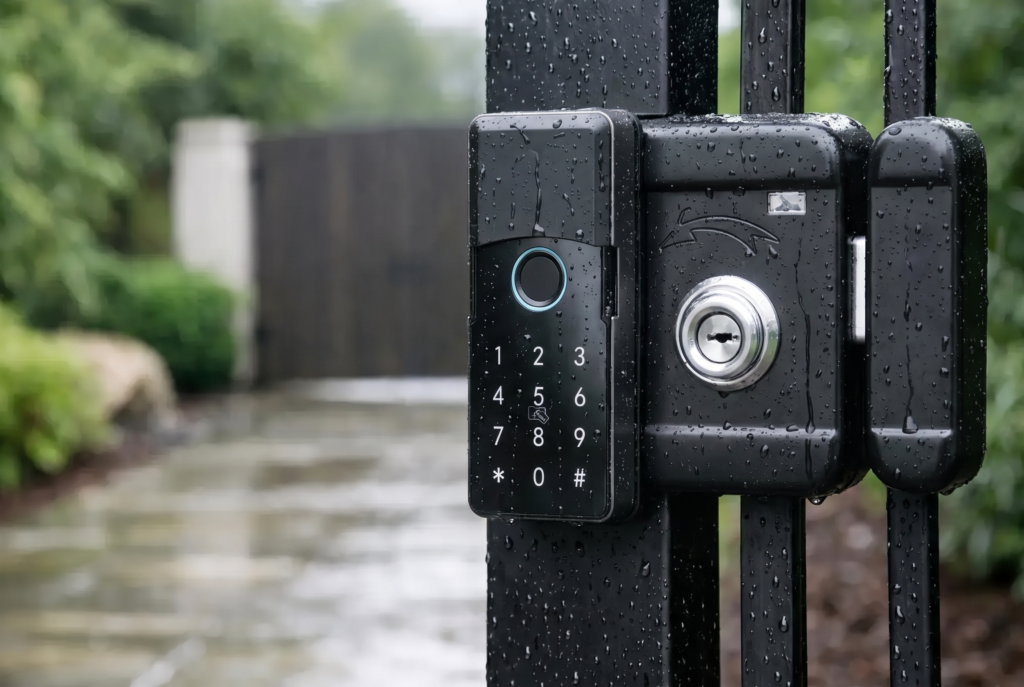
Also look at the lock’s installation location. An apartment door opening directly into a weather-exposed corridor requires hardware designed to handle humidity, heat, dust, or rain. For homes with a metal gate in front of the main door, a dedicated weather-resistant smart gate lock may make more sense than forcing an indoor door lock into an unsuitable environment.
Professional Installation Protects the Door and the Experience
Smart locks combine mechanical alignment, electronics, and access configuration. A small error in drilling, alignment, or strike-plate placement can cause a door to drag, a latch to bind, or batteries to drain faster than expected. It can also leave unnecessary holes in a rental door or compromise the appearance of an owner-occupied apartment.
Professional installation provides more than a neat finish. A trained installer can assess door compatibility, align the lock correctly, test every access method, configure auto-lock settings, and explain emergency entry procedures. This is particularly valuable with mortise locks, fully automatic locks, face-recognition models, and doors that already have multiple locking points.
After installation, test the lock with each household member before relying on it. Register fingerprints carefully, create separate PINs, confirm that the door closes and secures smoothly, and make sure everyone knows where the backup key or emergency power procedure is kept. A smart lock should make daily entry simpler, not create uncertainty during the first week of ownership.
Plan for Ownership, Not Just Purchase Day
A smart lock is a long-term part of your home’s security routine. Choose a provider that can support installation, warranty coverage, maintenance, and troubleshooting after the initial setup. Local after-sales service matters when a door needs adjustment, a resident changes phones, or you need help understanding app settings.
Keep batteries fresh rather than waiting for the first warning. Use the battery type recommended by the manufacturer, avoid mixing old and new cells, and check the lock’s alerts regularly. If you move apartments, reset all credentials before the lock changes hands. If you are a landlord, make credential deletion part of every move-out checklist.
The best apartment smart lock is not necessarily the one with the longest feature list. It is the one that fits your door, your building, and the people who use it every day – while giving you dependable control when life gets unexpectedly busy.