A rental property changes hands more often than an owner-occupied home. Keys get copied, returned late, misplaced during move-out, or passed between roommates without the owner ever knowing. Rental entry systems replace that uncertainty with controlled, trackable access designed around the real rhythm of leasing, maintenance visits, deliveries, and tenant turnover.
For landlords and property managers, the right entry setup does more than remove physical keys. It helps protect the property, reduces administrative work, and gives tenants the convenient home experience they increasingly expect. The best choice depends on the door, the property type, who needs access, and how much control the owner wants after move-in.
What Rental Entry Systems Should Solve
A rental entry system should make access easier to manage without making it harder for a resident to come home. That means a tenant needs a dependable everyday method to enter, while the owner needs a clear way to add, change, or remove access when circumstances change.
Traditional lock-and-key setups can still work for a single unit with stable, long-term occupants. However, they become inefficient when a property has frequent turnover, multiple authorized users, cleaners, contractors, or short-stay guests. Rekeying after every tenancy costs time and money. Leaving a spare key with a neighbor or agent creates another security gap.
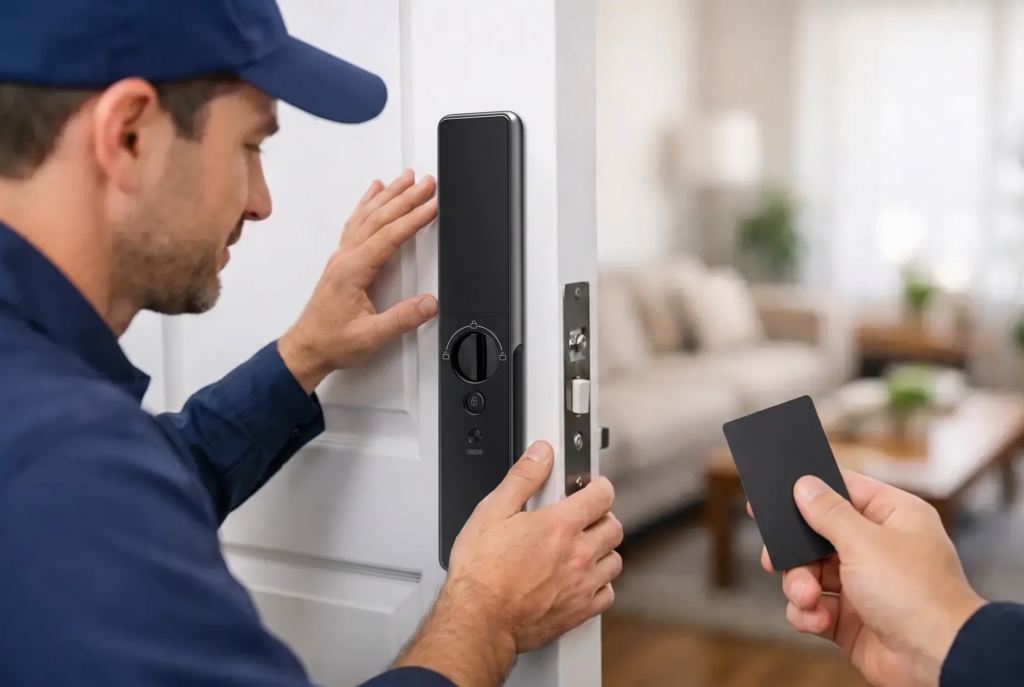
Keyless smart locks address these issues through options such as fingerprints, PIN codes, RFID cards, mobile app access, and mechanical emergency keys. Instead of collecting a key at the end of a lease, an owner can remove a digital credential. Instead of arranging a handover for a plumber, the owner can provide time-limited entry permission.
The technology is valuable because it gives access a clear owner. Every code, fingerprint, card, or app user should be assigned to a specific person and purpose.
Choosing Rental Entry Systems for Your Property
The front door is only one part of the decision. A rental unit in a high-rise building has different needs from a detached home with a driveway gate, side entrance, and package drop-off area. Start by mapping every point where someone may need authorized access.
Apartment and condo entrances
For apartments, a biometric mortise lock or smart lever lock can be an excellent fit when the existing door supports compatible hardware. Fingerprint entry is especially practical for residents who do not want to carry keys while walking the dog, exercising, or managing children and groceries.
PIN access provides another flexible option. A tenant can have a personal code, while a property manager or maintenance professional receives a separate code that can be deleted or scheduled. This separation matters. A landlord should not need to know a tenant’s daily code, and a tenant should not have to share it with every service provider.
For units where drilling or door modification is restricted, installation requirements need careful review before selecting a device. Door thickness, backset, handle orientation, fire-rated door rules, and building management requirements can all affect compatibility. Professional assessment avoids a premium lock becoming an expensive compromise.
Single-family homes and gated rentals
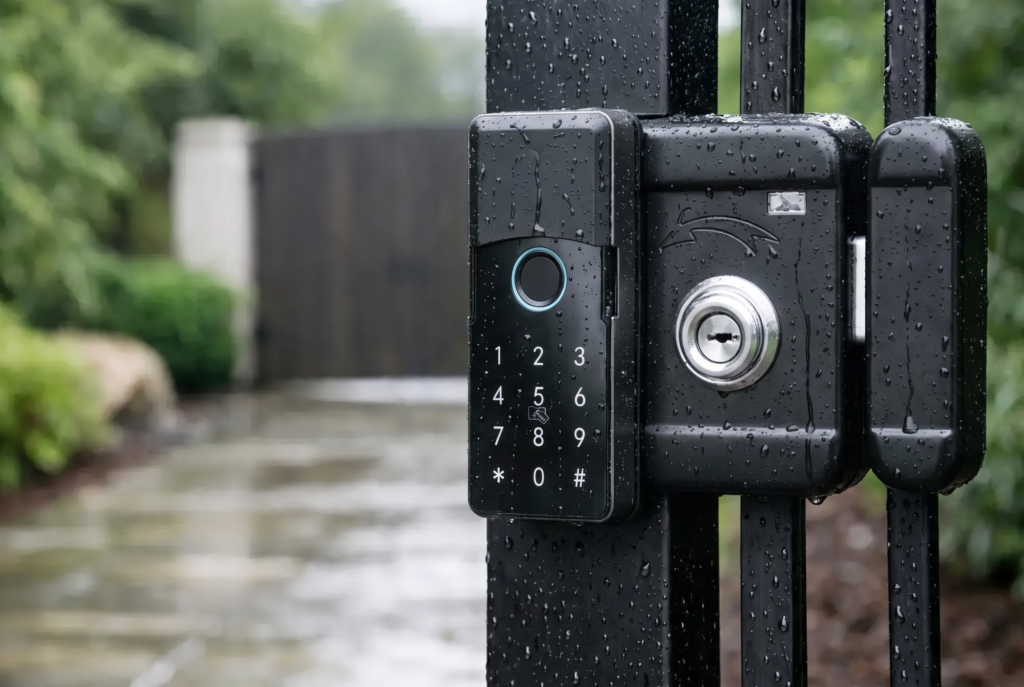
A house often needs a layered approach. The front door may use a fully automatic smart lock, while a side gate or driveway gate needs weather-resistant access hardware built for outdoor exposure. Gate locks should be selected with attention to rain, dust, heat, and the material and structure of the gate itself.
A video doorbell viewer can add useful visibility at the perimeter. Two-way audio lets a resident speak with a visitor without opening the door, while video recording can help clarify what happened when a package goes missing or an unexpected caller arrives. It is a practical complement to access control, not a replacement for a properly fitted lock.
For larger homes, consider which entry points truly need smart control. Adding connected hardware everywhere is not always better. The strongest setup is one that protects the most-used and most-vulnerable entrances while remaining simple enough for tenants to use confidently.
Access Methods That Work for Real Tenancies
No single credential is right for every user. A reliable rental setup usually gives residents at least two convenient ways to enter, plus an emergency backup.
Fingerprint access is quick and personal, making it well suited to primary residents. It also avoids the common problem of a code being casually shared. Biometric performance can vary with finger placement, very young children, or worn fingerprints, so a PIN or card should remain available as an alternative.
PIN codes are highly useful for temporary users. A contractor can receive a code for a specific day or time window, then lose access automatically or when the job is complete. For long-term tenants, encourage codes that are not based on unit numbers, birthdays, or easily guessed patterns.
Mobile app access gives owners and tenants remote control features, depending on the lock model and connection method. This can be helpful when a resident needs to let in a family member while away. It also adds responsibility: app accounts should be removed promptly when a tenancy ends, and account credentials should never be shared loosely.
RFID cards can be a straightforward option for residents who prefer a physical credential without carrying a metal key. They are particularly useful for older family members, household staff, or tenants who do not want to depend on a phone battery.
Mechanical keys still have a place as an emergency fallback when supported by the chosen lock. They should be tightly controlled, documented, and stored securely rather than left under a mat, in a mailbox, or with an unverified third party.
Build Turnover Into the Access Plan
The greatest advantage of a smart rental lock appears at move-out. Yet this benefit only holds if the owner follows a consistent process. A lock with many features cannot correct poor access administration.
At the start of a tenancy, create individual credentials rather than one shared household code. Record who receives each credential, including cards and emergency keys. Explain how the lock works, how to respond to a low-battery alert, and what residents should do if they are locked out.
When a tenant leaves, remove their fingerprint, PIN, card, and app access on the same day. Review any temporary codes issued to cleaners, agents, or contractors. If a physical emergency key was distributed, collect it and confirm its return. This process is faster than rekeying, but it still needs discipline.
For properties with frequent guest stays, avoid issuing a permanent master code. Use unique, time-bound credentials for each reservation. This protects the property while reducing confusion when one guest departs and another arrives hours later.
Reliability Matters More Than Novelty
A rental lock must be convenient, but it must also be dependable under daily use. Look beyond a feature list and evaluate the practical details: battery life, low-power warnings, emergency charging provisions, lock body construction, weather rating for outdoor products, and the availability of local installation and service.
Battery-operated locks are common because they continue operating during a household power outage. Residents should know not to ignore low-battery alerts. A simple maintenance check between tenancies can prevent an avoidable call late at night.
Wi-Fi-enabled functions can be useful for remote administration, but connectivity should not be the only way a resident enters. A tenant still needs reliable local access through fingerprint, PIN, card, or another method if the home network is unavailable.
Professional installation is particularly valuable for mortise locks, automatic locks, and gate hardware. Correct alignment affects both security and daily performance. A door that sticks, a misaligned strike plate, or an improperly fitted gate lock can create problems that no app setting will solve.
Set Clear Expectations With Tenants
Smart access works best when residents see it as a benefit rather than surveillance. Be transparent about what the system does, what information is visible to the owner, and when access logs may be reviewed. Respect applicable privacy rules, especially for video doorbells and shared entrances.
Tenants should understand that personal entry credentials are not for sharing outside the household without permission. They should also know how to report a lost card, a suspected code disclosure, or a device issue quickly. A clear handover guide at move-in makes the technology feel premium and approachable instead of complicated.
For owners, the goal is not to watch every door event. It is to know that access can be managed responsibly when a legitimate need arises.
A well-planned rental entry system gives tenants a more convenient way home and gives owners greater confidence between every handover. Choose hardware that fits the property, pair it with professional setup and support, and treat access management as part of the rental experience from the first viewing to the final move-out.