A package arrives while you are in a meeting. Your child gets home before you do. Someone rings the bell after dark. These are the moments when homeowners searching for video doorbell two way audio want more than a camera view. They want to see who is outside, speak clearly from wherever they are, and decide what happens next without opening the door.
For modern homes, the front entry is no longer just a lock and a door. It is a control point for visitors, deliveries, family access, and everyday peace of mind. A video doorbell with two-way audio brings that control into one simple interaction: see the visitor, hear what they need, and respond through your phone or indoor viewer.
What Video Doorbell Two Way Audio Does
Two-way audio is the intercom function built into a connected video doorbell. When someone presses the doorbell or triggers motion detection, you receive an alert. You can open the live video feed, listen to sound from the entry, and speak back through the doorbell’s speaker.
That sounds straightforward, but it changes the way an entry is managed. Instead of approaching the door with limited information, you can ask a visitor to identify themselves before deciding whether to answer. Instead of missing a courier, you can ask them to leave a package in a designated spot. Instead of giving a relative a spare key, you can communicate with them and, where your setup includes a compatible smart lock, grant access remotely.
The value is not simply that you can talk through a device. It is that you can make a better access decision before the door opens.
Why Two-Way Audio Matters More Than Video Alone
Video lets you identify a person. Audio provides context. A familiar face at the door may be a neighbor returning an item, a contractor arriving early, or someone looking for the wrong address. A brief conversation often gives you the information needed to respond confidently.
For families, this feature can be especially useful when children or older relatives are home. They do not need to open the door immediately just because someone rings. A household member can check the camera first, speak through the doorbell, and contact another family member if anything feels unusual.
It also improves daily convenience. If you are cooking, working upstairs, walking the dog, or away from home, an alert can help you handle a visitor without rushing back to the entry. For gated homes, the same principle applies at the perimeter: communicate before allowing someone closer to the property.
There is a practical security benefit as well. A prompt response through the doorbell can create the impression that someone is present, even when the home is empty. That does not replace secure locks, proper lighting, or good household habits. It does give you another layer of awareness and control.
How the Experience Works at Your Door
A well-designed system should feel natural from the first ring. The visitor presses the button. The doorbell sends an app notification or alerts an indoor monitor. You tap to view the live feed and start a conversation.
The best interactions depend on three fundamentals: fast notification delivery, a clear camera image, and understandable audio in both directions. If the alert arrives too late, the courier may already be gone. If the microphone picks up mostly traffic or wind, it becomes difficult to understand what is being said. If the speaker is too soft, your instruction may not reach the visitor.
For this reason, two-way audio should be considered alongside the entire video doorbell system rather than treated as an isolated specification. Camera angle, night visibility, Wi-Fi strength, placement height, and power configuration all affect the everyday experience.
Live Conversation Versus Recorded Messages
Live communication is ideal when you can answer immediately. You can ask a delivery driver to place an item by the gate, tell a guest you will be down shortly, or confirm why a service provider has arrived.
Recorded message functions can be useful when you cannot respond. A clear message can instruct visitors to leave a package, contact you by another method, or wait in a safe area. However, recorded responses are less flexible than a live conversation. They work best as a backup, not as a substitute for active monitoring.
What Happens When You Are Away
Remote access is one of the strongest reasons to choose a connected doorbell. When you are at work or traveling, you can still review an alert and speak to a visitor through the app, provided the device and your phone have a stable internet connection.
This is particularly helpful for planned deliveries, household services, and visiting family members. But remote control should be used thoughtfully. Do not rely on a video view alone to grant entry to someone you cannot verify. If your doorbell is integrated with a smart lock, confirm the visitor’s identity and use temporary access methods where available rather than sharing permanent credentials.
Choosing a Doorbell With Clear, Dependable Audio
Not every video doorbell delivers the same conversation quality. When comparing options, focus on how the product will perform at your actual entry, not only on the feature list.
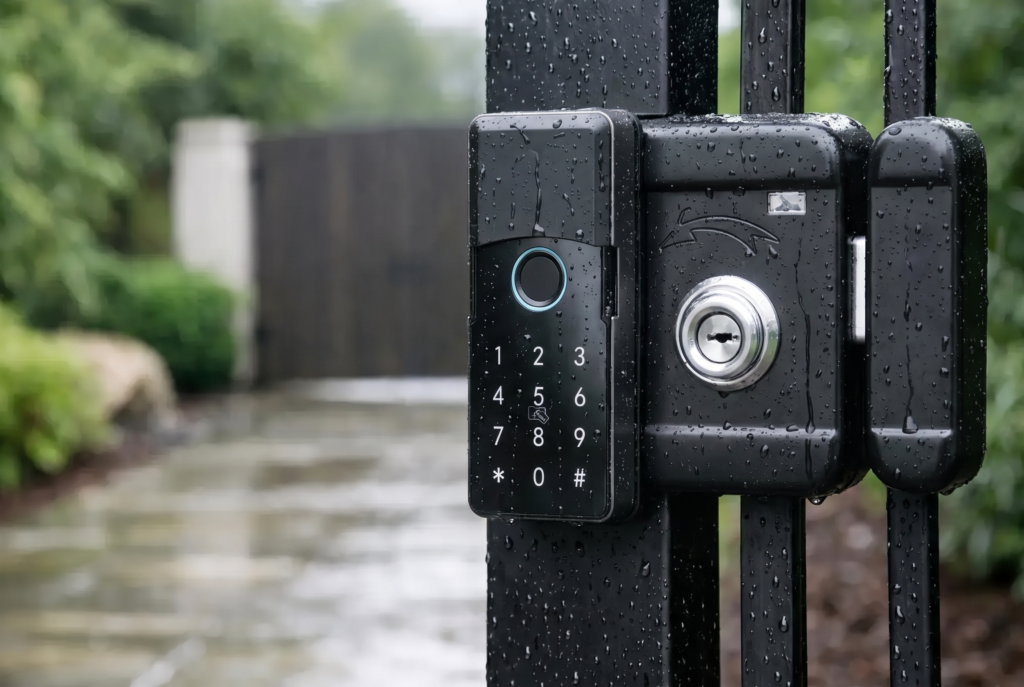
First, consider the environment. An apartment hallway is usually more protected from wind and road noise than an exposed front gate. A landed home may need a device designed to handle rain, humidity, dust, and changing outdoor conditions. Weather resistance is not a cosmetic detail when the doorbell is installed outside all year.
Second, think about the distance between your router and the entrance. A weak Wi-Fi signal can cause slow alerts, frozen video, or broken audio. In some homes, improving network coverage near the gate or door makes a bigger difference than selecting a doorbell with a higher camera resolution.
Third, look at how visitors will hear you. Speaker volume and microphone placement matter, particularly near busy streets. Echo reduction and noise control can improve clarity, but no device can fully eliminate loud environmental sound. If your entrance faces traffic, test the system in realistic conditions after installation.
Finally, consider how the doorbell fits into the rest of your access setup. A standalone doorbell may be enough for visual verification. A connected video doorbell paired with a smart lock can offer a more complete arrival experience: verify the person, speak with them, then provide controlled access only when appropriate.
Pairing Video Communication With Smart Entry Control
A front door camera becomes far more useful when it supports a clear access routine. You see a visitor, communicate through two-way audio, and choose one of several actions: ask them to leave a package, wait for you, contact another household member, or enter using an authorized access method.
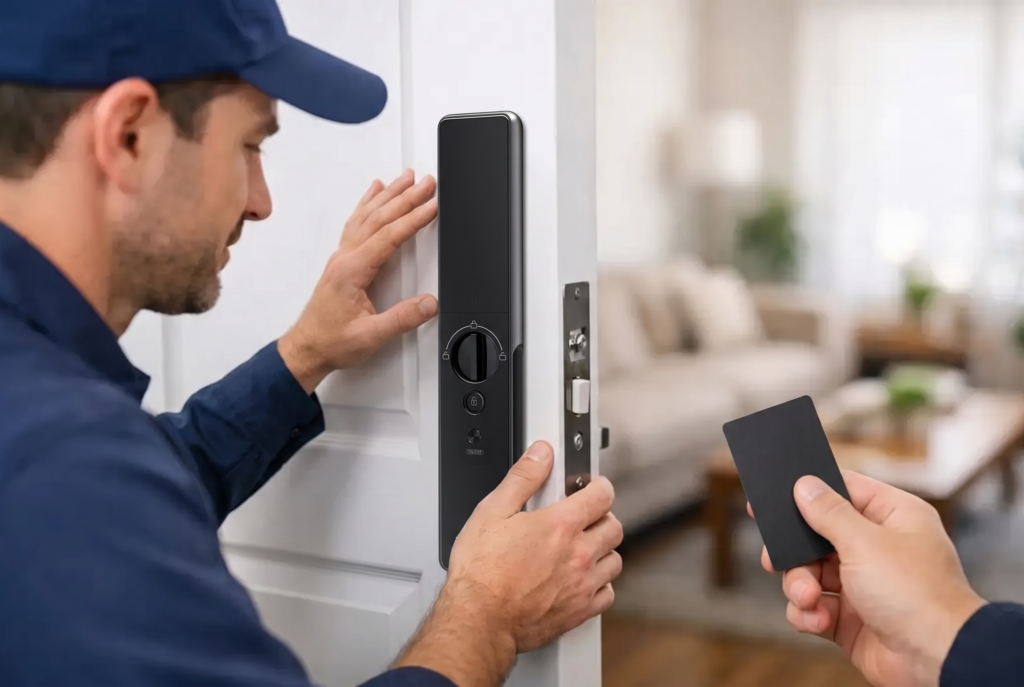
For trusted visitors, connected locks can reduce the need for physical keys. Families may use fingerprints, passcodes, mobile access, or other supported credentials. Landlords and property managers can benefit from access methods that are easier to administer than collecting and reissuing keys between occupants or service visits.
The trade-off is that a connected entry system needs professional planning. Door thickness, gate material, weather exposure, power needs, network coverage, and lock compatibility should all be assessed before installation. A premium device cannot deliver its full value if its camera is poorly positioned or its wireless connection is unreliable.
Genesis Singapore approaches connected access as a complete entry solution, combining video monitoring, smart lock options, installation, warranty coverage, and local after-sales support. That full-service approach matters for homeowners who want the benefits of smart security without turning their front door into a complicated do-it-yourself project.
Practical Habits for Better Two-Way Audio Security
Two-way audio works best when it supports sensible household rules. Use it to verify unexpected visitors before opening the door. Keep conversations brief and avoid sharing unnecessary personal details, such as whether the house is empty or when you will return.
For deliveries, establish a preferred drop-off location that does not expose packages to the street. For service providers, arrange appointments in advance and confirm their identity before allowing access. If you have children at home, show them how to use the viewer first and make it clear that they should never unlock the door for someone they do not know.
Review notification settings as well. If alerts are too frequent, people tend to ignore them. Adjust motion zones and sensitivity where supported so the system focuses on the path, porch, gate, or entry area that matters most.
A video doorbell with two-way audio will not replace good locks or careful decisions, but it gives you a calmer way to handle the moments outside your door. When the next bell rings, you can respond with information first – and open the door only when it makes sense.