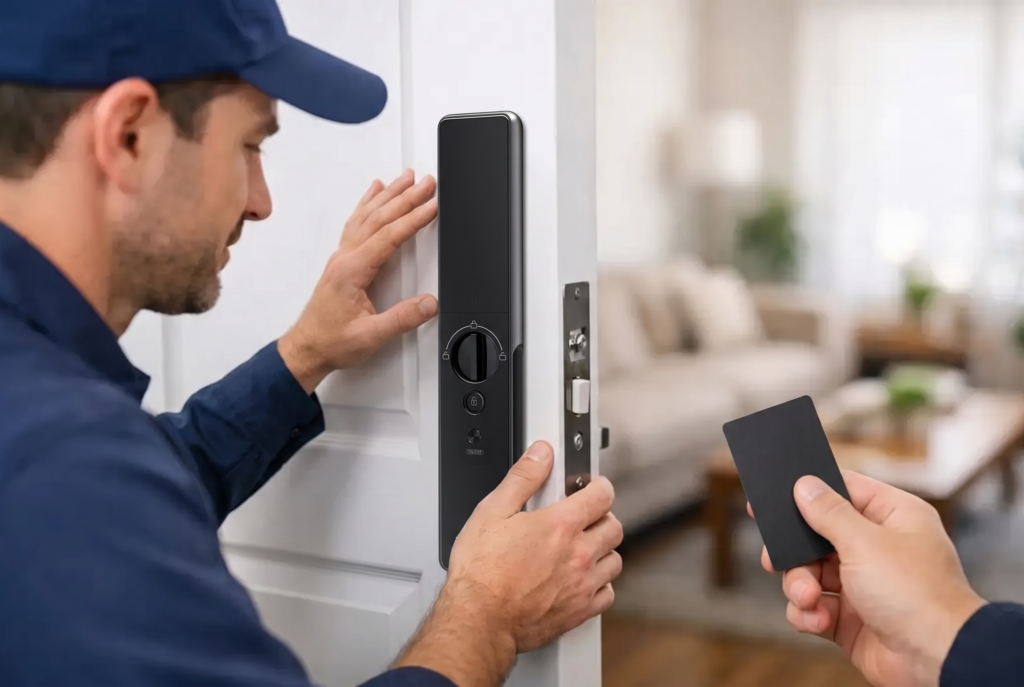
The front door is one of the busiest parts of a home. It needs to work when your hands are full, when children arrive home from school, and when you are leaving quickly for work. A fully automatic mortise lock replaces the familiar routine of lifting handles, turning keys, and checking whether the door is secured with a more intuitive approach: close the door, and the lock can take care of the rest.
For homeowners who want a cleaner door design and a more complete smart-security upgrade, this lock category combines a concealed mortise mechanism with keyless entry features such as fingerprints, passcodes, cards, and mobile access. The result is a door that feels more convenient every day while maintaining the physical security expected from a proper mortise lock body.
What Makes a Fully Automatic Mortise Lock Different?
A mortise lock is built around a lock case installed inside a pocket cut into the edge of the door. This differs from a surface-mounted or rim-style lock, where much of the locking hardware sits on the door face. The mortise construction gives the door a more integrated appearance and can support a substantial locking mechanism within the door itself.
The words “fully automatic” describe how the locking action works after the door closes. In a typical fully automatic configuration, the latch and locking bolts engage automatically when the door meets the frame. You do not need to lift a handle to throw the bolt or complete a separate manual locking step. From the outside, the lock can be opened with an approved credential. From inside, a handle or designated release control provides a fast exit.
A semi-automatic mortise lock may still offer smart entry and strong security, but it often asks the user to lift the handle after closing the door to engage the deadbolt. That is not necessarily a drawback. Some homeowners prefer that deliberate action. But for busy households, the automatic engagement of a fully automatic model removes a common point of uncertainty: whether the door was actually locked when everyone rushed out.
Why Automatic Locking Matters in Daily Life
Automatic locking is less about adding technology for its own sake and more about reducing small security gaps. A mechanical lock can be reliable, but it depends on the same behavior every time. Someone must remember the key, turn the cylinder, and confirm the bolt is in place. Those steps are easy to miss when managing groceries, pets, deliveries, or a late-night arrival.
With a fully automatic mortise lock, the door secures itself once it closes properly. This can bring useful reassurance to families with children, older relatives, and household members who may not always follow the same locking routine. It also suits homeowners who want keyless access without giving up the solid, built-in feel of a mortise lock.
The convenience extends to entry as well. Fingerprint recognition offers a quick option for regular family members. Passcodes can be convenient for people who prefer not to use biometrics. Cards, key tags, mechanical override keys, and app-based controls may be available depending on the model. The best access method is not always the most advanced one. A household with young children may value cards, while a family that comes and goes frequently may rely most on fingerprints and app notifications.
Choosing the Right Fully Automatic Mortise Lock
A smart lock should fit the door, the household, and the way the property is used. Choosing based on appearance alone can lead to an installation that looks premium but does not provide the most practical experience.
Start With Door Compatibility
Mortise lock installation requires accurate measurements and proper preparation of the door. Door thickness, backset, existing cutouts, handle position, swing direction, frame alignment, and the condition of the door all influence which lock can be fitted correctly. A lock that does not align precisely with the strike plate may not auto-lock consistently, which defeats one of its main benefits.
For this reason, professional site assessment and installation are especially valuable with a mortise system. The lock body, handles, front panel, and door frame must work as one complete assembly. Skilled installation also helps preserve the door finish and ensures the closing action is smooth rather than forced.
Choose Access Methods for Real Household Habits
Think about who needs access and when. Fingerprints are ideal for daily entry because there is no key to carry or passcode to remember. Passcodes are useful for family members, while temporary codes can help manage short-term access for guests, cleaners, or contractors when supported by the lock.
Mobile app control can add another layer of oversight. Depending on the connected features offered by the selected model, homeowners may be able to manage access permissions, receive activity alerts, or check lock status remotely. Wi-Fi connectivity can be useful for owners who travel often or landlords who manage access from a distance, but it should be selected for a real purpose rather than as a box to check.
Every electronic access method should be paired with practical backup options. Look for low-battery alerts, emergency power capability, and a mechanical override key where appropriate. Smart security should make entry easier without leaving the household uncertain about what happens when batteries need replacing.
Consider the Door Environment
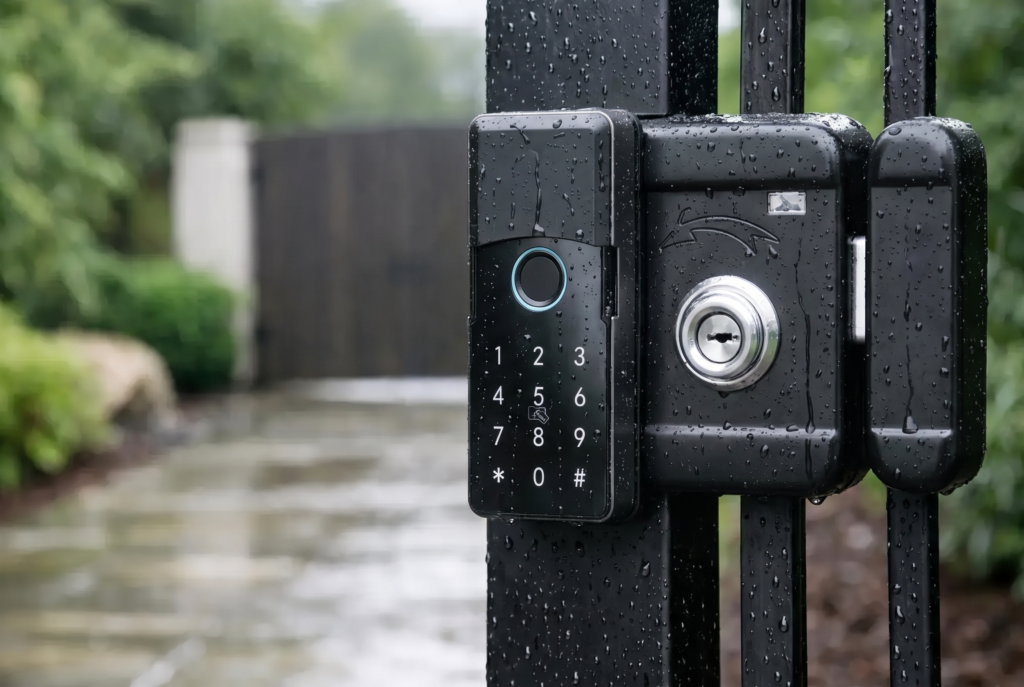
A lock on an interior-facing apartment door has different needs from one exposed to heat, rain, dust, and humidity. For exterior doors and gated properties, ask about weather resistance, operating conditions, and the suitability of the lock for the specific location. Not every smart mortise lock is designed for the same level of exposure.
Homeowners should also consider the door itself. A heavy solid door may need a different setup from a lightweight composite door. If a property has a separate gate and main door, the security experience can be improved by choosing compatible gate-lock and video-entry solutions rather than treating each entry point as an unrelated purchase.
Security Is More Than the Unlocking Method
Biometric access and mobile controls receive attention because they are visible features, but a smart lock should also be judged by what happens after authentication. A quality fully automatic mortise lock should have a secure lock body, reliable motorized engagement, anti-tamper alerts where available, and a properly aligned strike plate.
The door frame matters just as much as the lock. A strong lock installed on a poorly aligned door or weak frame cannot deliver its intended protection. During installation, the closing pressure, bolt travel, and frame fit should be checked carefully. The goal is not simply to make the lock operate. It is to make it operate reliably through thousands of everyday opening and closing cycles.
Privacy also deserves attention when using connected features. Use unique app credentials, avoid sharing permanent passcodes widely, and remove old users when a helper, tenant, or household member no longer needs access. Smart access control is most useful when permissions reflect who should be able to enter now, not who had access months ago.
What to Expect After Installation
Once installed, a fully automatic mortise lock should feel straightforward. Register household fingerprints carefully, test each preferred access method, and make sure everyone knows the inside exit operation. It is also worth practicing the low-battery and emergency power procedure before it is ever needed.
Routine care is simple but worthwhile. Keep the door and frame aligned, avoid slamming the door, replace batteries when alerts appear, and do not force the handle if the door has not closed fully. If the lock begins to engage inconsistently, address the issue early. It may be a battery matter, door alignment issue, or strike-plate adjustment rather than a major hardware failure.
Professional after-sales support can make a meaningful difference here. Genesis Singapore approaches smart security as a complete ownership experience, combining connected lock options with installation, warranty coverage, and local servicing. That support matters because a lock is not an appliance you use occasionally. It is part of the household’s everyday routine.
Common Questions About Fully Automatic Mortise Locks
Does automatic locking mean the door cannot be left unlocked?
Usually, the lock is designed to secure when the door closes, but specific modes vary by model. Some locks offer passage or open modes for selected situations. Ask about the available modes if you regularly host visitors, move items in and out, or need the door to remain accessible for a defined period.
Are fingerprint locks practical for the whole family?
They can be, particularly for adults and older children whose fingerprints register consistently. It is still wise to set up more than one access method. A passcode, card, or mechanical backup gives the household flexibility if a fingerprint is wet, dirty, or temporarily difficult to read.
Is a fully automatic model always better than a semi-automatic one?
Not always. A fully automatic model is ideal for people who prioritize effortless locking after every close. A semi-automatic mortise lock may appeal to homeowners who prefer to manually confirm the deadbolt action or who are replacing an existing setup with similar operating habits. The right choice depends on the door, the users, and the level of convenience you want each day.
A front door should not require a second thought after you leave. Choose a fully automatic mortise lock that fits your door precisely, gives your household practical ways to enter, and is supported by installation and service you can rely on long after the first successful fingerprint scan.