A smart lock should make the busiest moments at home feel simpler: arriving with groceries, letting a child in after school, or giving a guest temporary access without handing over a physical key. Smart lock warranty coverage matters when that daily convenience depends on electronics, moving parts, batteries, and professional installation working together. Before choosing a lock, understand not just how it opens your door, but what support stands behind it if something goes wrong.
What Smart Lock Warranty Coverage Actually Means
A warranty is a manufacturer or seller’s promise to address qualifying defects within a stated period. For a smart lock, that generally means a failure caused by a defect in materials or workmanship under normal residential use. If a fingerprint reader stops responding, a motor fails prematurely, or a display malfunctions despite proper use, those are the kinds of issues a warranty may address.
The key word is defect. Warranty coverage is not the same as a maintenance plan, accidental-damage protection, or an open-ended promise to replace a lock whenever it stops performing perfectly. Smart locks are installed at the intersection of hardware, door alignment, home connectivity, and household habits. A clear warranty helps separate a product fault from an issue that can be corrected through adjustment, servicing, or setup.
Coverage terms differ by model and provider. Always review the written terms for the specific lock, gate lock, video door viewer, or connected access device you are considering. The most reassuring purchase experience pairs clear product coverage with knowledgeable local support that can diagnose the issue before assuming a full replacement is needed.
What Smart Lock Warranty Coverage Usually Protects
A well-defined smart lock warranty commonly applies to the lock’s core electronic and mechanical components when they fail under normal use. This can include the internal motor, circuit board, fingerprint sensor, keypad, handle mechanism, and display. Depending on the product, it may also include certain supplied accessories that are necessary for operation.
Electronics and biometric components
Biometric access is one reason homeowners move beyond traditional locks. A covered defect could involve a fingerprint sensor that no longer reads enrolled fingerprints, a face-recognition module that fails without signs of damage, or a keypad that becomes unresponsive. These components should be assessed by a trained technician because an apparent sensor issue may sometimes be caused by depleted batteries, installation pressure, or configuration settings.
Mechanical lock operation
The motor, clutch, latch mechanism, mortise body, and handle assembly are equally important. When a properly fitted door suddenly cannot engage the lock, makes abnormal mechanical sounds, or repeatedly reports a locking error, the cause may be inside the lock body. Warranty support may cover the repair or replacement of a defective part, subject to the provider’s inspection and terms.
Included accessories, when specified
Some smart locks arrive with items such as strike plates, mounting hardware, charging cables, remote controls, or backup keys. Whether these are covered can vary. Do not assume every accessory receives the same warranty period as the main lock. A premium provider should make those distinctions easy to understand before installation day.
Common Exclusions That Homeowners Should Expect
Exclusions are not a sign of weak service. They set reasonable limits around conditions that a manufacturer cannot control. Reading them early prevents surprises later, particularly for homes with heavy traffic, young children, pets, or exposed gate entrances.
Normal cosmetic wear is often excluded. Small scratches, fading, finish changes, and marks caused by everyday contact do not usually affect security or indicate a manufacturing fault. Consumable items, especially batteries, are also commonly excluded because their lifespan depends on battery quality, frequency of use, temperature, and the lock’s connectivity settings.
Damage caused by force, impact, flooding, fire, pests, improper cleaning products, power surges, or attempted tampering may not qualify. The same can apply when a lock has been modified, dismantled, or repaired by an unauthorized party. If a household wants a different handle, third-party accessory, or custom door treatment, it is wise to confirm compatibility first.
Door condition matters as well. A warped door, loose hinges, swollen timber, misaligned strike plate, or shifting gate frame can place extra pressure on a smart lock. Over time, that pressure can affect operation even when the lock itself is functioning correctly. Warranty coverage for a device fault may not extend to repairing the door, frame, gate, or surrounding structure.
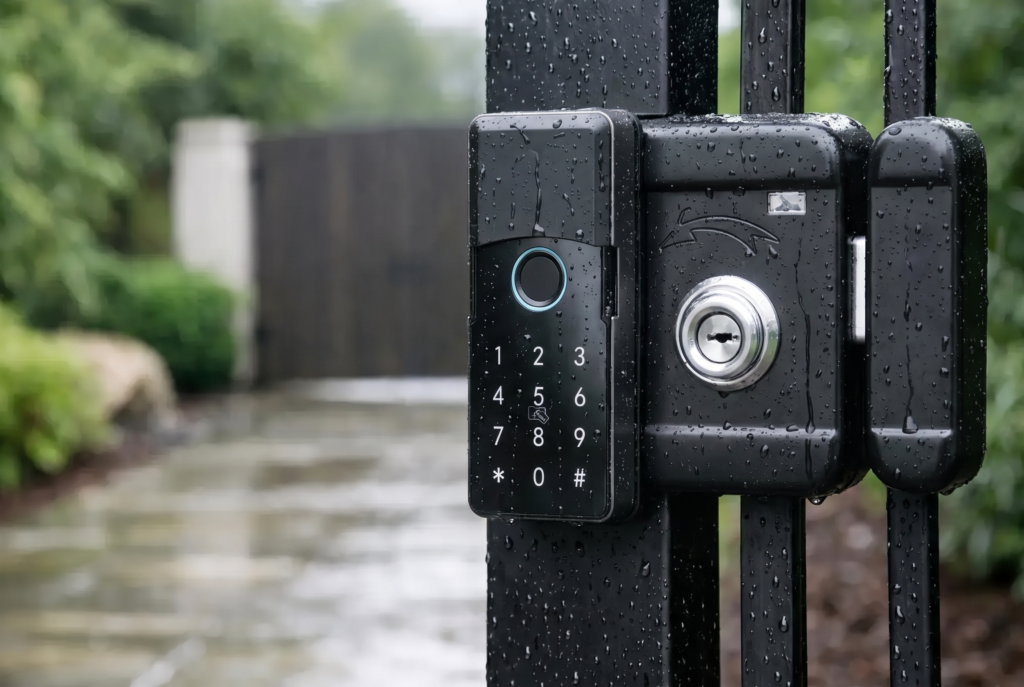
Outdoor products require special attention. A gate lock with a stated weather-resistance rating is designed for the conditions within that rating, not for every possible exposure. Persistent water intrusion, severe corrosion, or installation in a location beyond the product’s intended use may fall outside coverage. Ask whether the model is appropriate for a covered entryway, an exposed gate, or a coastal environment before making a decision.
Why Professional Installation Supports Your Warranty
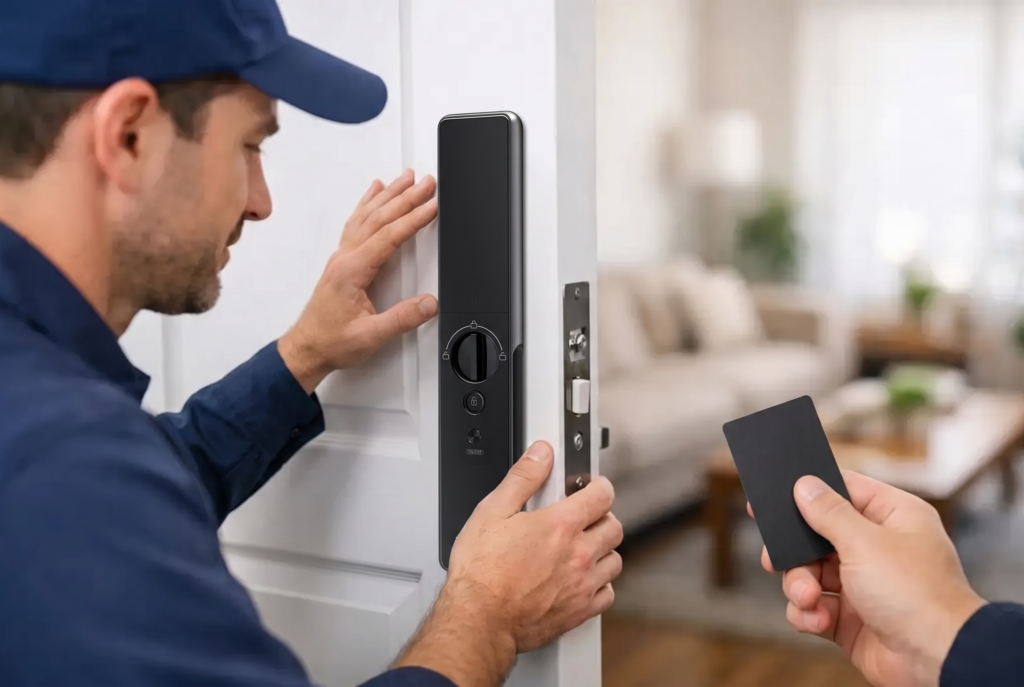
Smart locks are precise devices. Even an advanced biometric model can perform poorly if the mortise is not seated correctly, the cable is pinched, or the door does not align with the strike plate. Professional installation protects more than appearance. It helps the lock operate as designed from the first day.
During a proper installation, a technician checks door thickness, backset, handing, latch alignment, and the condition of the frame. For connected models, they can also verify app pairing, access settings, emergency opening options, and battery placement. This reduces the chance that an installation issue is mistaken for a product failure later.
It also creates a clearer service path. If the same team that supplied and installed the lock is available for after-sales support, they can assess whether the concern relates to the product, the fitting, the door alignment, or user settings. That is faster and more useful than replacing parts without identifying the underlying cause.
How to Make a Smart Lock Warranty Claim Easier
If your lock develops a problem, avoid forcing the handle, removing the lock body, or repeatedly resetting the device before speaking with support. Those actions can make diagnosis harder and may create additional damage. Instead, record what happened and when it started.
Keep these details available:
- Proof of purchase, installation date, model name, and serial number if available.
- A short video or photo showing the error message, indicator lights, or mechanical behavior.
- Information about battery changes, recent app updates, door repairs, or power interruptions.
- A clear description of whether the issue affects fingerprint access, keypad entry, app control, automatic locking, or the physical handle.
Support may first guide you through practical checks, such as replacing batteries with the recommended type, checking door alignment, or confirming network status for Wi-Fi-enabled functions. These steps do not dismiss your concern. They help determine whether the issue can be resolved quickly or needs a technician visit, repair, or warranty evaluation.
Questions to Ask Before You Buy
The best time to understand a warranty is before the lock is on your door. Ask how long the main lock is covered, whether labor and onsite service are included, and whether replacement parts carry their own coverage period. Confirm how warranty requests are handled and whether support is local to your area.
For a gate lock or video doorbell viewer, ask specifically about outdoor exposure, corrosion, camera components, and wiring requirements. For app-connected locks, clarify whether the warranty applies to the hardware only or whether help is available for initial app setup and device pairing. Software features can change over time, while a warranty generally focuses on the physical product.
It is also worth asking what happens if the product is discontinued. A dependable provider should explain whether repair, an equivalent replacement, or an upgrade option may be available if a qualifying covered fault cannot be fixed. The exact outcome depends on the written terms and available inventory, but transparency here is a sign of strong after-sales service.
A smart lock is a daily security decision, not just a hardware purchase. Choose a model suited to your door and lifestyle, have it installed with care, and keep the warranty details where your household can find them. When support is clear before you need it, keyless living feels more confident every time your family comes home.