A front-door key tends to become a small household problem at the worst possible moment: when a child arrives home before a parent, when groceries fill both hands, or when a cleaner, guest, or contractor needs access. The decision around biometric locks versus keys is not just about replacing an old habit with new technology. It is about choosing how your household manages entry every day.
For many homeowners, a fingerprint-enabled smart lock reduces the friction of coming home while giving the household more control over who can enter. A traditional key still has clear strengths, especially as a simple physical backup. The right choice depends on your door, your family routine, the people who need access, and the level of visibility you want over your home.
Biometric Locks Versus Keys: The Everyday Difference
A mechanical key is familiar because it is simple. Insert it, turn it, and the door opens. It does not need batteries, an app, or a setup process. But its simplicity also creates limitations. A lost key may be found by someone else. A copied key can circulate without the homeowner knowing. If access needs to be removed, the lock cylinder may need to be rekeyed or replaced.
A biometric lock verifies a person rather than an object. With fingerprint access, an authorized family member can place a registered finger on the sensor and enter without carrying anything. Depending on the lock model, entry may also be available through a passcode, RFID card, mobile app, face recognition, or a mechanical override key.
That choice of access methods matters. Smart access is most useful when it fits real life, not when it forces everyone into one method. A teenager may prefer a fingerprint. A visiting relative may be more comfortable with a temporary passcode. A property owner may want app-based control for a short-term helper. A well-selected lock provides those options without turning the front door into a complicated device.
Convenience Is More Than Going Keyless
The most noticeable benefit of a biometric lock is speed. There is no key to search for at the bottom of a bag and no need to hand out spare copies before a trip. This can be especially valuable for families whose schedules rarely line up.
Biometric access also simplifies guest management. Instead of lending a key that may never return, homeowners can create a code for a visitor and remove it when it is no longer needed. Connected models can extend that control through a mobile app, allowing the owner to manage authorized access even when away from home.
Keys can still be convenient for a household with one or two occupants and few visitors. They require no learning curve and remain easy to use for anyone who can turn a key. Yet convenience changes as more people need entry. Each additional user increases the question of copies, handovers, and retrieval.
For a rental property or a home with regular service visits, digital credentials can be far easier to manage than a growing collection of physical keys. The benefit is not simply that the door opens without a key. It is that access can be adjusted to suit the household.
Security Depends on the Whole Entry System
Neither a biometric lock nor a key is automatically the safer choice in every situation. Door security includes the lock body, deadbolt or mortise mechanism, strike plate, door material, frame condition, and installation quality. A premium access feature cannot compensate for a poorly fitted lock or a weak door frame.
Traditional keys have a familiar risk profile. They can be misplaced, borrowed, duplicated, or taken. Most homeowners cannot tell whether an existing key has been copied. If a key goes missing, the safest response may be to change the cylinder, even when there is no proof it was stolen.
Biometric locks avoid the problem of a fingerprint being casually copied and passed around like a key. Registered fingerprints are typically stored as encrypted templates in the lock rather than as ordinary fingerprint photos. Still, homeowners should choose established hardware and ask how biometric data is stored, how enrollment is protected, and what happens if the lock is reset.
A good biometric lock should also resist simple tampering attempts and provide secure fallback access. Features such as anti-peep passcode entry, automatic locking, low-battery alerts, intrusion alarms, and user management can add meaningful protection. The available features vary by model, so homeowners should focus on capabilities they will actually use.
Connected functions add another consideration. App control can make access more visible and flexible, but it should be protected with a strong account password and sensible phone security. If a lock supports access logs or real-time notifications, those features can help owners spot unusual activity. They are a useful layer of awareness, not a substitute for good physical security.
Reliability: Batteries, Backups, and Real-World Conditions
The most common concern about biometric locks is straightforward: what happens when the battery runs low? Quality smart locks are designed around this question. They provide early low-battery warnings, often well before power is exhausted, and may support emergency external power through a dedicated port. Many models also include a mechanical key override.
The practical answer is to treat batteries as routine home maintenance, much like replacing smoke-detector batteries. Check alerts promptly, use the recommended battery type, and keep a backup power source or override key available in a secure place outside the home.
Fingerprint performance deserves a realistic view as well. Modern sensors can be fast and accurate, but a wet, greasy, injured, or heavily worn finger may not scan consistently. Registering more than one finger for each regular user reduces frustration. It is also wise to set up a passcode or card as an alternative entry method.
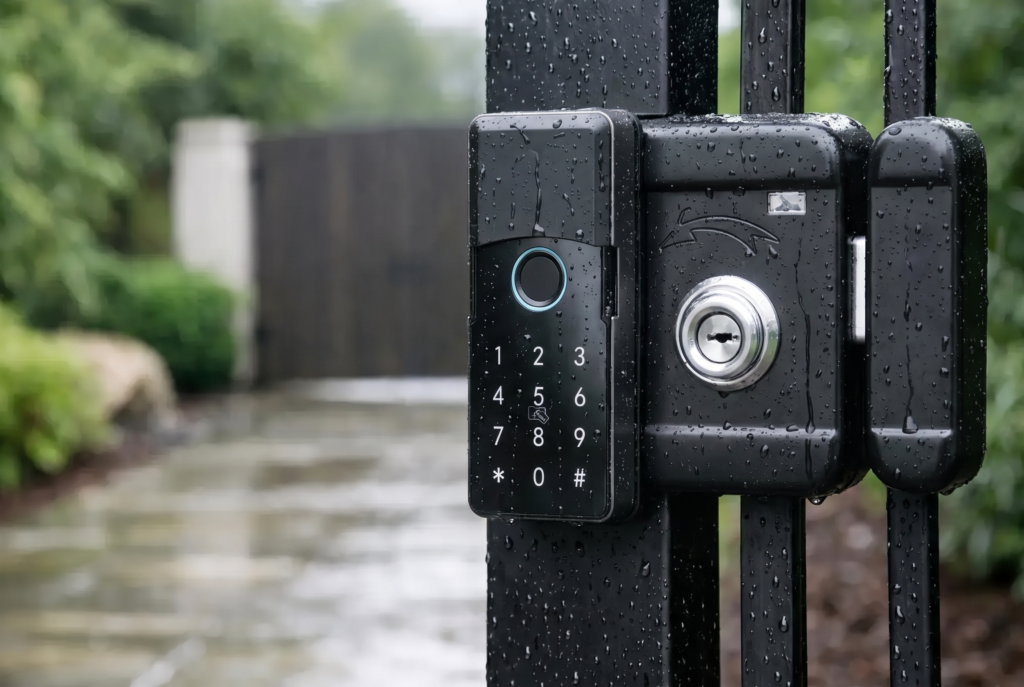
Outdoor gates require closer attention to weather exposure. A gate lock should be selected for the local environment, including rain, dust, direct sun, and temperature changes. Its weather-resistance rating, installation position, and protective cover can affect long-term performance. A front-door lock inside a sheltered corridor has very different demands from a lock mounted on an exposed gate.
Installation Can Determine the Experience
A smart lock should fit the door before it fits the shopping cart. Door thickness, handle orientation, backset, existing mortise cutout, frame alignment, and gate construction all influence the correct model. Some doors suit a fully automatic mortise lock, while others work better with a semi-automatic option, smart lever lock, or separate gate lock.
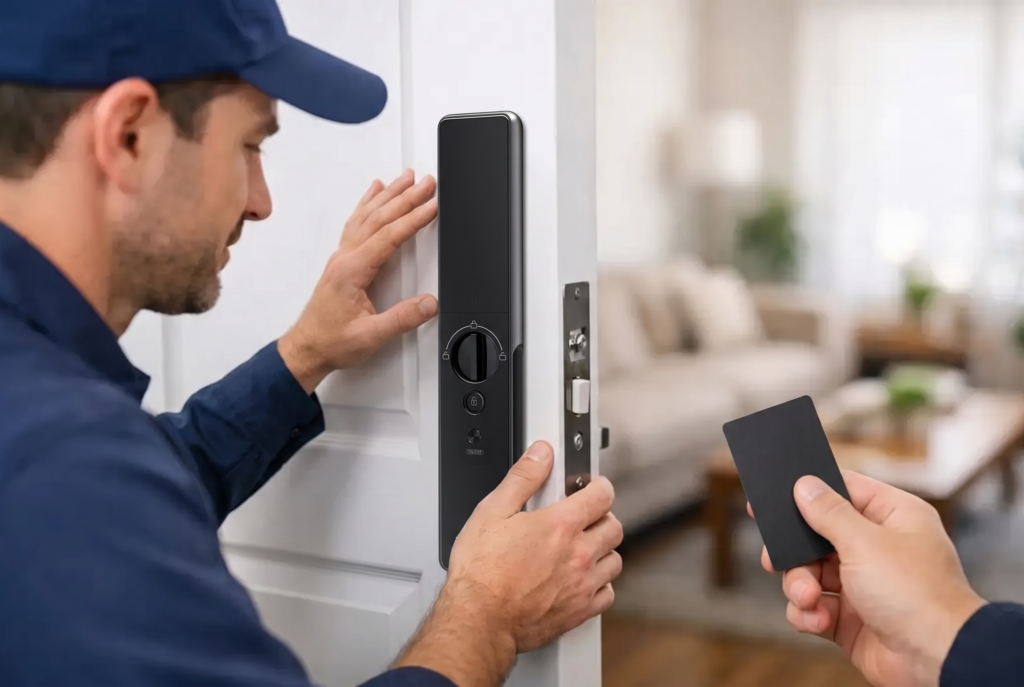
Professional installation helps ensure that the bolt aligns cleanly, the handle operates correctly, and the lock’s safety features work as intended. It also gives homeowners an opportunity to learn enrollment, code creation, emergency access, battery replacement, and basic care before relying on the system daily.
This service element matters after installation too. Hardware is only one part of a security decision. Local maintenance, warranty support, and knowledgeable troubleshooting can make a smart-lock upgrade feel dependable rather than experimental. Genesis Singapore takes this full-service approach because a connected entry system should support the household long after installation day.
When Keys May Still Be the Better Choice
A traditional key can be the sensible option when a homeowner wants the lowest upfront cost, has a basic access routine, and does not need guest codes, access records, or remote management. It may also be preferable for certain older doors where modification is impractical or where the owner does not want any electronic component.
Keys are not outdated simply because smart locks exist. They are a proven, low-maintenance tool. The trade-off is that they offer little flexibility once they leave your hand.
For many households, the strongest answer is not an all-or-nothing choice. A biometric smart lock with a mechanical override combines keyless daily access with a physical contingency plan. It gives families the convenience of fingerprints and passcodes while preserving a familiar backup for unusual situations.
Before choosing, think through an ordinary week: who arrives first, who needs temporary access, whether your door or gate faces weather, and how comfortable each household member is with technology. The best entry system is the one that makes coming home easier while giving you clear, dependable control over who gets in.