A misplaced key, an unexpected delivery, or a child arriving home before you can get there can expose the limits of a traditional lock. The top home security upgrades do more than add alarms – they give your household better control over who enters, when they enter, and what happens at the front door.
For most homeowners, the best place to start is not with a complicated whole-home system. It is with the entry points used every day: the main door, gate, and visitor access. A well-chosen connected lock or video device can reduce everyday friction while adding meaningful layers of protection.
Start With the Top Home Security Upgrades at Your Entry
Your front door is where convenience and security meet. A mechanical lock may still work, but it creates familiar problems: keys can be copied, lost, left with a contractor, or passed between family members without a clear record. Smart access control replaces that uncertainty with managed, flexible entry.
The right upgrades depend on your property type, household routines, and existing door or gate configuration. An apartment homeowner may prioritize a biometric mortise lock and video doorbell viewer. A landed-home owner may need a weather-resistant smart gate lock alongside an automated main-door solution. The goal is not to add technology for its own sake. It is to make every point of entry easier to manage and harder to misuse.
1. Upgrade to a biometric smart door lock
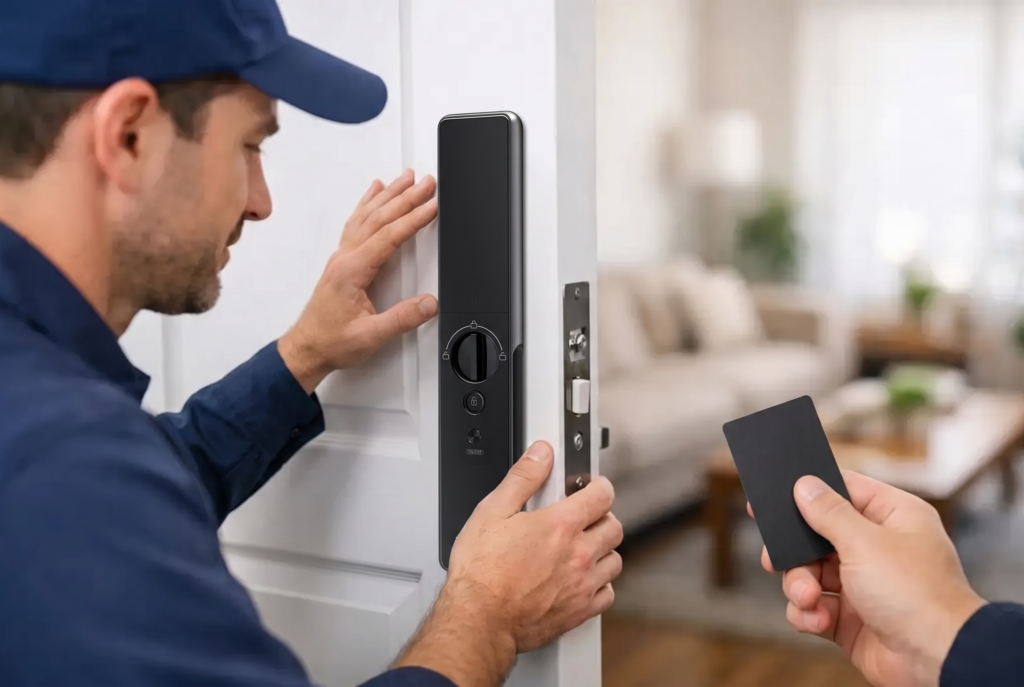
A biometric smart lock is often the most practical first upgrade because it solves a daily problem immediately: carrying and sharing keys. Fingerprint access lets approved household members unlock the door in seconds, while PIN codes, cards, mechanical override keys, and mobile access can provide additional ways to enter.
For busy families, fingerprints are particularly useful. Children do not need to remember where they placed a key, and older family members can use a straightforward entry method without handling small keys. Many smart lock models also support temporary passcodes, which are valuable when a cleaner, caregiver, visitor, or contractor needs access at a specific time.
Choose the lock type around the door, not just the feature list. Fully automatic mortise locks offer a premium experience, automatically engaging and releasing the lock mechanism with minimal effort. Semi-automatic mortise locks may suit homeowners who prefer a more familiar handle-based action while still wanting biometric and app-enabled access. Smart lever locks can be an effective fit for certain interior doors or door configurations where a mortise model is not appropriate.
2. Add mobile app access and entry records
The strongest security improvement is often better visibility, not simply a stronger physical barrier. App-connected locks allow authorized owners to check lock status, manage access credentials, and review entry activity from a phone. Instead of wondering whether the door was locked during a rushed morning, you can confirm it remotely.
Access records also bring clarity to shared households and rental properties. They can show when a PIN code or authorized credential was used, helping owners manage recurring service visits or tenant turnover with less reliance on physical key handovers. When someone no longer needs access, remove the digital credential rather than waiting for a key to be returned.
Remote control should be chosen thoughtfully. Some households need live mobile unlocking regularly, while others mainly want notifications and access management. Wi-Fi capability can offer broader remote control, but it also means your home network should be protected with a strong, unique password and current router security settings. Convenience works best when it is paired with good digital habits.
3. Install a video doorbell viewer
A doorbell rings differently when you can see who is outside. A video doorbell viewer gives homeowners a clearer way to screen visitors, speak with delivery drivers, and check activity at the door when they are away. Features such as live video, two-way audio, motion alerts, and recording support turn the entrance into a more informed point of control.
This upgrade is especially useful for households that receive frequent parcels or have children and older relatives at home. You can answer a visitor without opening the door, confirm a delivery, or ask someone to leave a package in a designated spot. It also creates a useful record when activity around the entrance needs to be reviewed.
Placement matters. The camera needs a clear view of the approach to the door, not just a close-up of a visitor’s face. Consider lighting conditions, the width of the hallway or porch, and whether the device is suited to your exposure to rain, heat, or dust. A professional assessment helps prevent blind spots and ensures the viewer complements the lock rather than competing with it.
4. Secure the gate with a purpose-built smart gate lock
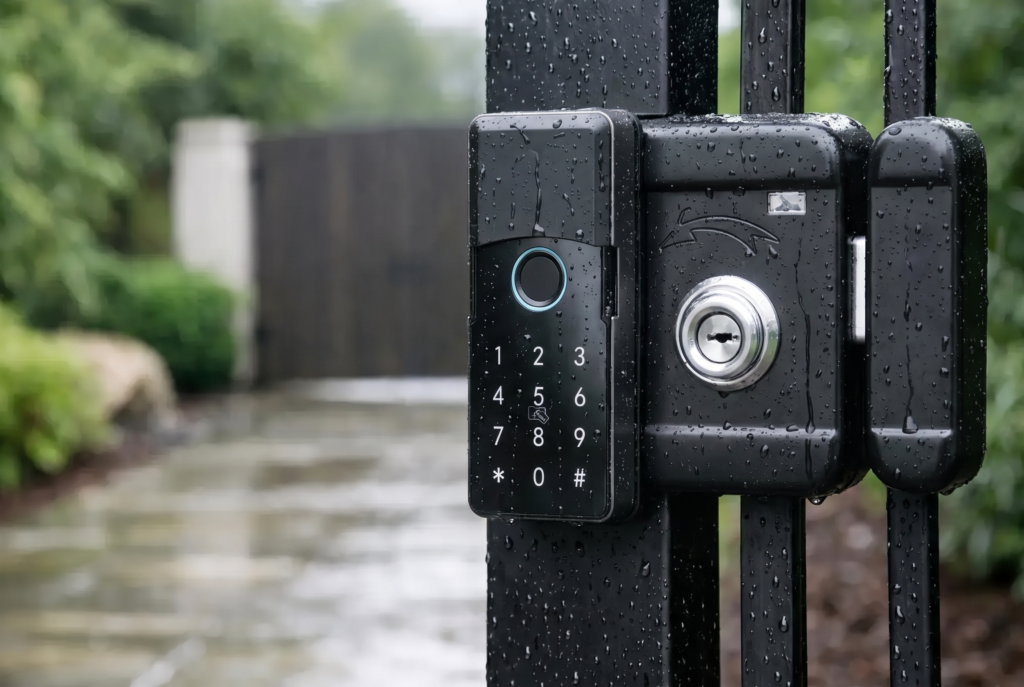
A gate is not just an outer boundary. It is an access point that may be exposed to weather, delivery traffic, guests, and service personnel. Using an indoor-focused lock on an external gate can lead to poor performance over time, which is why purpose-built gate hardware deserves separate consideration.
Smart gate locks can bring keyless access to landed properties while supporting PIN, fingerprint, card, or app-based entry depending on the model. Weather resistance is a major factor. Look for an appropriate IP rating and hardware designed to handle outdoor conditions, rather than assuming all smart locks offer the same protection.
Gate automation can add another level of convenience, but it should not compromise safety. The best setup considers how residents enter on foot, how vehicles access the property, where deliveries are received, and whether there is a reliable manual override during a power issue. A gate system needs to work on ordinary mornings, not only in a showroom demonstration.
5. Use temporary access instead of spare keys
Spare keys under mats, in planters, or with loosely managed third parties are a small risk that can become a major inconvenience. Temporary digital access is a cleaner alternative for short-term visitors and service appointments.
Create a time-limited PIN for a contractor, housekeeper, pet sitter, or guest, then remove it when the access window ends. For landlords and property managers, this approach can simplify move-ins, maintenance visits, and tenant changes. There is no need to rekey the property every time access needs change, provided the lock supports secure credential management.
It is still wise to keep an emergency backup plan. Battery-powered locks typically provide low-battery alerts, but batteries should be replaced promptly rather than waiting for a warning to become urgent. Keep mechanical override access available where applicable, and make sure trusted household members understand the backup procedure.
6. Reinforce the door and installation details
A smart lock is only as effective as the door and frame supporting it. Before selecting a model, inspect the door material, thickness, alignment, handle position, and condition of the strike area. A warped door, loose frame, or poorly aligned latch can affect both physical security and the smooth operation of an automatic lock.
Professional installation is valuable because smart access hardware has mechanical and electronic requirements. The lock must fit correctly, engage reliably, and be configured for the household’s preferred access methods. Installation is also the right time to confirm that the door closes smoothly, the lock bolts fully, and every authorized user can operate it confidently.
Do not overlook after-sales support. Security hardware is a long-term home upgrade, not a one-time gadget purchase. Local servicing, maintenance options, and warranty coverage can matter as much as the initial feature set, particularly for a primary entrance used multiple times a day.
7. Build a layered setup, not a single point of failure
No single device can address every security concern. A smart door lock controls entry, a video doorbell viewer improves awareness, and a gate lock helps secure the outer boundary. Together, they create a more complete system without making daily life more complicated.
Start with the point that causes the most friction or concern. If key management is the issue, begin with a biometric door lock. If you regularly miss visitors or deliveries, a video doorbell viewer may deliver the most immediate value. If your property has an exposed entrance gate, prioritize outdoor-rated access control first.
For a cohesive setup, choose products that match the way your household actually lives. Genesis designs connected access solutions around this balance: premium keyless convenience, practical biometric security, and professional support that helps each device perform as intended.
The most effective upgrade is the one your family will use consistently. Choose access that feels natural on a rushed morning, provides reassurance when you are away, and gives you a clear, dependable way to stay in control of the place you call home.