A busy household notices the difference at the door. When your hands are full of groceries, a child is heading out for school, or a delivery arrives while you are away, the question is not only how the door opens. It is whether it is reliably secured after it closes. That is the practical decision behind automatic versus semi automatic locks.
Both lock types can offer keyless entry through fingerprints, PIN codes, cards, mobile apps, or mechanical backup keys. The major difference is what happens after access is granted and the door swings shut. Choosing well means looking beyond the label and considering your household routine, door condition, security expectations, and preferred level of automation.
Automatic versus semi automatic locks: the core difference
A fully automatic smart mortise lock uses an internal motor to extend and retract its locking bolts. After successful verification, the lock releases the door electronically. Once the door closes, it can engage the bolts automatically, often within seconds. The experience is designed to be hands-free from entry through securing the door.
A semi-automatic lock still provides electronic access control, but it generally requires a physical action to secure the door fully. Depending on the lock design, this may mean lifting the handle to throw the bolts after closing the door. To leave, you may also need to use the handle or a designated button before the door opens.
That distinction sounds small, but it changes daily behavior. A fully automatic lock reduces the risk that someone closes the door without fully locking it. A semi-automatic lock gives the user a more tactile confirmation and may suit homeowners who prefer deliberate control of the locking action.
Terminology can vary by manufacturer, so do not rely on the product category alone. Ask exactly how the lock behaves when the door closes, how it opens from inside, and whether the latch and deadbolt engage automatically. A professional demonstration is often more useful than comparing feature names on a specification sheet.
Why fully automatic locks appeal to busy households
The strongest case for a fully automatic lock is convenience that also supports consistent security habits. A fingerprint, PIN code, or app command grants access, and the lock takes care of the motorized bolt movement. When you leave home, you close the door and the lock secures it without needing to lift a handle or turn a thumbturn.
This is particularly useful for families. Children and older relatives do not have to remember a second locking step. A household member carrying bags, holding a pet leash, or managing a stroller can enter and leave with less effort. For landlords and property managers, automatic locking also offers added confidence that users are less likely to leave a unit unsecured through simple oversight.
Many premium fully automatic models support multiple credential options. Fingerprint access is quick for everyday use, while PIN codes can be assigned to household members or short-term visitors. Wi-Fi or app connectivity may allow remote status checks, access records, temporary codes, and notifications. When paired with a compatible video doorbell viewer, homeowners can verify a visitor and manage access with a clearer view of what is happening at the entrance.
There is a trade-off. Fully automatic locks have more motorized movement, so correct installation and door alignment matter greatly. A door that sags, rubs against the frame, or has a poorly positioned strike plate can place extra resistance on the lock. The result may be slower operation, warning alerts, or inconsistent bolt engagement. The lock is sophisticated, but it still depends on a properly fitted door.
When a semi-automatic lock is the smarter choice
Semi-automatic locks remain a strong option for homeowners who want smart credentials without prioritizing motorized bolt operation. They can offer fingerprint access, PIN codes, cards, and app features while preserving the familiar action of operating a handle.
For some people, lifting the handle after closing the door is not an inconvenience. It is a reassuring routine. The physical movement provides a clear indication that the bolts have engaged, and the mechanism can feel closer to a conventional mortise lock. This can make the transition from a mechanical lock more comfortable for households that value familiar behavior.
Semi-automatic models may also be a sensible fit where a door has minor alignment limitations that should not be ignored but are difficult to correct immediately. Because the user actively engages the mechanism, there may be more awareness of resistance at the door. That said, no smart lock should be used to compensate for a damaged frame, loose hinges, or a door that does not close properly. Those issues should be addressed before installation.
The main consideration is consistency. If one person in the household forgets to lift the handle, the door may be closed but not fully deadbolted. Some locks provide alerts or auto-locking functions for certain components, but the exact behavior depends on the model. A semi-automatic lock works best when everyone understands the final locking step and follows it every time.
Security is about more than automatic locking
Automatic operation is valuable, but it is only one part of residential protection. The quality of the mortise body, deadbolt engagement, handle construction, anti-tamper alerts, verification methods, and installation all affect the real-world result.
For a main entrance, look for a lock with reliable biometric performance, secure PIN features, emergency power capability, and a mechanical override for contingency access. A battery-powered smart lock should provide low-battery warnings well before power runs out. An external emergency power contact can provide a temporary way to power the device if batteries are depleted, while a backup key offers another safeguard where supported.
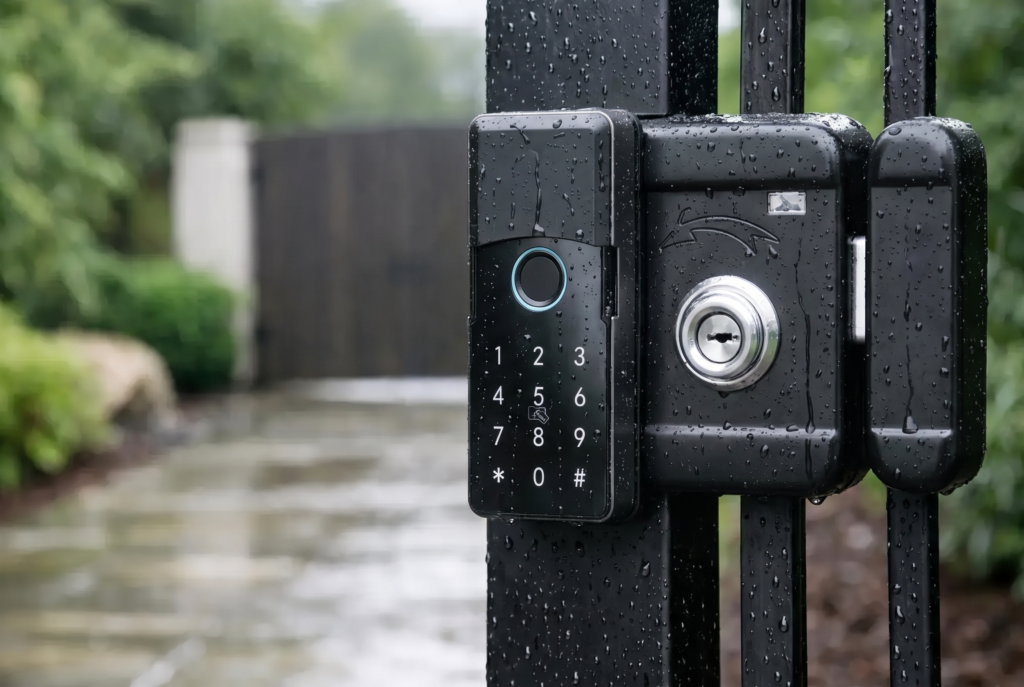
The door itself matters just as much. A strong lock installed on a weak door frame is not a complete security solution. The strike plate, screws, frame material, gap between door and frame, and hinge condition should all be assessed. For landed homes and gated properties, gate locks need separate consideration because outdoor exposure, material type, and weather resistance can be very different from the requirements of an interior-facing apartment door.
For any electronic lock, privacy also deserves attention. Use individual codes instead of sharing one household PIN widely. Remove temporary credentials when they are no longer needed. If app controls are available, protect the account with a strong password and device-level security. Smart access should make control easier, not create unmanaged access points.
Installation determines how well either lock performs
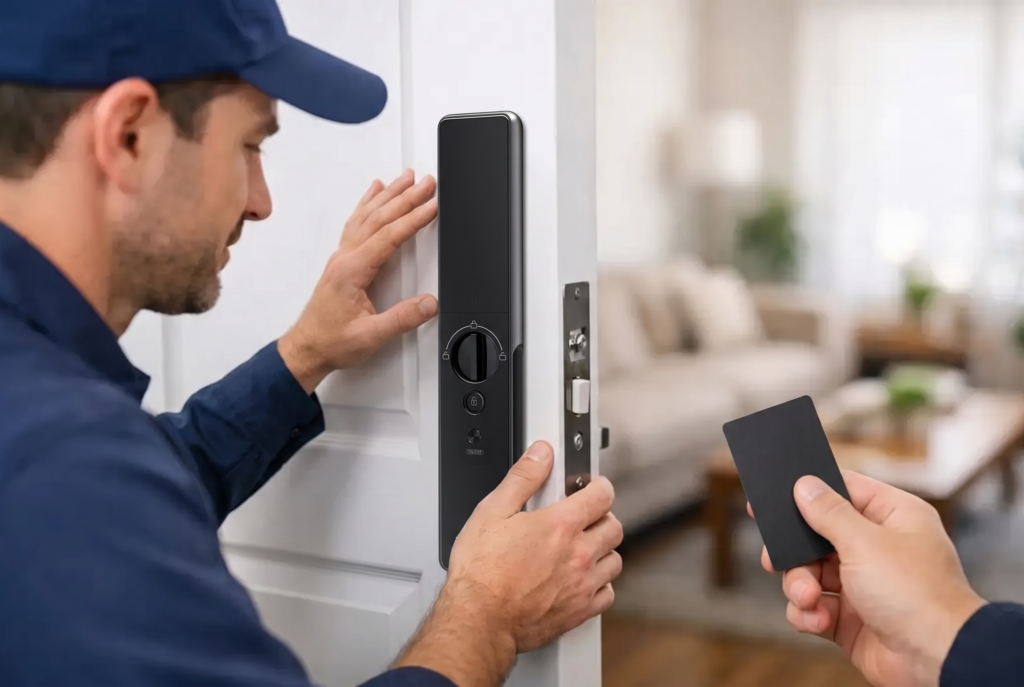
A smart lock should feel refined, not forced. Proper installation begins with measuring door thickness, checking the existing cutout, confirming handing direction, and reviewing the door frame. The installer should test closing force and bolt alignment rather than simply confirming that the screen turns on and credentials register.
This is especially important with fully automatic mortise locks. The motor needs a clear, correctly aligned path for every locking cycle. If the bolts strike the frame instead of entering the strike plate cleanly, the lock may work at first but face unnecessary wear over time. A qualified installation team can adjust the strike position, assess hinges, and make sure the handle, latch, and deadbolt operate as intended.
After installation, every household member should know the essential routines: how to use their preferred credential, how the lock behaves when the door closes, where the backup key is kept, and what low-battery alerts mean. A lock with excellent features is more dependable when its users know how to respond to the few situations that require attention.
How to choose for your home
Choose a fully automatic lock if your priority is a hands-free routine and the added reassurance of automatic deadbolt engagement after the door closes. It is particularly well suited to active families, frequent visitors, and homeowners who want the system to reduce reliance on memory.
Choose a semi-automatic lock if you prefer a familiar handle-driven action, want electronic credentials with a more deliberate locking routine, or value the physical confirmation of engaging the bolts yourself. It can be an excellent balance of modern access and traditional door behavior.
Before deciding, try the lock in person if possible. Test the fingerprint reader, close the door, feel the handle movement, and ask what happens during a battery warning or power interruption. Confirm that the selected model fits your door and that local installation, warranty coverage, and after-sales support are available. Genesis Singapore approaches smart access as a complete home-security upgrade, because dependable performance begins with the right product and continues with proper setup and service.
The best lock is the one your household will use correctly without thinking twice. Select the operation that fits your daily rhythm, then give it the professional installation and ongoing care that a secure front door deserves.