A metal gate is often the first physical barrier between your home and the street. If it still relies on a loose padlock, a hard-to-find key, or a latch that can be forced from outside, it creates an everyday security gap. The best locks for metal gates combine strong mechanical protection with convenient, controlled access for the people you trust.
For a busy household, that means no more passing spare keys around, returning home to find a child locked out, or wondering whether the gate was secured after a delivery. The right smart gate lock can give residents fingerprint access, temporary visitor codes, app-based entry management, and a clear record of who entered. But the right choice depends on the gate itself, its exposure to weather, and how your family uses the entrance.
What Makes the Best Locks for Metal Gates?
A metal gate lock must do more than look modern. It needs to suit the gate’s frame, opening direction, material thickness, and daily traffic. A lock designed for a solid front door may not fit an open-grille gate or withstand rain and direct sun. Gate security is strongest when the lock, gate structure, strike area, and installation work together.
Start with access. Fingerprint recognition is ideal for homeowners who want fast, keyless entry without asking family members to carry keys. A quality biometric reader should recognize enrolled prints quickly while allowing multiple user registrations for household members. PIN access is useful as a backup, especially for guests, service providers, or older children who may not have a consistently readable fingerprint.
App control adds another layer of practical oversight. Depending on the lock system, homeowners can issue time-limited codes, remove access when a contractor’s work is complete, and check access activity from their phone. This is particularly valuable for landlords and property managers who need to change access without collecting physical keys after every tenant or vendor visit.
The mechanical side still matters. Look for a lock body and latch designed to resist pulling, prying, and tampering. A secure installation requires a solid mounting surface and correct alignment between the lock and strike. Even a feature-rich smart lock will not perform as intended if the gate shifts, sags, or fails to close cleanly.
Choose a Lock Type That Fits Your Gate
Not every metal gate needs the same locking setup. The best option is based on gate design, whether the gate swings or slides, and whether it is your primary daily entrance.
Smart gate locks for everyday family access
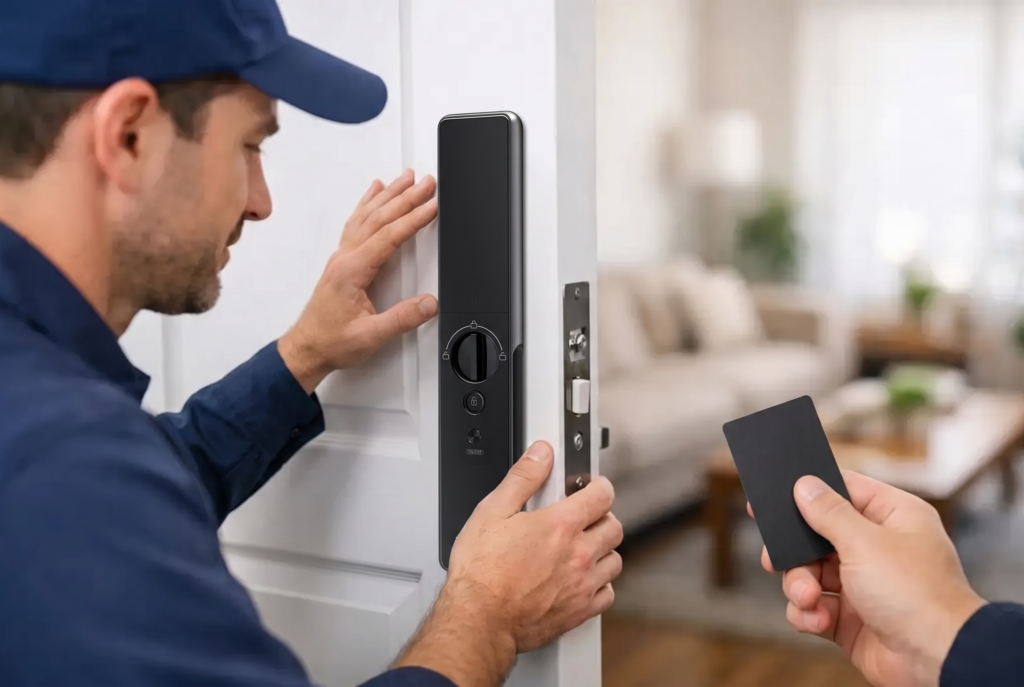
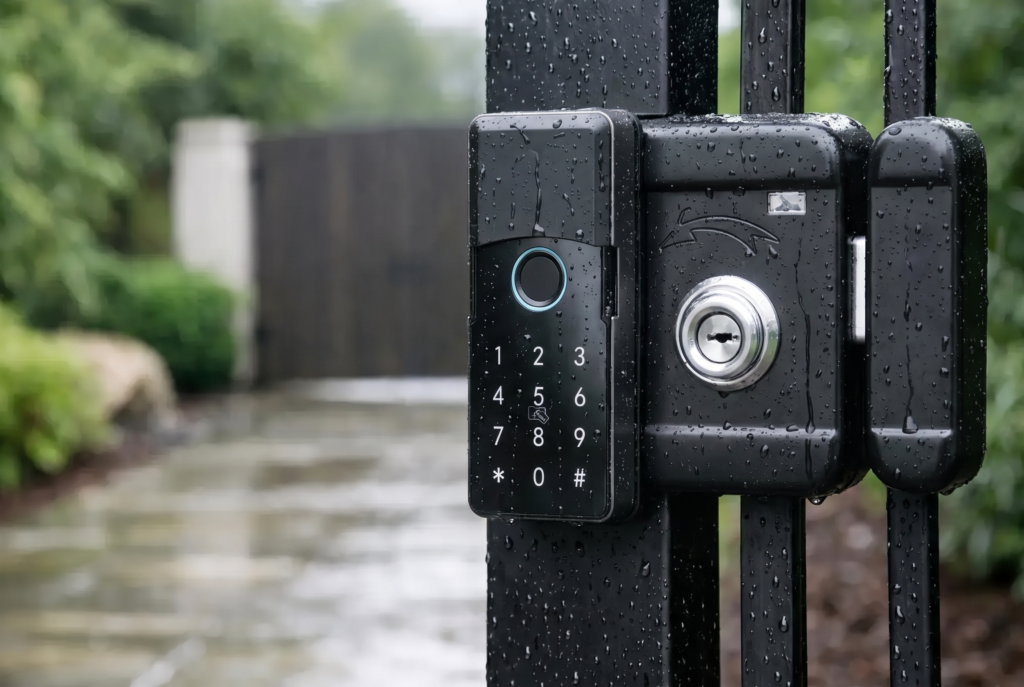
For most residential swing gates, a dedicated smart gate lock is the most balanced solution. These locks are designed for gate use and may offer fingerprint entry, PIN codes, RFID cards, mobile app control, or a combination of methods. A family can use fingerprints for daily entry while keeping a code or card available for backup.
Choose a model with a protected exterior panel and a weather-resistance rating suited to its location. If the gate faces heavy rain, sprinkler spray, coastal air, or intense afternoon sun, weather protection is not a minor specification. It directly affects long-term reliability. Battery-powered operation is also worth considering, particularly when wiring to the gate is difficult. Confirm how low-battery alerts work and whether emergency power can be supplied from outside if batteries run low.
Mortise-style locks for a cleaner integrated finish
A mortise gate lock sits within the gate frame rather than projecting heavily from its surface. This can create a more refined appearance and may offer a more substantial locking feel, but it requires adequate frame depth and precise cutting. It is generally best installed during a gate upgrade or by a technician who can assess the frame before work begins.
For gates with narrow metal bars or limited internal space, a mortise lock may not be practical. In that case, a surface-mounted smart lock can deliver better compatibility without compromising ease of use.
Electric and automatic gate locks for connected entrances
An electric gate lock is a strong fit when the gate is paired with an intercom, video doorbell, or automatic gate operator. Rather than walking out to release the gate, residents can verify a visitor and grant entry remotely. This setup is especially useful for landed homes, side entrances, and properties that receive frequent deliveries.
The trade-off is planning. Electric locking often needs reliable power, protected cabling, and compatible controls. It should also have a clear plan for power outages. Some homes benefit from battery backup, a manual release method, or a secondary mechanical access route. A professional site assessment helps prevent a convenient system from becoming frustrating during an emergency.
Heavy-duty mechanical locks for lower-tech needs
A high-quality mechanical deadbolt or gate lock can still be a sensible choice for a secondary yard gate, storage area, or property where electronic access is unnecessary. It avoids batteries and app setup, but it also brings back the limitations of keys: copying, loss, and no visibility into who used them.
Avoid treating a basic padlock as the whole security plan for a main entrance. Exposed padlocks can be vulnerable to cutting, leverage, and weather-related corrosion, depending on their construction and placement. If a padlock is necessary, protect it with a shrouded design and a reinforced hasp, then consider whether the gate frame itself is strong enough to match it.
Weather Resistance Is a Security Feature
Metal gates spend their lives outdoors. Rainwater, humidity, dust, sunlight, and temperature changes can affect both the finish and the electronics inside a lock. A lock that works perfectly in a sheltered showroom may need more protection on an exposed front gate.
Check the product’s weather-resistance rating and ask what the rating covers. It may describe resistance to splashing water and dust, not complete submersion or direct high-pressure washing. Placement matters too. A small rain cover, correctly positioned lock panel, and drainage around the gate can reduce unnecessary exposure.
Coastal conditions deserve extra attention. Salt in the air can accelerate corrosion on metal hardware, screws, and exposed terminals. In these locations, choose durable materials and make periodic cleaning part of home maintenance. A lock should be inspected if the gate begins dragging, sticking, or closing out of alignment, since those mechanical issues place extra stress on the latch.
Access Features That Actually Make Life Easier
The most useful smart gate lock is not necessarily the one with the longest feature list. It is the one that gives each household member a dependable way to enter while keeping access simple to manage.
Fingerprint access is excellent for regular users. PIN codes are flexible for visitors and temporary access. RFID cards can suit children, domestic helpers, or users who prefer a physical credential. Mobile app control is helpful for remote management, but it should not be the only way into the property. Phones lose charge, wireless connections can fail, and some family members may not want to use an app every day.
A well-planned setup usually provides at least two convenient methods for residents and one emergency backup. For example, fingerprints for adults, cards for children, PIN codes for visitors, and an emergency power option for the lock. This approach keeps the system practical without relying on a single point of failure.
Installation Can Make or Break Gate Security
Smart gate locks are not a casual fit-and-forget purchase. Metal gates vary widely in bar spacing, frame thickness, hinge condition, latch position, and clearance from walls or pillars. A lock must be positioned so it can engage fully when the gate closes, while the exterior reader remains accessible and protected.
Before choosing a model, measure the gate frame and inspect its movement. Does the gate sag when opened? Does it strike the frame cleanly? Is there enough room for an interior handle or lock body? Can a person reach around the gate to manipulate the inside release? These details determine whether a lock is truly secure after installation.
Professional installation is particularly valuable for biometric, mortise, and electric gate locks. An experienced installer can reinforce weak mounting points, align the strike, route cables safely where needed, enroll users, and explain battery care and emergency entry. Genesis approaches smart security as a complete ownership experience, because dependable installation and local support matter just as much as the device on the gate.
Make the Final Choice Around Your Home’s Routine
Choose a biometric smart gate lock if your household wants the fastest keyless entry. Choose an app-connected model if you regularly manage visitors, deliveries, tenants, or service providers. Choose an electric locking system if remote release and video verification are central to your entrance. Choose a heavy-duty mechanical option when simplicity, limited access needs, and no electronic maintenance are the priority.
The best lock is the one your household will use correctly every day, fitted securely to a gate that closes properly and protected from the weather it faces. When those details are handled well, your gate becomes more than a boundary – it becomes a confident, convenient first layer of home security.