A digital door lock features review is only valuable if it answers the question homeowners actually face at the door: will this make daily access easier without creating new security worries? The best locks do more than replace a key. They give your household controlled entry, clear visibility over who comes and goes, and dependable backup options when life gets unpredictable.
For a family home, apartment, rental property, or gated entrance, the right feature set depends on the door, the people using it, and how much connected control you want. A premium smart lock should feel simple in the morning rush, secure when the house is empty, and supported long after installation day.
Digital Door Lock Features Review: Start With Access Methods
The first feature to assess is not the app. It is how people will enter every day. Most modern digital locks offer several methods, and that redundancy is a practical security advantage. If one method is inconvenient or unavailable, another remains ready.
Fingerprint access is often the preferred choice for owner-occupied homes. A quality biometric reader recognizes registered fingerprints quickly and stores them securely within the lock system. It removes the need for children, adults, and regular household staff to carry keys, while still keeping access personal. Performance matters here: a reader should work reliably with normal finger placement, not require repeated attempts at a busy doorway.
PIN-code access provides flexibility for visitors and service professionals. Look for the ability to create separate user codes rather than sharing one household code. Temporary or scheduled codes are especially useful for cleaners, caregivers, contractors, and short-term guests. Once the visit ends, the code can be removed without collecting a physical key.
Card, tag, and mechanical-key access may sound less advanced, but they have a place. Cards can be convenient for family members who prefer a simple tap-to-enter option. A concealed emergency key cylinder gives homeowners an independent backup method. The strongest setup is not one access method that promises to do everything. It is a lock with sensible, well-managed alternatives.
Face Recognition: Convenient, With Conditions
Face-recognition entry offers a hands-free option when you are carrying groceries, managing a child, or arriving with your hands full. It can be a compelling feature on a premium smart lock, particularly when the sensor is designed to distinguish a real person from a photo or video image.
Still, face recognition should be judged by its real doorway conditions. Lighting, mounting height, direct sunlight, eyewear, and the height differences between household members can influence the experience. It is best viewed as a convenient primary option paired with fingerprint and PIN access, not as the only way into the home.
App Control That Adds Real Household Value
App connectivity is one of the biggest differences between a standard digital lock and a connected access-control system. With Wi-Fi or a compatible gateway, homeowners can check lock status remotely, receive access notifications, and manage authorized users without standing at the door.
Remote status checks provide reassurance when you are already on the road and cannot remember whether the door was secured. Activity logs can show which credential was used and when, helping households understand daily entry patterns. For landlords and property managers, remote credential management can reduce the inconvenience of key handovers between tenants.
The trade-off is that connected features require good account hygiene. Use a unique, strong password for the lock app, protect the account with multifactor authentication if available, and remove access for former residents or contractors promptly. A smart lock is part of the home security system, so digital access should be managed with the same care as physical access.
Not every household needs remote control. If your priority is keyless entry with no network dependency, a standalone biometric mortise or lever lock can be an excellent choice. Connectivity is most valuable when it solves a real need, such as managing visitors, checking access while traveling, or coordinating a busy household.
Security Features Beyond the Entry Screen
A polished touchscreen or fingerprint sensor is only the visible layer. In any digital door lock features review, examine the hardware and protective functions behind it.
A solid mortise body or durable deadbolt mechanism helps resist forced entry, while an automatic locking function reduces the chance that a door is left unsecured after someone enters. Some households prefer immediate auto-locking for peace of mind. Others need a short delay so they can carry in bags or step back outside. The best setting is the one that matches your routine without encouraging people to disable it.
Look for privacy functions that prevent entry from the outside when activated from indoors. A double-verification mode can require two credentials for higher-risk situations, though it may be more than a typical family home needs every day. Tamper alarms can alert occupants if someone repeatedly enters incorrect codes or tries to interfere with the lock.
For PIN access, features such as randomized-number entry can help reduce the risk of others guessing a code by watching finger movements. The exact method varies by lock, but the principle is simple: security should account for what happens around the keypad, not only what is stored inside it.
Battery Power, Emergency Entry, and Everyday Reliability
Digital locks are battery-powered, and that is a feature to review carefully rather than fear. A well-designed lock delivers low-battery warnings well before power is exhausted, giving homeowners time to replace batteries during normal maintenance.
Emergency external power is equally valuable. Many locks allow a temporary power source to be connected from outside if the internal batteries are depleted. This does not replace regular battery checks, but it helps prevent a stressful lockout. Keep the required battery type on hand and replace all batteries together according to the manufacturer’s recommendation.
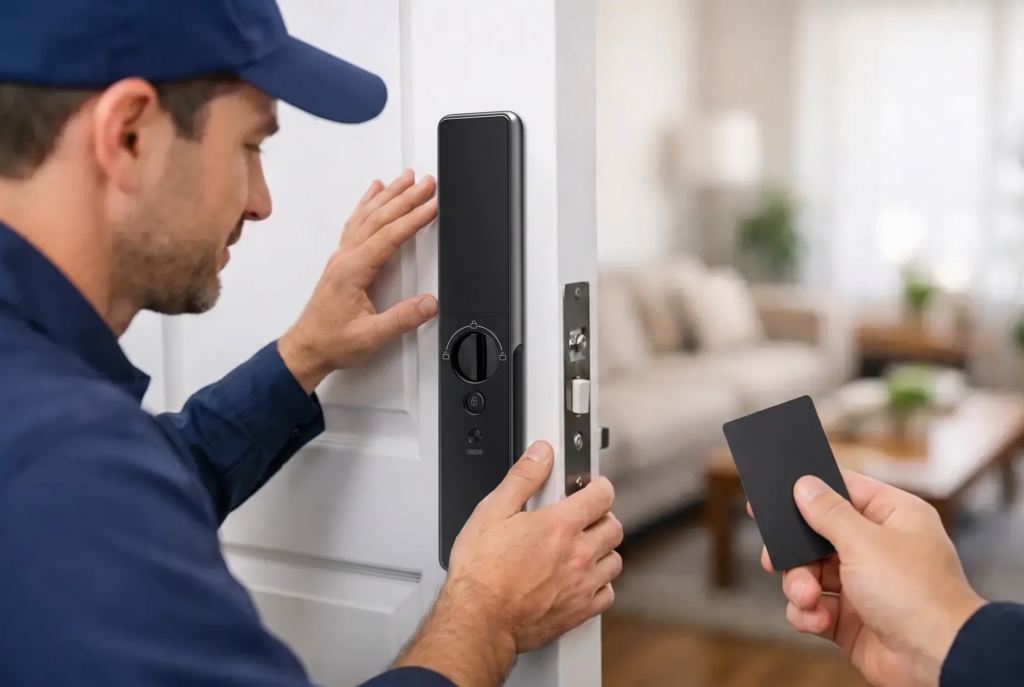
Reliability also comes down to installation. A high-quality lock can perform poorly if the door is misaligned, the strike plate is not properly positioned, or the door thickness is incompatible with the lock body. Professional assessment matters for wooden doors, metal doors, narrow stiles, and doors with existing mortise cutouts. Genesis Singapore approaches smart-lock ownership as a complete service experience, including professional setup and local after-sales support, because hardware and installation need to work as one system.
Match the Lock Type to the Door
There is no universal smart lock category. A fully automatic mortise lock can suit homeowners who want an elevated, touch-free entry experience and automatic locking. A semi-automatic mortise lock may appeal to those who prefer a more familiar manual handle action while gaining biometric and PIN access.
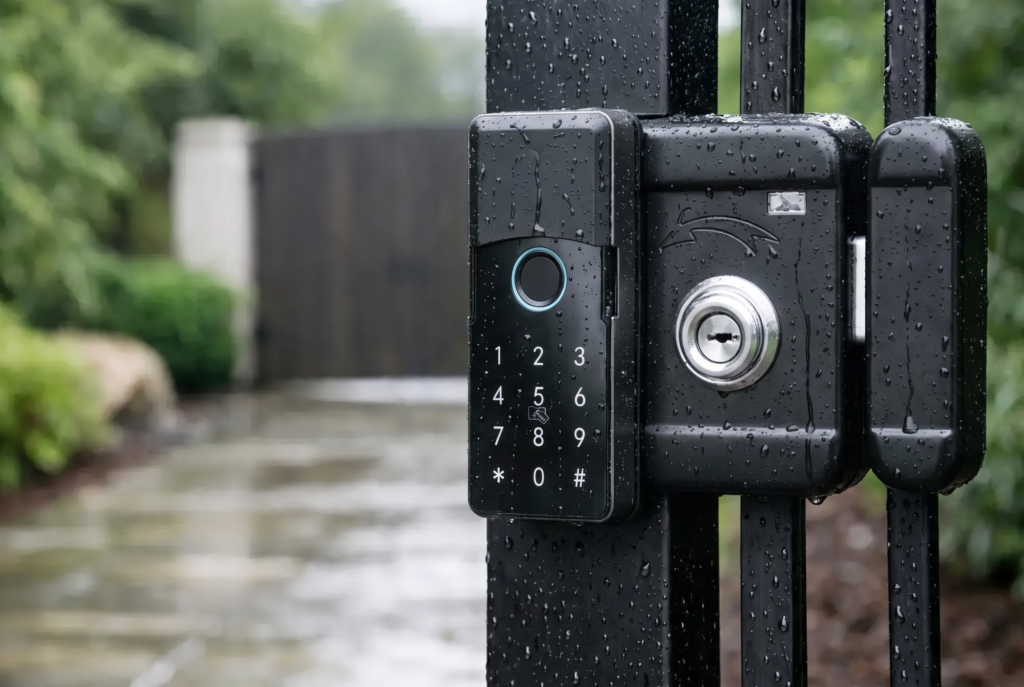
Smart lever locks can be a practical upgrade for bedroom, office, or interior access, depending on the property layout. Gate locks need another level of consideration. They should be designed for outdoor use, with suitable weather resistance and materials that can handle heat, moisture, dust, and frequent operation. An IP rating can be helpful, but it should be considered alongside installation exposure. A covered gate and a fully exposed boundary gate do not face the same conditions.
For homes that want more context around entry, a video doorbell viewer adds a useful second layer. Live viewing, recording support, motion alerts, and two-way audio can help residents identify visitors before granting access. It does not replace a properly fitted lock, but it gives households more information at the decision point.
Questions Worth Asking Before You Buy
Before selecting a lock, confirm whether it fits your door type, thickness, opening direction, and existing handle or mortise configuration. Ask which access methods are included, how many users can be registered, and whether temporary codes require a Wi-Fi connection. Confirm the battery type, warning behavior, emergency-power method, and warranty coverage.
Also ask what service looks like after installation. Smart security should not become a DIY troubleshooting project when a sensor needs adjustment or a household member needs help learning the app. Installation quality, responsive support, and available maintenance can be as valuable as the longest specification sheet.
Choose the features that remove friction from your household without adding complexity you will never use. When the lock fits the door, the app fits your routine, and every family member has a reliable way to enter, smart security becomes a daily comfort rather than another device to manage.