A front door should not turn a late arrival into a search for keys. When your hands are full, children are waiting inside, or a guest needs access while you are away, the lock becomes part of how smoothly your home runs. This mortise lock comparison looks beyond the finish and keypad to help you choose the right level of security, convenience, and professional support for your door.
A mortise lock is built into a pocket cut within the door edge, rather than sitting entirely on the door surface. That internal lock body can support a solid, integrated entry system, but it also means compatibility matters. The right choice depends on your existing door preparation, door thickness, entry habits, and whether you want a traditional lock or connected smart access.
Mortise Lock Comparison: Start With the Lock Body
The most useful comparison begins with construction. A mortise lock uses an internal case containing the latch, deadbolt, or both. The trim, handle, cylinder, keypad, fingerprint reader, and electronics are then fitted around that internal body. Because the primary mechanism sits inside the door, the installation has a clean appearance and can offer a substantial feel when paired with quality hardware.
By contrast, many cylindrical locks use a large bore hole through the door. They can be simpler to replace, but they do not necessarily match a door already prepared for a mortise case. Replacing a mortise lock with the wrong lock type may leave visible openings, require major door work, or compromise the final appearance.
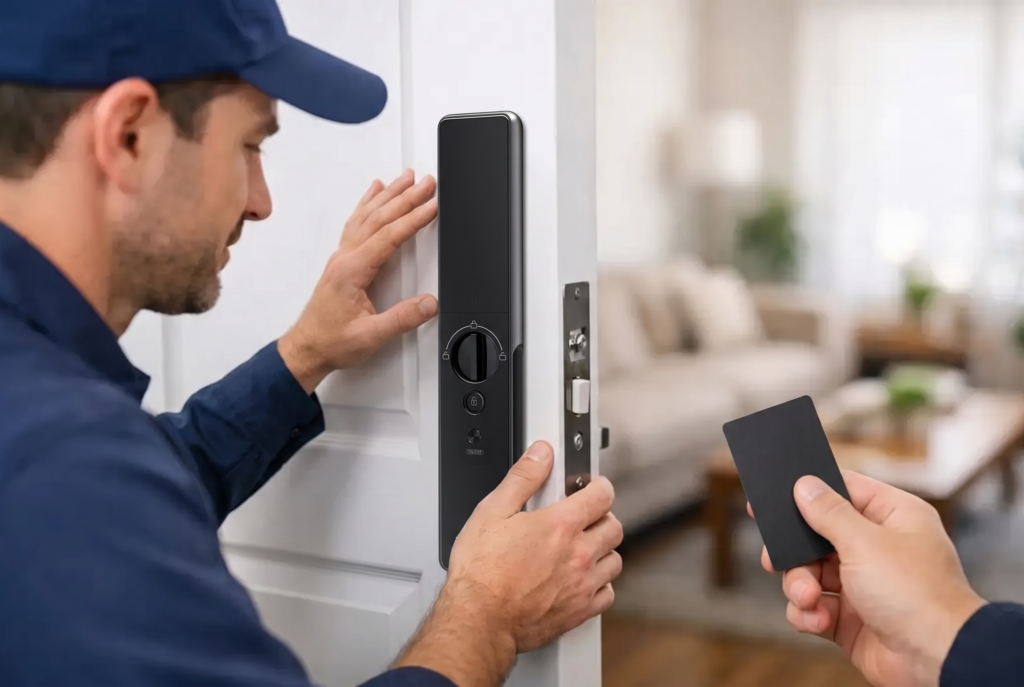
For homeowners, the practical point is simple: do not select a lock based on features alone. Measure the existing mortise pocket, backset, door thickness, handle position, and strike alignment first. A professional assessment prevents the common mistake of ordering a visually appealing smart lock that cannot be fitted properly to the door.
Mechanical, Smart, Semi-Automatic, and Automatic Options
The best mortise lock is not always the one with the longest feature list. Each type solves a different access problem.
Traditional mechanical mortise locks
A mechanical mortise lock is operated by a physical key and handle, often with a separate deadbolt. It remains a practical option for homeowners who want familiar operation, minimal electronics, and a classic door design. There are no batteries to monitor and no app settings to manage.
The trade-off is everyday convenience. Keys can be misplaced, copied without your knowledge, or difficult to distribute when family members, cleaners, contractors, or tenants need temporary access. Rekeying or changing cylinders may be necessary after a lost key or occupancy change.
Smart mortise locks
A smart mortise lock combines the internal mortise body with keyless access methods. Depending on the model, this can include fingerprints, PIN codes, RFID cards, mobile app control, Bluetooth, Wi-Fi connectivity, facial recognition, or a mechanical override key.
This is often the strongest fit for busy households. Family members can enter without carrying keys, and access can be managed more precisely than with a shared physical key. A temporary code can be assigned for a visitor or service provider, then removed when it is no longer needed. App-connected models can also provide access records and remote control features where supported.
Smart features do introduce considerations. Battery-powered locks require occasional battery replacement, Wi-Fi features depend on the home network and model configuration, and biometric performance can vary with placement, user enrollment, and the sensor technology. A quality smart lock should still provide clear low-battery alerts and an emergency access plan.
Semi-automatic mortise locks
A semi-automatic mortise lock usually allows keyless authentication at the exterior, then requires the user to push or pull the handle to open the door. After closing, the door may lock automatically or require a manual action depending on the model and settings.
This style suits homeowners who want fingerprint or PIN convenience without a fully motorized opening experience. It can be a sensible middle ground: quick access, a familiar handle action, and often lower power consumption than a fully automatic system. It is especially appealing when the door already has a handle-oriented layout.
The limitation is small but worth considering. You still need to operate the handle, which may be less convenient when carrying groceries, a child, or several bags. Check whether the lock auto-locks after the door closes and whether the deadbolt engages automatically, since these details shape daily security.
Fully automatic mortise locks
A fully automatic mortise lock uses a motorized mechanism to retract the latch or deadbolt after successful authentication. Once your fingerprint, PIN, card, or approved mobile credential is verified, the door can open with minimal physical effort. Many models also engage locking automatically after the door closes.
For a main entrance used several times a day, this can feel like a meaningful home upgrade rather than a novelty. It is useful for households with children, older family members, or residents who value hands-free convenience. It also reduces the chance that someone enters successfully but forgets to throw a manual deadbolt.
The trade-off is that motorized systems are more complex. Proper installation, door alignment, strike adjustment, and reliable battery management matter more. A door that rubs against its frame or closes under pressure can affect any lock, but it can place extra strain on a motorized mechanism. Choose a provider that can assess the door, install the lock accurately, and support it after installation.
Security Features That Matter More Than a Long Spec Sheet
A premium-looking lock is only as effective as its installation and everyday use. In a mortise lock comparison, focus on the functions that directly affect household protection.
First, consider authentication. Fingerprint access is fast for household members, while PIN codes are useful for people who may not want to enroll biometrics. App-based credentials are valuable for remote access management. A mechanical override should be available for emergencies, but its cylinder and key management still deserve care.
Next, look at locking behavior. Auto-locking can protect against the simple but frequent mistake of leaving a door unsecured. Door-open alerts, incorrect-entry alarms, tamper notifications, and low-battery warnings add another layer of awareness. These are not substitutes for a strong door and frame, but they help homeowners respond sooner when something needs attention.
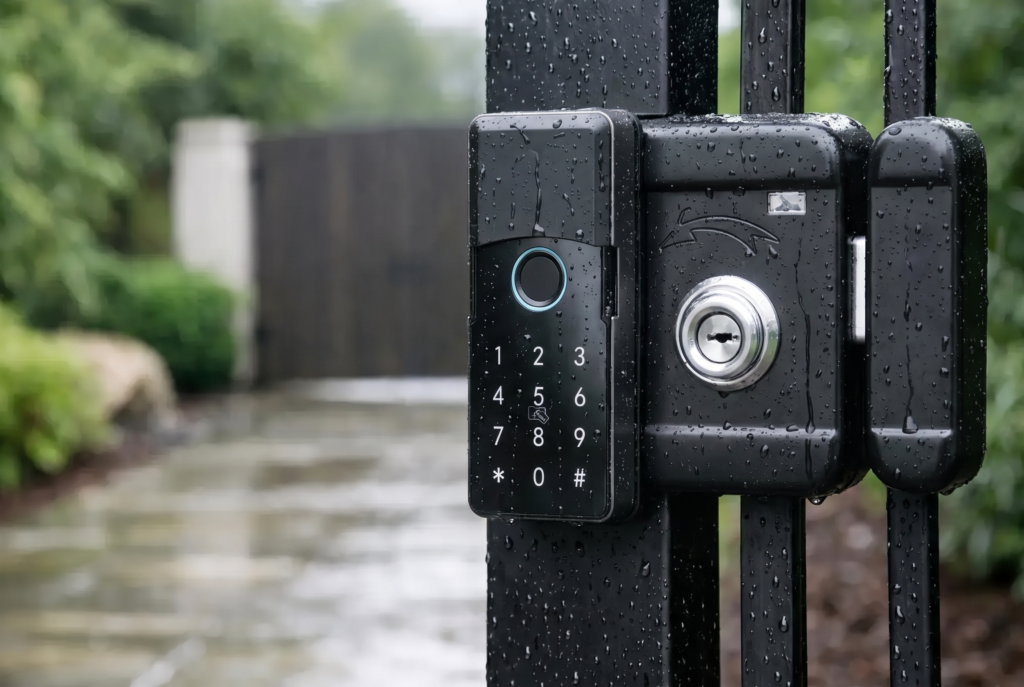
Finally, assess the complete doorway. The strike plate, frame condition, hinges, door material, and weather exposure all influence results. For exterior or gate-adjacent applications, confirm that the chosen device is designed for the expected environment. A lock should fit the property, not force the property to accommodate a poorly matched lock.
How to Match a Mortise Lock to Your Home
For an apartment or single-family home with a frequently used front door, a smart semi-automatic or fully automatic mortise lock is usually worth considering. Choose semi-automatic operation if you prefer a handle-based feel and want keyless entry with a straightforward mechanism. Choose fully automatic operation if hands-free access and automatic locking are central to your routine.
For a rental property or household with changing access needs, prioritize flexible credential management. Temporary PINs, time-limited access, audit records, and simple credential deletion can reduce the inconvenience of collecting keys after a guest or tenant leaves.
For homeowners upgrading an existing mechanical mortise lock, door compatibility should lead the decision. An installer should verify the mortise case dimensions and identify whether modifications are required. A clean, secure installation is more valuable than forcing a particular model onto an unsuitable door.
For a gated property, treat the gate and main door as separate access points with different needs. Gate locks may require greater weather resistance and a different installation approach, while the main entrance may benefit most from biometric entry, app control, and an integrated video doorbell viewer.
Installation and Support Are Part of the Product
Smart access hardware is not a typical do-it-yourself purchase for most homeowners. A lock can have excellent biometrics and app features, yet still disappoint if the latch does not align, the door is not calibrated, or users are not shown how to set up emergency access.
Professional installation should include compatibility checks, physical fitting, function testing, user enrollment, and guidance on battery replacement and override procedures. Local warranty and after-sales service matter as well, particularly for motorized models that are used every day. Genesis Singapore approaches smart locks as a complete home-access solution, combining device selection with installation and continued support.
Choose the mortise lock that makes entry easier without creating uncertainty. When the lock body fits the door, the access methods suit the household, and expert support is available when needed, keyless security becomes a practical part of coming home.