A front door should not become a daily key search. For busy households, a biometric lock review is less about choosing the most futuristic-looking device and more about deciding whether the lock will recognize the right person quickly, protect the home reliably, and fit the way your family actually comes and goes.
Fingerprint access can make the morning school run, grocery delivery, dog walking, and late arrival home noticeably easier. But not every biometric lock offers the same experience. Sensor quality, lock construction, backup entry methods, installation, and local support all shape whether a smart lock feels like a smart upgrade or another device to manage.
What a biometric lock should do well
At its core, a biometric lock verifies identity through a physical trait, most commonly a fingerprint. Instead of carrying keys or remembering a code, registered users place a finger on the reader to enter. Many residential models also combine fingerprints with PIN codes, RFID cards, mobile app control, and mechanical emergency keys.
That combination matters. A fingerprint reader is convenient, but a household security system should never rely on only one way to enter. A well-specified lock gives family members practical alternatives for wet fingers, an injured hand, a temporary guest, or a low battery alert.
For most homes, the best configuration is fingerprint access for daily use, PIN codes for family and visitors, and a protected emergency option for rare contingencies. App access adds another layer of control, especially when homeowners need to issue temporary credentials or review access activity.
Biometric lock review: the features that matter
A polished finish and a large touchscreen can be appealing, but the details below are what separate a dependable residential lock from a disappointing one.
Fingerprint speed and consistency
The fingerprint sensor should recognize enrolled users promptly without repeated attempts. This is particularly valuable when a parent is carrying groceries, a child is returning from school, or rain is coming down at the gate.
No fingerprint system is perfect. Very dry skin, moisture, dirt, and shallow fingerprints can affect recognition. The practical test is whether the lock includes enough alternate access methods and whether multiple fingers can be enrolled for each regular user. Enrolling a thumb and index finger, for example, gives each household member a sensible fallback.
Families with young children or older relatives should pay special attention here. A high-quality sensor can be easier for them to use, but a PIN or card credential may still be the better everyday choice for certain users.
Lock type and door compatibility
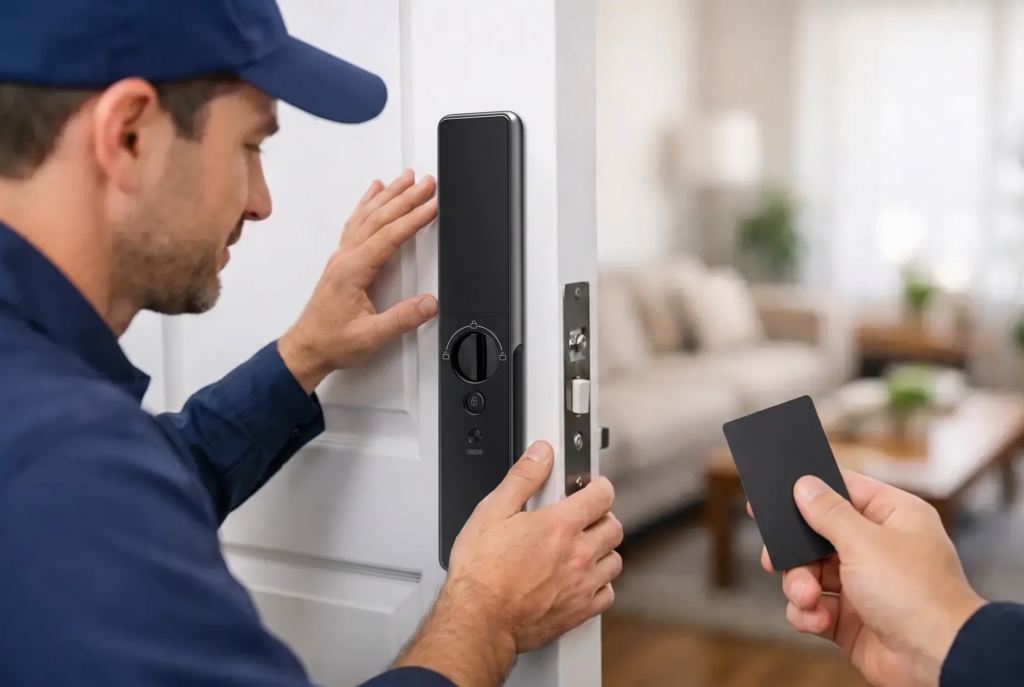
A biometric reader is only one part of the system. The lock body must suit the door, existing cutouts, door thickness, handing, and your preferred level of automation. A mortise lock can provide a more integrated, substantial setup for a main door, while a smart lever lock may suit a different interior or side-door application.
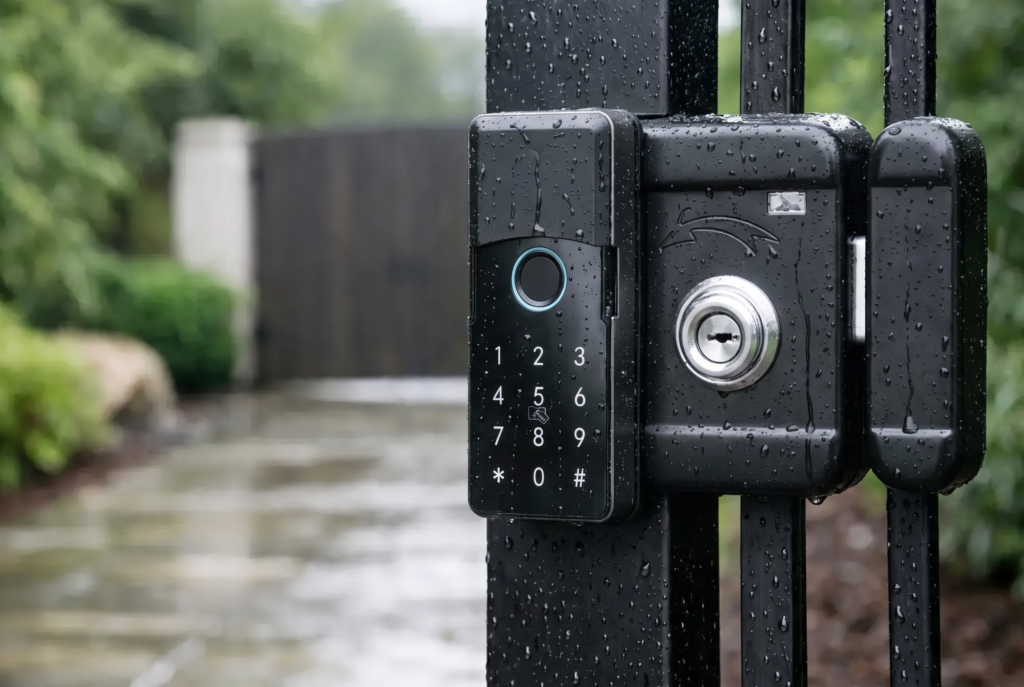
For gates, outdoor suitability becomes central. A gate lock must handle exposure to heat, humidity, rain, and dust. Look for weather-resistance specifications, secure mounting, and access options that remain practical from both sides of the gate. A device designed for an indoor apartment door is not automatically the right choice for an exposed landed-home entrance.
Professional assessment before installation prevents common mistakes, such as selecting a model that conflicts with a gate frame, a door closer, or existing hardware. It also ensures the door closes and latches correctly, which is essential for any electronic lock to provide meaningful protection.
PIN, card, app, and emergency access
Biometrics should make entry simpler, not remove your options. PIN access is useful for housekeepers, visiting relatives, contractors, and tenants because it can be changed without collecting a physical key. Some systems support temporary or scheduled codes, helping owners limit access to a specific time window.
Mobile app control is especially useful when paired with clear credential management. Homeowners can add or remove users without rekeying a cylinder, while landlords and property managers can avoid the uncertainty of copied keys after a tenant changes.
Check how the lock handles emergencies. Battery-powered locks generally provide low-battery warnings well before the power runs out, and many include an external emergency power connection. Understand where that connection is located, what backup method is available, and how the mechanical key is stored. Security is strongest when the household knows the backup plan before it needs one.
Access records and connected controls
Wi-Fi or gateway-enabled locks can provide access notifications and activity records through an app. These features can give homeowners useful visibility, such as knowing when a child arrives home or confirming that a service provider entered during an approved window.
However, connected features should match the household’s needs. If the priority is simply keyless entry for family members, a standalone biometric lock may be sufficient. If remote credential management, event history, and monitoring matter, app connectivity is worth considering.
For homeowners who want a more complete entry setup, a video doorbell viewer can complement the lock with live video, recording support, motion alerts, and two-way communication. The lock manages access, while the viewer helps establish who is at the door before access is granted.
Security is more than the fingerprint reader
A biometric lock adds convenience, but it should also be evaluated as physical door hardware. Look at the strength of the lock body, the quality of the mortise or deadbolt mechanism, the fit of the strike plate, and how securely the unit is mounted. A premium sensor cannot compensate for a poorly aligned door or weak installation.
Privacy also deserves attention. Homeowners should understand what information is stored by the lock and its app. Reputable systems typically store fingerprint templates rather than ordinary fingerprint images, but buyers should still ask how user data, activity records, and app accounts are managed.
For shared homes, establish simple access rules. Remove old credentials when a helper or tenant no longer needs entry. Avoid using obvious PINs such as birthdays or unit numbers. Keep emergency keys in a secure, intentional location rather than hiding them near the door.
Installation and support change the ownership experience
A smart lock can look straightforward in a product video, yet installation affects nearly every part of its performance. Precise alignment determines whether the latch engages cleanly. Correct fitting protects the door finish. Proper setup ensures that fingerprints, PINs, app controls, auto-lock settings, and alerts work as intended from day one.
This is why full-service providers can be a practical choice rather than an optional extra. Genesis Singapore pairs connected access products with professional installation, warranty coverage, and local after-sales support, which is particularly reassuring for homeowners replacing a primary door or gate lock.
Ask what the service includes before purchase. Confirm whether the installer will assess compatibility, remove existing hardware, demonstrate enrollment, explain battery replacement, and provide a clear path for support after installation. The right answer varies by property, but the goal is the same: a lock that works reliably without turning the homeowner into a technician.
Who benefits most from a biometric lock?
Biometric locks are a strong fit for households that regularly juggle keys, share access among family members, or want to stop issuing spare keys. They are also useful for homeowners with cleaners, caregivers, or contractors who need limited access, and for landlords who want faster credential changes between occupants.
They may be less compelling for a household that rarely shares access, has a door incompatible with available lock formats, or prefers an entirely mechanical setup. Smart security is not automatically better because it has more features. It is better when the access methods, hardware design, and support model fit the property and the people using it.
Before choosing, picture an ordinary week at home. Consider who enters, when they arrive, whether they need temporary access, and what happens if the battery is low or a fingerprint is not recognized. The best biometric lock is the one that makes those everyday moments feel controlled, simple, and secure.