A sliding patio door is often the most-used entrance to a backyard, balcony, or pool area, yet its narrow frame and horizontal latch work very differently from a front door. So, can smart locks fit sliding doors? Yes, but only when the lock is designed for a sliding-door configuration and the door itself provides the right structure for secure installation.
The best result is not simply adding technology to an existing latch. It is choosing a smart access solution that suits the door material, panel movement, frame dimensions, and the way your household uses that entrance. With the right hardware and professional setup, a sliding door can offer convenient keyless entry without compromising everyday security.
Why Standard Smart Locks Usually Do Not Fit
Most smart locks for hinged entry doors replace a deadbolt, lever, or mortise lock. They are built around a door that swings inward or outward and has enough faceplate width for a lock body, keypad, fingerprint reader, and battery compartment.
A sliding door operates on a different principle. Its panel moves sideways, and its locking point typically hooks into a strike on the opposing jamb. A conventional deadbolt cannot extend into place as the panel slides, and a bulky lock can interfere with the door frame, screen door, blinds, or handle clearance.
That does not mean sliding doors are excluded from smart-home access. It means homeowners need a purpose-built sliding door smart lock or a compatible replacement system, rather than a standard front-door model.
Can Smart Locks Fit Sliding Doors of Every Type?
It depends on the style and construction of the door. Sliding glass patio doors are the most common candidates, particularly when they have a sturdy aluminum, steel, or reinforced vinyl frame and an existing mortise-style lock. An installer can assess whether the current handle and locking cutout can support a compatible smart lock body.
Not every sliding door is a suitable match. Lightweight interior bypass doors, closet doors, and many pocket doors do not have the frame strength or strike arrangement required for a secure access-control lock. These doors may benefit from privacy hardware or separate home-automation solutions, but they are not usually appropriate for exterior-grade smart locking.
For exterior sliding doors, compatibility often comes down to several physical details:
- The frame profile and available mounting depth
- The existing lock type, including mortise dimensions and handle spacing
- The condition and alignment of the sliding panel and fixed jamb
- Clearance around the handle, screen door, curtains, or blinds
- The door material and whether it can securely hold the mounting hardware
A site assessment is valuable because measurements alone do not show whether the panel is dragging, the latch is misaligned, or the frame has shifted over time. Smart locking hardware works best when the door already closes cleanly and consistently.
The Smart Lock Options That Work Best
Purpose-Built Sliding Door Smart Locks
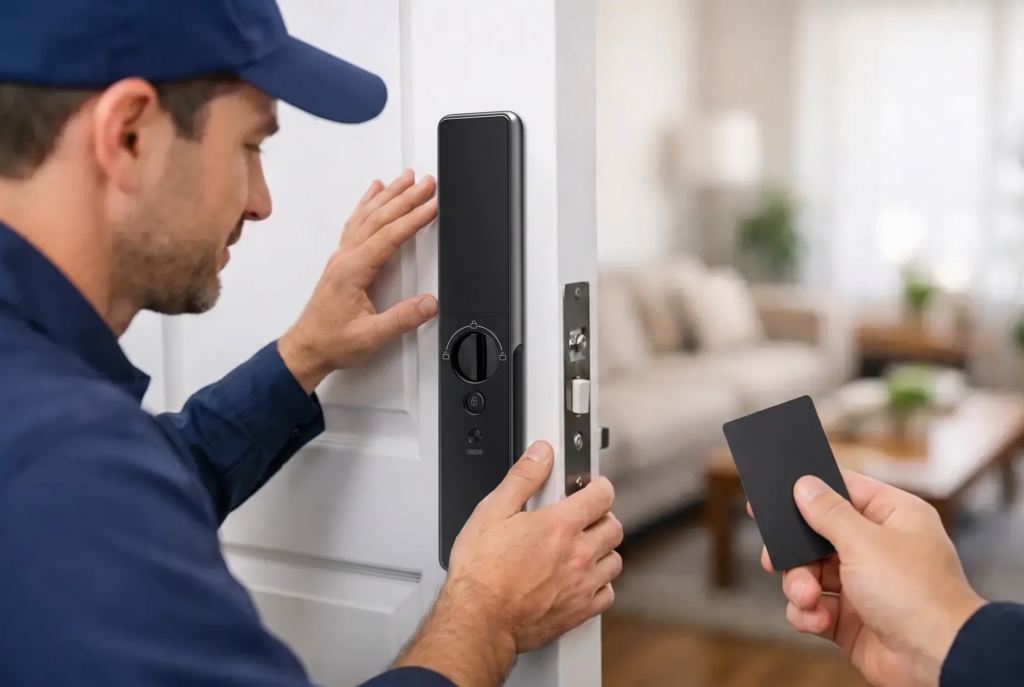
A dedicated sliding door smart lock is the most direct option. These systems are engineered to work with a hook bolt or compatible sliding-door mortise mechanism, allowing the lock to secure the panel against the jamb without blocking its travel.
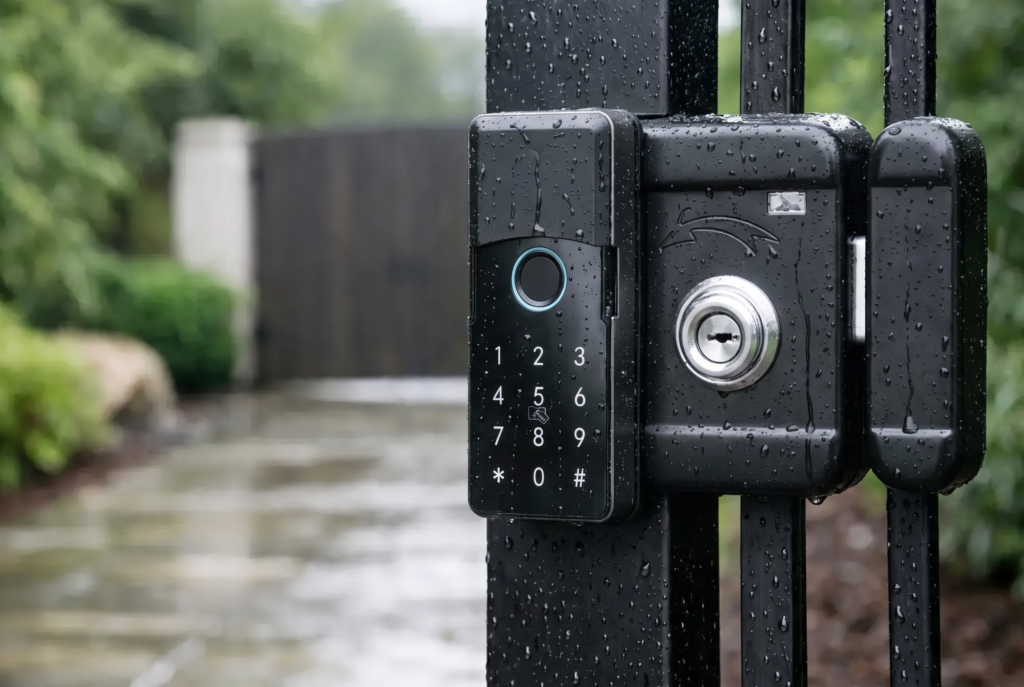
Depending on the model, access may include fingerprint recognition, PIN codes, RFID cards, mobile app control, mechanical key override, or remote access through Wi-Fi connectivity. This is especially practical for a patio entry used by family members, caregivers, cleaners, or guests who need temporary access.
The key consideration is that the smart lock must match both the door’s existing mortise preparation and its frame geometry. A lock that looks suitable from the front may still be incompatible with the internal lock case or strike position.
Smart Mortise Lock Conversions
Some sliding doors use a mortise lock body that can be upgraded with a compatible smart mortise solution. This approach can preserve the clean, integrated appearance of the door while adding modern access features.
Mortise configurations vary considerably, however. Backset, handle height, lock case depth, and hook-bolt positioning all matter. A professional installer should confirm the specifications before recommending a model. For homeowners, that prevents the common frustration of purchasing a device that cannot be securely fitted after the old hardware is removed.
Secondary Smart Security for Existing Sliding Doors
If a full replacement lock is not compatible, a secondary solution may still improve control over the entry point. Options can include smart sensors that send alerts when the door opens, integrated alarm systems, or reinforced secondary locks designed to prevent unwanted movement of the panel.
This approach does not always provide keyless entry at the door itself, so it is better suited to households that mainly want monitoring or added protection. It can be a sensible choice for older doors where a full smart lock installation would require major modifications.
Security Features Worth Prioritizing
A sliding door often faces a garden, patio, deck, or side yard, where activity may be less visible than at a front entrance. That makes secure construction and access management more important than a keypad alone.
Look for a lock system with a secure latch or hook mechanism that properly engages the strike, as well as tamper alerts or incorrect-entry protection where available. Fingerprint access adds speed for household members while reducing dependence on physical keys. PIN codes are useful for visitors and service professionals because they can be changed or removed when access is no longer needed.
Mobile-app control can add another layer of visibility. Depending on the system, homeowners may review access activity, receive door-status notifications, or issue temporary credentials. For homes with a sliding patio door that doubles as a daily family entrance, those features bring meaningful convenience.
Battery planning matters as well. Most residential smart locks run on batteries, so choose a model with low-battery alerts and an emergency power option. A dependable mechanical override is also worth having for unexpected situations.
Installation Matters More Than Most Homeowners Expect
A smart lock cannot compensate for a poorly aligned sliding door. If the panel does not sit correctly in its track, the locking hook may not meet the strike at the required angle. Repeated forcing can affect both the lock and the door hardware.
Professional installation starts with the basics: checking the rollers, panel alignment, frame condition, lock cutout, and latch engagement. The installer then mounts the correct lock body, verifies that the door slides freely, programs access methods, and tests the locking operation from both sides.
This is also the right time to consider the wider entry setup. A video doorbell viewer or outdoor camera can help cover approaches to a patio or side entrance. For homes with multiple connected access points, using compatible smart-security devices makes daily management simpler and gives household members a clearer view of who is entering and when.
When a Sliding Door Smart Lock Is a Good Investment
A smart lock is particularly useful when the sliding door is a regular access point rather than an occasional exit. Families may use it after school, while bringing groceries in from the car, or when moving between indoor and outdoor living spaces. Keyless entry avoids the familiar problem of searching for a key while carrying bags, managing children, or returning from the yard.
It can also help landlords and property managers who need to grant and remove access without collecting physical keys. For a vacation property, guest suite, or rental unit with a compatible sliding entry door, temporary passcodes can offer more control than keys that may be copied or misplaced.
The investment may be less appropriate when the sliding door is rarely used, badly worn, or scheduled for replacement. In those cases, repairing the door first or choosing a monitoring solution may provide better value. Security upgrades should work with the home, not force an unsuitable product onto it.
Questions to Ask Before Choosing a Model
Before selecting a smart lock for a sliding door, ask whether it is specifically rated for sliding-door use, whether it matches your current lock preparation, and how it performs in the local environment. Exterior doors may be exposed to direct sun, humidity, rain, dust, or salt air, so weather resistance and hardware durability should be part of the decision.
Also ask how access will be managed. A fingerprint reader may be ideal for a busy household, while PIN codes and app-based permissions may matter more for rental owners. If remote operation is a priority, confirm the required connectivity setup and what functions remain available if Wi-Fi is temporarily unavailable.
Most importantly, have the door assessed before committing to a model. Genesis Singapore’s approach to smart access emphasizes matching the right lock category to the entry point, then supporting it with proper installation and service. That is the difference between a feature-packed device and an access solution that performs reliably every day.
A well-chosen smart lock can turn a compatible sliding door into a more convenient, controlled household entrance. Start with the door’s construction, choose hardware designed for its movement, and let secure installation guide the final decision.