A worn key, a sticky deadbolt, or an extra copy floating around with a former tenant can turn a familiar front door into a daily concern. Many homeowners decide to replace mechanical locks after a problem appears, but an upgrade can also be a practical way to gain better control over who enters your home, when they enter, and how access is managed.
A modern smart lock does more than remove the need to carry keys. It can give family members fingerprint access, let you issue a temporary code to a visitor, and help you confirm that the door is secured from an app. The right choice depends on your door type, household routine, security expectations, and whether you want a simple keyless lock or a more connected access-control system.
Signs It Is Time to Replace Mechanical Locks
Mechanical locks can remain reliable for years when they are properly installed and maintained. The question is not whether every traditional lock is unsafe. It is whether it still gives your household the level of security and convenience you need.
Physical wear is the clearest reason to make a change. If the key must be jiggled, the cylinder catches, the latch does not align cleanly, or the handle feels loose, the lock may no longer perform consistently. A door that does not close or latch smoothly can also place unnecessary strain on a new lock, so the door alignment should be assessed during installation.
Access control is another common trigger. Re-keying is sensible after a move, lost key, or change in household staff. However, frequent key handoffs can become difficult to track. A spare key given to a cleaner, contractor, dog walker, or relative may be copied without your knowledge. Smart locks replace that uncertainty with individual fingerprints, passcodes, cards, or app-based access, depending on the model.
Homeowners also upgrade when keys create friction. A parent arriving with groceries, a child returning from school, or an older family member who struggles with small keys all benefit from simpler entry. Keyless access is not merely a technology feature. It can make the front door easier to use every day while keeping entry permissions more organized.
What You Gain When You Replace Mechanical Locks
A traditional lock is designed around one credential: the physical key. A smart lock can offer several secure ways to enter, which gives a household more flexibility without leaving the door dependent on a single method.
Fingerprint access is especially useful for immediate, no-key entry. Quality biometric locks are designed to recognize authorized users quickly, making them a strong choice for busy families. Passcodes provide another option for people who do not need permanent credentials, while RFID cards can suit users who prefer a simple tap-to-enter experience.
With Wi-Fi or app-compatible models, remote control adds another layer of confidence. You may be able to check lock status, receive activity notifications, lock the door from a distance, or create time-limited access for a guest. These features are valuable when your routine changes, but they should support good security habits rather than replace them. Use strong app passwords, keep your phone protected, and remove access permissions when they are no longer needed.
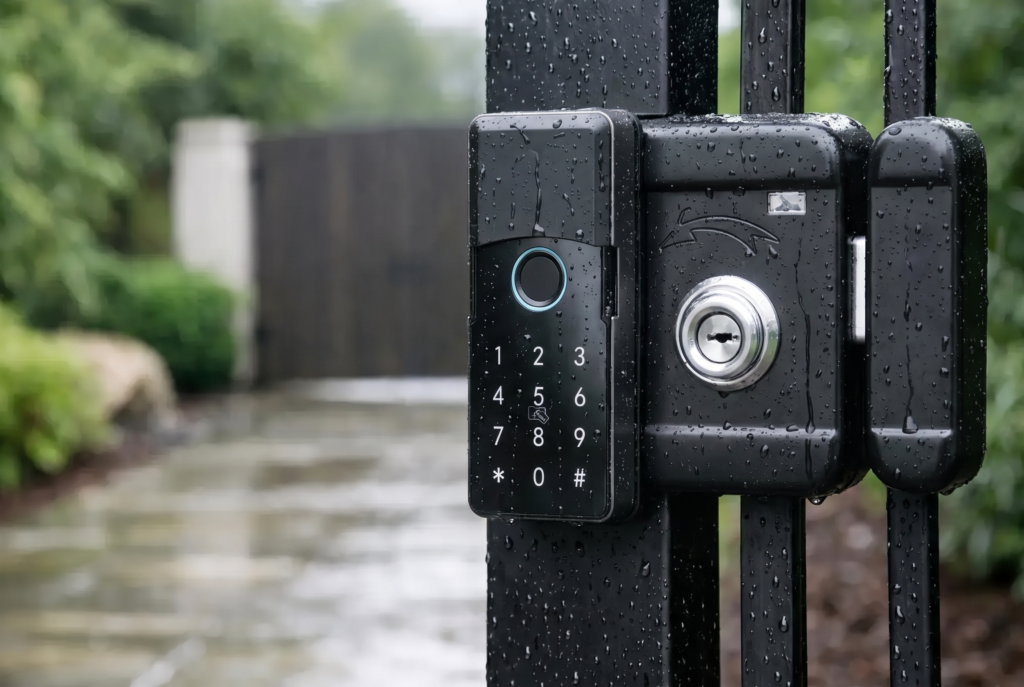
For front entrances, a video doorbell viewer can complement a smart lock by adding live viewing, recorded footage, motion alerts, and two-way audio. This is useful when a delivery arrives or someone rings while you are away. For homes with gates, a weather-resistant smart gate lock can extend controlled access beyond the front door.
Choose the Right Smart Lock for Your Door
The best replacement is not always the lock with the longest feature list. It is the model that fits your door and the way your household lives.
Main Door and Mortise Lock Upgrades
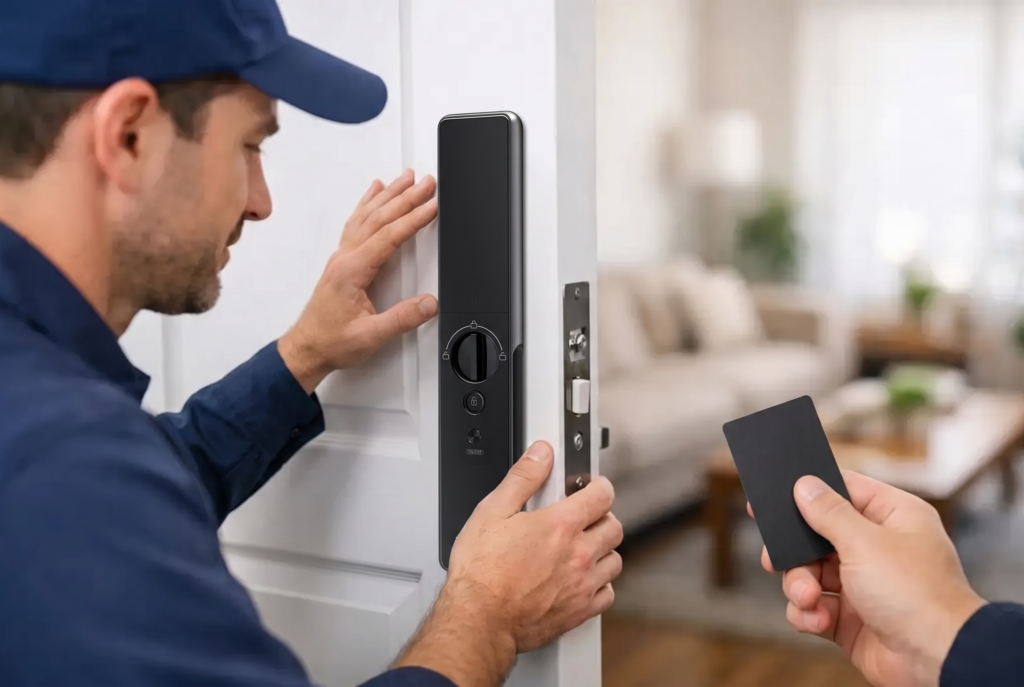
Many homes use a mortise lock body integrated into the door. Replacing this type of hardware often calls for a compatible smart mortise lock, particularly when you want to retain a handle-and-latch configuration. Fully automatic mortise locks can engage the locking mechanism automatically after the door closes, while semi-automatic versions may require a deliberate handle action or command to lock.
Automatic locking can provide welcome reassurance for households where someone occasionally leaves in a rush. Still, it must be configured carefully. Families should understand the door’s locking behavior before relying on it, especially if children, pets, or people inside the home may need to exit quickly.
Deadbolt and Lever Lock Upgrades
A smart deadbolt can be a practical option for doors with a separate deadbolt above an existing handle. A smart lever lock may be better for interior access points, side doors, or entrances where a lever is already part of the current setup. Door thickness, backset, swing direction, and the condition of the frame all affect compatibility.
Do not assume a smart lock is a universal swap. A professional site assessment helps identify whether a new lock can use existing door preparation or whether adjustments are needed for clean operation and a premium finish.
Gate and Outdoor Access
Outdoor gates require more than a standard indoor smart lock. The device should be designed for exterior exposure and selected with attention to weather resistance, gate material, electrical requirements, and the way visitors approach the property. For a gated home, the strongest setup may combine a smart gate lock with a separate main-door lock and video monitoring.
That layered approach lets you manage perimeter access and household entry separately. It is especially helpful for deliveries, service visits, and properties with multiple family members coming and going.
Security Features Worth Prioritizing
When comparing options, focus first on the features that improve real household use. A dependable lock should offer secure authentication, a practical backup method, low-battery alerts, and clear status feedback. Emergency power capability can also be valuable if batteries are depleted before they can be replaced.
Biometrics should be fast but not frustrating. App control should be simple enough to manage without needing technical expertise. For homes with several users, look for the ability to add and remove credentials individually instead of sharing one household code.
The physical side matters just as much as the digital side. A quality lock needs a secure fit, a properly aligned strike plate, and a door that closes correctly. Smart features cannot compensate for a weak door frame or damaged hinges. If the door itself is aging, warped, or poorly aligned, address those issues as part of the project.
Why Professional Installation Makes a Difference
Smart locks are consumer-friendly, but door hardware is precise. A lock can appear installed correctly yet perform poorly if the latch is misaligned, mounting screws are overtightened, or the door preparation does not match the model. Problems such as false lock alerts, stiff handles, incomplete latching, and excessive battery use can begin with installation details.
Professional installation helps ensure the lock is matched to the door, calibrated correctly, and tested across every entry method. It also gives homeowners a proper handover: how to enroll fingerprints, create access codes, use app functions, replace batteries, and respond to low-battery notifications.
This is where a full-service provider such as Genesis Singapore adds value beyond the device itself. Product selection, installation, warranty support, and maintenance guidance create a more dependable ownership experience than treating home security as a do-it-yourself hardware purchase.
A Better Way to Plan Your Lock Upgrade
Before choosing a model, think through the people and moments that matter most. How many regular users need access? Do you need separate permissions for guests or service providers? Is remote control useful, or would fingerprint and passcode entry cover your routine? Are you upgrading one door, a gate, or the entire access path to your home?
Also consider your preferred backup plan. Many homeowners want multiple entry methods so that a dead phone, forgotten code, or low battery does not disrupt the day. The right combination may include fingerprint recognition for family, temporary passcodes for visitors, app control for remote management, and emergency power support for reassurance.
Replacing a mechanical lock is a small change at the door, but it can improve how your household moves through the day. Choose a lock that fits your property, make installation part of the decision, and set up access around the people you trust most.