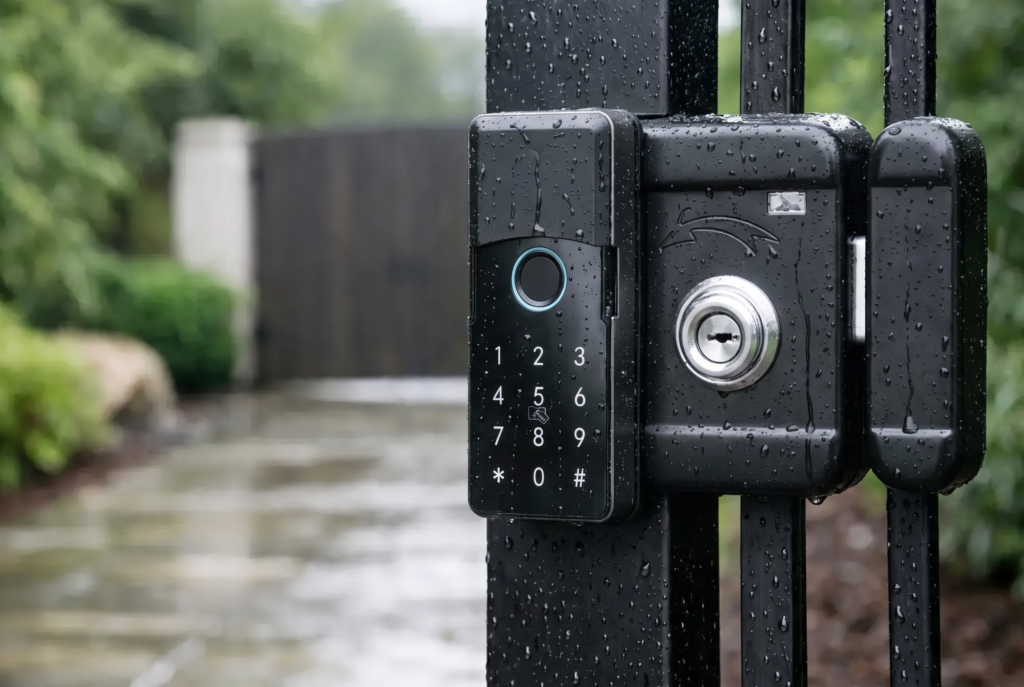
A gate lock can face far harsher conditions than a front-door lock. It may sit through wind-driven rain, road dust, sprinkler overspray, humidity, and daily temperature changes. So, what is IP65 gate protection? It is an enclosure rating that tells you a smart gate lock or access device has been designed to keep out dust and withstand water jets from any direction under defined test conditions.
For homeowners choosing keyless gate access, IP65 is a meaningful indicator of weather readiness. It helps protect the electronic components behind fingerprint readers, keypads, batteries, and connected controls. But the rating is only one part of a dependable outdoor security setup. The lock design, gate material, mounting position, drainage, and professional installation all matter too.
What Is IP65 Gate Protection?
IP stands for Ingress Protection. The rating comes from the IEC 60529 standard, which classifies how well an electrical enclosure resists entry by solid particles and water. The two numbers in IP65 each describe a different type of protection.
The first number, 6, is the highest dust-protection level in the standard. An IP6X-rated enclosure is dust-tight, meaning dust should not enter in a quantity that could interfere with normal operation or safety. This matters at a gate, where fine particles can collect around moving parts, fingerprint sensors, keypad edges, and cable entry points.
The second number, 5, means the enclosure can resist water projected by jets from any direction. In practical terms, an IP65-rated smart gate lock is built for rain and ordinary outdoor washdown exposure. It is a better fit for an exposed residential gate than a device intended only for sheltered indoor use.
That said, IP65 does not mean waterproof under every condition. It does not mean the device can be submerged, left in standing water, sprayed with a high-pressure cleaner at close range, or exposed to steam cleaning. A rating is a tested boundary, not a promise that a lock is immune to every form of water exposure.
Why IP65 Matters for a Smart Gate Lock
A traditional padlock may have few electronic components to protect. A smart gate lock can include a fingerprint scanner, touch keypad, motorized latch, circuit board, battery compartment, wireless antenna, and emergency power contacts. Each of these components benefits from an enclosure that keeps contaminants out.
An IP65 rating supports reliable everyday use when your gate is exposed to rain, dust, and splashes. It can reduce the chance that moisture reaches sensitive electronics and causes unreliable fingerprint recognition, keypad issues, corrosion around contacts, or power interruptions.
For households using app-based access, PIN codes, RFID cards, or biometrics, weather protection is also a convenience feature. Your family should be able to enter through the gate without returning to physical keys because a sudden downpour affected the lock. A properly selected outdoor smart lock helps preserve the frictionless entry experience that makes connected access worthwhile.
The benefit is especially relevant for side gates, driveway gates, garden entrances, pool access gates, and other locations that receive direct weather exposure. Even a covered gate can be affected by wind-blown rain, condensation, or water bouncing off nearby surfaces.
What IP65 Protects Against – and What It Does Not
The most useful way to evaluate IP65 is to understand its limits before installation. It is a strong rating for typical residential outdoor exposure, but it should not be treated as an all-weather guarantee.
IP65 protection is generally suitable for dust, rain, splashing water, and water jets from a garden hose or cleaning process when used reasonably. It is not the same as IP67 or IP68, which include temporary or continuous immersion testing. If a gate lock is installed near a low point where water pools after storms, an IP65 rating alone will not solve that placement problem.
It also does not automatically address salt air, chemical cleaners, UV fading, physical impact, or corrosion of the gate itself. Homes near the coast may need extra attention to material finishes, exposed screws, hinges, and maintenance intervals. A lock’s IP rating speaks to ingress into its enclosure, not every environmental risk around it.
Water resistance can also depend on the lock being assembled and installed correctly. An open battery cover, damaged gasket, loose screw, cracked housing, or improperly sealed cable opening can compromise protection. If the product includes a charging port, mechanical key cover, or wiring connection, those areas need to be closed and secured exactly as intended.
IP65 Is Not the Same as Outdoor Reliability
A weather rating is a valuable starting point, but a gate lock needs to work as a complete system. The gate must close and align consistently, the latch or mortise must engage without excessive force, and moving sections must not pull on cables or strike the lock body.
For example, a heavy metal gate that sags over time can place stress on a smart lock’s bolt. An automatic sliding gate may require access-control planning that differs from a pedestrian swing gate. A lock can be IP65-rated and still perform poorly if it is fitted to a gate with poor alignment or an unsuitable lock position.
Power planning matters as well. Battery-operated smart locks offer flexibility where wiring is inconvenient, but homeowners should understand the expected battery life, low-battery alerts, emergency power option, and manual backup access. If a lock connects to Wi-Fi or a gateway, the installer should also confirm that the wireless signal reaches the gate reliably.
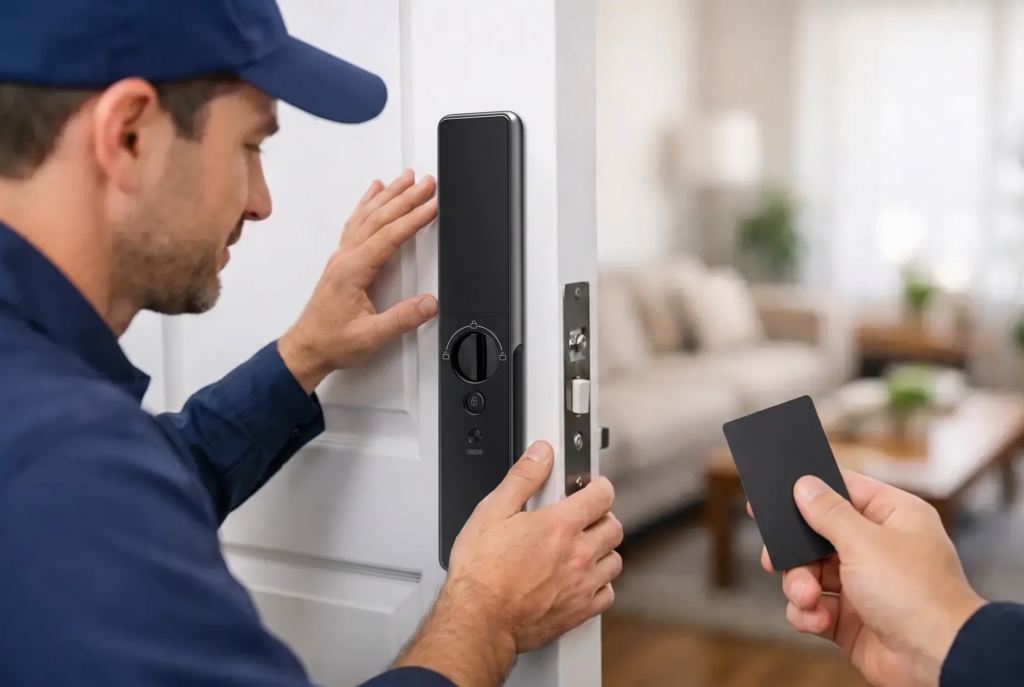
These details are why professional setup is valuable for exterior access control. The goal is not simply to attach a lock to a gate. It is to create dependable entry for the people you authorize while keeping the gate secure in real conditions.
Choosing an IP65 Gate Lock for Your Property
Start by looking at the actual exposure of your gate. A sheltered apartment entry gate may only receive occasional rain, while a landed-home driveway gate may face direct sun, storms, dust, and irrigation every week. The more exposed the location, the more carefully you should consider the device rating, materials, and placement.
Then think about how your household enters. Fingerprint access can be ideal for family members who want to leave keys behind. PIN codes are useful for guests and service providers, while app controls can make it easier to manage access remotely. For rental homes or properties with regular visitors, temporary access credentials can provide more control than copying physical keys.
The lock type should match the gate construction. A narrow metal frame, solid wooden gate, glass-adjacent panel, or existing mortise cutout may each require a different hardware approach. Do not choose based on the IP rating alone. Confirm the lock is compatible with the gate thickness, opening direction, latch arrangement, and available clearance.
For a connected security system, it is also worth considering whether a video doorbell viewer or camera can complement the gate lock. Seeing who is at the entrance before granting access adds another layer of confidence, particularly when deliveries or visitors arrive while no one is near the gate.
Place the Lock to Reduce Unnecessary Exposure
Even an IP65-rated device benefits from smart placement. Where possible, mount the lock so water drains away from the housing instead of collecting around seams, buttons, or the lower edge. Avoid locations directly beneath a roof runoff point or beside a sprinkler head.
A small canopy or properly designed gate cover can reduce long-term exposure without interfering with operation. The point is not to hide an outdoor lock from weather completely. It is to avoid preventable water concentration and repeated direct impact from runoff.
Protect the Electronics During Cleaning
Routine cleaning should be gentle. Wipe the exterior with a soft, lightly damp cloth and use only cleaning methods approved for the specific device. Do not aim a pressure washer closely at fingerprint readers, keypad borders, seams, battery covers, or emergency power contacts.
If you notice condensation behind a display, a loose cover, damage to a gasket, or unreliable access after severe weather, arrange an inspection rather than waiting for a full failure. Early service can help preserve both security and convenience.
The Practical Takeaway for Homeowners
IP65 gate protection is a strong sign that a smart lock is intended for dusty, rainy outdoor conditions. It gives homeowners more confidence that the electronics are protected during normal gate use, but it does not replace correct product selection, proper installation, and simple maintenance.
When comparing smart gate locks, ask how the device will handle your specific gate, exposure level, access preferences, and household routine. The right solution should feel easy every day: your family can enter with the access method that suits them, visitors can be managed with greater control, and the hardware is prepared for the weather outside your home. A well-planned IP65 setup turns the gate from a daily inconvenience into a dependable first layer of connected home security.