The school-run rush is where a front-door lock proves its value. One parent has groceries, another family member is arriving home, and a child has forgotten a key again. The best lock features for families remove that daily friction without asking you to compromise on protection. The right system gives each person a simple way to enter, lets you see who is at the door, and keeps you in control when plans change.
For most households, a smart lock is not about adding technology for its own sake. It is about replacing a shared, easily lost mechanical key with access that fits real family routines. The best choice depends on your door, household size, whether you have a gate, and how much remote visibility you want. Start with the features that solve the situations your family faces most often.
Best Lock Features for Families: Start With Easy Access
A lock has to work quickly enough that everyone in the household will actually use it. Biometric fingerprint access is one of the strongest options for family homes because it is personal, fast, and removes the need to carry a key. Parents can register their own prints, while older children, grandparents, or trusted caregivers can have their own authorized fingerprints.
Fingerprint access is especially practical when hands are full or when someone comes home after sports, school, or a walk with the dog. Look for a lock that stores multiple fingerprints and is designed to recognize a print consistently, rather than requiring repeated attempts at the door. It is wise to register more than one finger for each regular user. A minor cut, dry skin, or a wet finger should not leave someone standing outside.
A PIN code remains an excellent backup and may be the preferred option for teenagers or visitors who do not need permanent biometric access. Choose a lock that supports individual codes instead of one household-wide code. That way, a code can be changed or removed for one person without forcing the entire family to learn a new number.
Cards, tags, and mechanical emergency keys can also be useful fallback methods. They are not the main event, but a family lock should offer reliable alternatives. Technology should give your household more choices at the door, not create a single point of failure.
Temporary Access Makes Household Life Easier
Families rarely operate on a fixed schedule. A dog walker may arrive at noon, a cleaner may visit on Fridays, or a relative may need access while you are traveling. Temporary and scheduled access codes are among the most useful features of a connected lock because they avoid the risk of handing out physical keys that are never returned.
A good app should allow you to create a code for a specific visitor and set exactly when it works. For example, you might create a weekday-only code for a caregiver, a single-use code for a delivery, or a time-limited code for a contractor. Once the task is complete, access expires automatically.
This level of control is more secure than leaving a spare key under a mat or in a mailbox. It is also easier to manage than coordinating handoffs between family members. For landlords and property managers, scheduled credentials can reduce the effort involved in tenant turnovers, maintenance visits, and short-term access.
There is a trade-off: app-based access depends on proper setup and household habits. Decide who has administrator rights, use a strong account password, and avoid sharing one login across several people. Each adult who needs control should have an individual account where possible.
Choose Alerts That Tell You What Matters
Remote notifications can turn a lock from a passive door device into a practical household security tool. Entry activity alerts tell you when the door has been opened, whether a particular fingerprint or code was used, and when someone arrives home. For parents, that can offer real reassurance when older children start coming home independently.
The key is to avoid notification overload. An alert for every lock or door event may be useful during the first weeks after installation, but it can quickly become background noise. Configure alerts around meaningful events: a child arriving home, an unexpected entry attempt, a door left ajar, or repeated failed verification attempts.
Door-position sensing is especially valuable for busy households. A lock may be engaged while the door is not fully closed. A sensor that can notify you about an open or improperly closed door addresses a different issue than locking alone. This feature is worth discussing during installation because the exact setup depends on the door frame and lock type.
Add Video Verification for the Front Door
A smart lock manages entry, but a video doorbell viewer helps your family decide whether to grant it. For homes that receive frequent deliveries, have children at home after school, or simply want more visibility at the entrance, video and two-way audio are a powerful pairing.
A camera lets you check who is outside before responding. Two-way audio makes it possible to speak with a visitor without opening the door, whether you are upstairs, at work, or away for the weekend. Recording support can also provide a useful record of doorstep activity, depending on your local privacy requirements and where the camera is positioned.
Video does not need to be complicated to be useful. Prioritize clear image quality, dependable notifications, and an app that lets you check the door quickly. If the entrance is exposed to rain, heat, or dust, ask about the device’s weather-resistance rating and whether the installation position provides additional protection.
Do Not Overlook Physical Lock Strength
Smart features are only part of the decision. A family lock still needs a suitable physical design for your door, whether that is a deadbolt, mortise lock, lever lock, or gate lock. The lock should be matched to the door material, thickness, handing, and existing cutouts rather than selected on appearance alone.
For a main entrance, a fully automatic mortise lock can be appealing because it can secure the door as it closes. A semi-automatic model may suit homeowners who prefer a more deliberate locking action. Neither is automatically better. The right choice is the one that fits how your family enters and exits, while working properly with the door and frame.
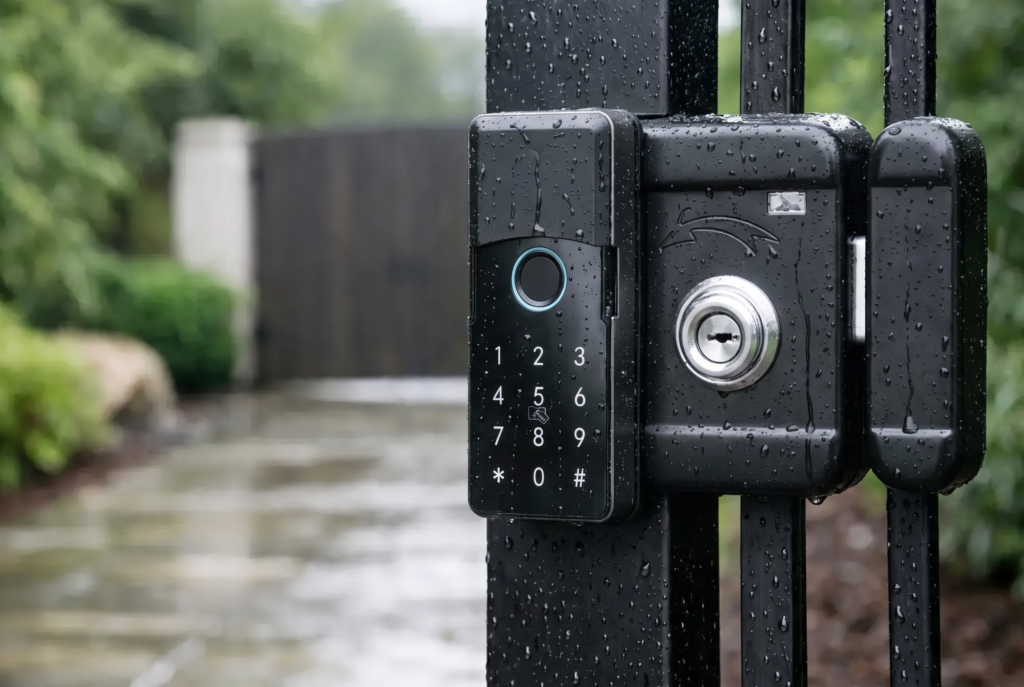
For landed properties or homes with an external gate, a dedicated smart gate lock is often a better answer than adapting an indoor-focused lock to outdoor use. Gate hardware needs to handle different exposure, alignment, and access patterns. Consider whether family members need separate access at the gate and the main door, or whether a connected setup can make those routines simpler.
Battery Backup Is a Family Essential
Battery-operated smart locks are designed to continue working during a household power outage, but battery management should still be part of your buying decision. Look for low-battery warnings through the lock and mobile app, giving your family enough time to replace batteries before they are depleted.
Emergency power capability is another worthwhile safeguard. Many locks provide an external emergency power connection so you can power the device briefly if the internal batteries run out. Keep the compatible power source available and make sure the adults in the household know how it works. A mechanical emergency key, stored securely away from the home rather than hidden outside it, adds another layer of preparation.
Battery life varies based on usage, Wi-Fi connectivity, motorized locking, temperature, and the number of daily entry events. A family of five using a lock several times a day will have different battery needs than a couple living alone. Ask for realistic guidance based on your household’s routine, not only a maximum battery-life claim.
Professional Installation Protects the Experience
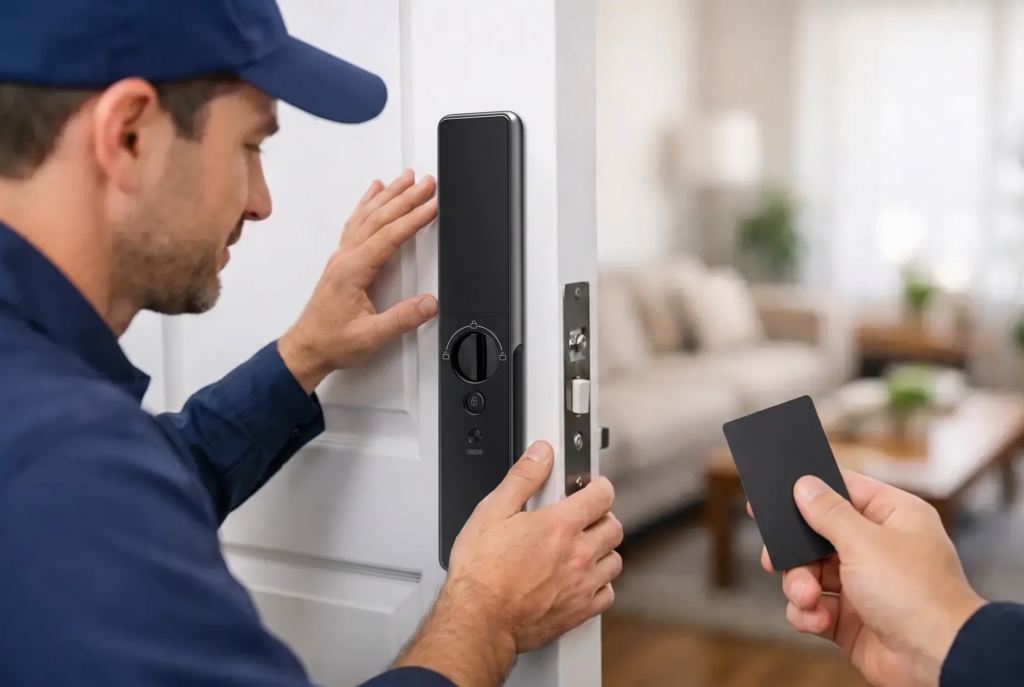
A premium smart lock can still perform poorly if it is installed on a misaligned door or configured without attention to household needs. Professional installation helps ensure the latch, strike plate, mortise body, handles, and sensors operate correctly together. It also gives you a chance to register users, test backup access methods, and understand the app before the installer leaves.
After-sales support matters just as much. Families need a clear path to help if they replace a phone, add a caregiver, notice a door-alignment issue, or need service later. Genesis Singapore approaches connected access as a full home solution, combining smart-lock hardware with installation, warranty coverage, and local support. That service-led approach is particularly valuable when a lock protects the entrance your family uses every day.
The best family lock is not necessarily the one with the longest feature list. It is the one every household member can use confidently, that gives you meaningful control over access, and that has dependable support behind it. Choose the features around your family’s real routines, then make sure everyone knows the simple backup plan. That is how a smarter entrance becomes a calmer part of home life.