A gate is often the first physical boundary between your household and the outside world. That makes the choice between gate locks versus padlocks more significant than it may seem. A padlock can be a quick, familiar fix, but a purpose-built gate lock can provide a more controlled, convenient entry experience for households that use their gate every day.
The right answer depends on your gate construction, who needs access, exposure to rain and heat, and whether you want simple mechanical security or connected, keyless control. Here is how to make that decision with confidence.
Gate Locks Versus Padlocks: The Core Difference
A padlock is a portable locking device. It usually secures a gate by passing its shackle through a hasp, chain, latch loop, or two aligned gate fittings. Its appeal is clear: installation is fast, replacement is simple, and it can work across many gate types.
A gate lock is designed to become part of the gate system itself. It may be a mechanical deadbolt, latch lock, mortise lock, digital lock, or smart lock fitted directly to the gate frame and panel. Instead of adding a removable lock to an existing closure point, it creates a defined access point with a handle, latch, bolt, credential reader, or combination of these features.
That distinction shapes nearly every practical trade-off. Padlocks prioritize flexibility and low initial cost. Gate locks prioritize daily usability, cleaner integration, and greater control over how people enter.
Where Padlocks Make Sense
Padlocks still have a valid place around a property. For a seldom-used side gate, a storage enclosure, a utility area, or a temporary construction barrier, a quality weather-rated padlock may be all that is needed. There is no need to modify the gate extensively, and the lock can be removed or moved if the setup changes.
They are also useful as a secondary layer. A homeowner may use a main gate lock for normal family entry while placing a padlock on a separate service gate that only needs occasional access.
However, the security of a padlock is never just about the padlock body. The hasp, chain, latch loop, and gate material matter just as much. A hardened shackle is of limited value if the fixture it passes through can be bent, cut, or unscrewed. Exposed padlocks can also invite tampering because the shackle and locking mechanism are visible and accessible from outside the gate.
Daily use can become inconvenient as well. Someone has to carry a key, align the shackle, open the lock, find a safe place to set it down, and repeat the process when leaving. In wet weather or low light, that small routine quickly feels less practical, especially when arriving home with groceries, children, or pets.
Why a Dedicated Gate Lock Changes Daily Access
A dedicated lock gives the gate a more complete entry function. The latch and locking mechanism are aligned with the gate’s movement, so the gate closes and secures in a more natural motion. A properly selected model also looks more intentional than a padlock hanging from an external hasp.
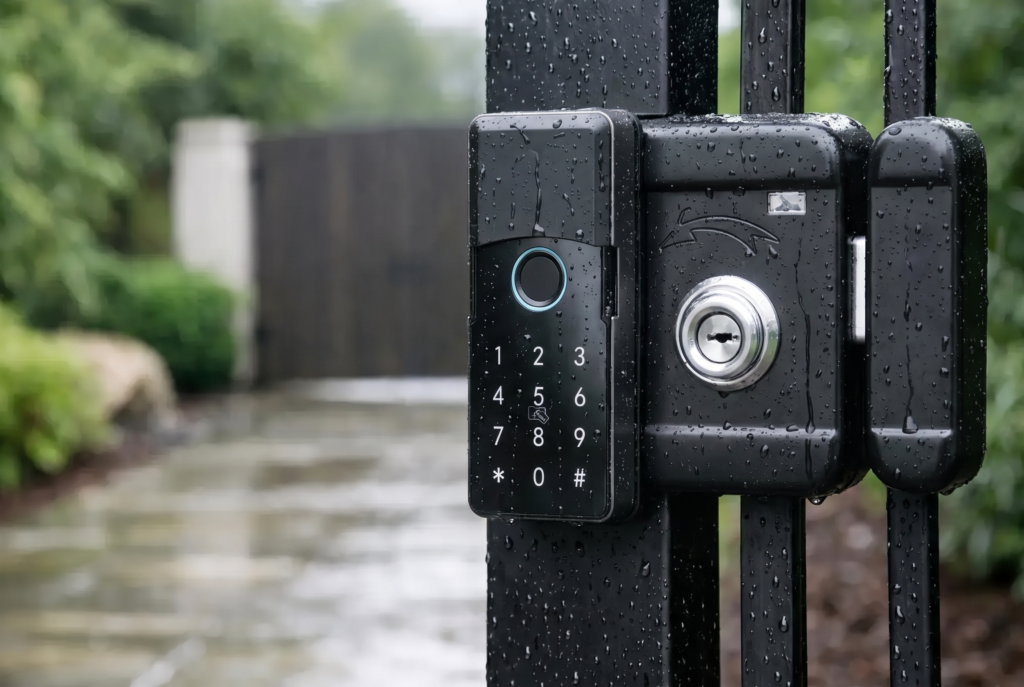
For households with frequent visitors, cleaners, caregivers, deliveries, or contractors, smart gate locks bring a meaningful advantage. Depending on the model, entry can be managed through fingerprint recognition, PIN codes, RFID credentials, mobile-app controls, or mechanical backup access. Rather than duplicating physical keys or sharing one padlock key among several people, the homeowner can assign access in a more organized way.
Temporary or scheduled access is particularly valuable. A contractor may need a code for a specific day. A family member can use their fingerprint without carrying keys. If a credential is no longer needed, it can be removed without replacing the entire lock cylinder or collecting every copied key.
For a gated home, a smart gate lock can also complement a video doorbell viewer or gate camera. Seeing who is at the entrance and communicating with them before granting access adds another level of household awareness. The lock is not simply a barrier. It becomes part of a connected entry routine.
Security Is About the Whole Gate System
A premium lock cannot compensate for a weak gate frame, loose hinges, or poor installation. Before choosing any locking solution, inspect the gate’s structure. The latch side should close firmly against a stable post or frame. Hinges should not sag. Gaps should not be large enough to reach through and manipulate internal hardware.
For swing gates, consider the direction of movement and where the lock will sit. For sliding gates, check whether the lock is intended for that application or whether an automated gate operator already provides the primary securing function. Metal thickness, gate profile, and clearance around the handle all affect which lock can be installed correctly.
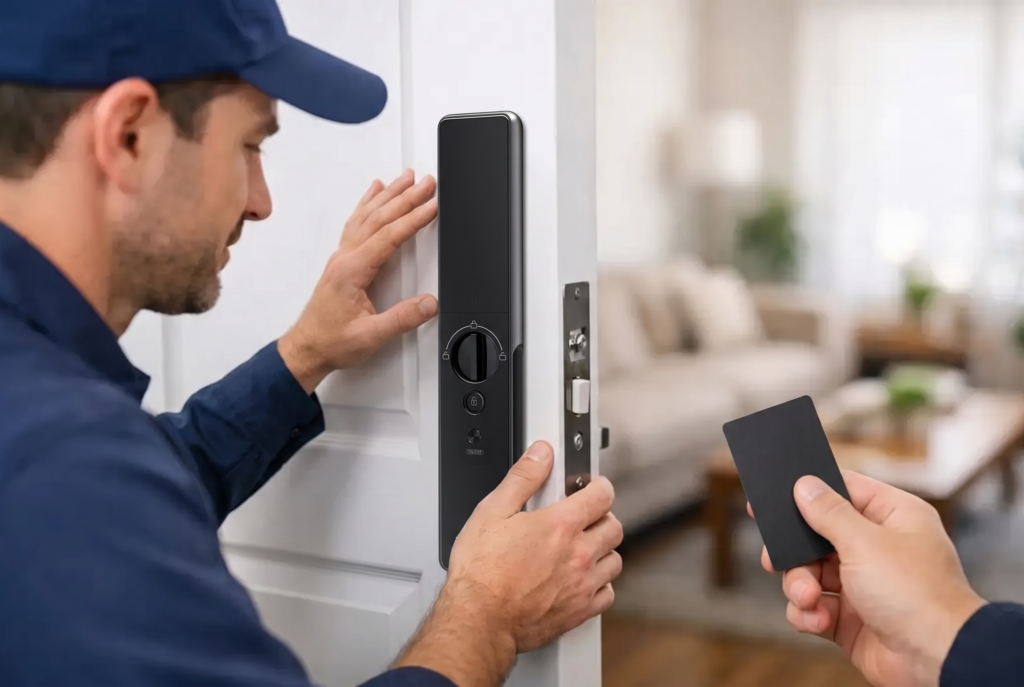
Professional fitting matters most with digital and smart gate locks. Incorrect alignment can cause a latch to bind, shorten battery life, affect weather protection, or leave the gate difficult to close. Genesis Singapore provides installation and local after-sales support because the performance of connected access hardware depends on both the device and the quality of its setup.
Weather Resistance Is Not Optional
A front gate typically faces more environmental stress than an indoor door. Rain, humidity, direct sunlight, dust, and temperature changes can affect mechanical and electronic components over time. This is where buyers should look beyond appearance and compare the lock’s stated suitability for outdoor use.
A padlock should be corrosion-resistant and rated for the environment where it will be used. Even then, its keyway and shackle can collect dirt or moisture. Regular cleaning and appropriate lubrication may be needed to keep operation smooth.
For electronic gate locks, look for clear weather-resistance specifications, protected battery compartments, and materials suitable for outdoor installation. An IP rating can help indicate resistance to dust and water, but it should be interpreted in context. A lock that handles splashes is not automatically suitable for constant direct rain exposure. Gate orientation, overhangs, and drainage still matter.
Battery-powered smart locks are designed to operate without relying on a permanent external power connection. That can simplify installation, but homeowners should choose a model with low-battery alerts and a reliable emergency access method. Backup power contacts, mechanical keys, or emergency credential options can prevent a drained battery from becoming a gate-access problem.
Comparing the Real Cost of Ownership
A basic padlock usually costs less at the outset. That makes it attractive when the gate is temporary or rarely used. But price alone does not capture the ownership experience. Lost keys, copied keys, corroded hardware, replacement hasps, and the inconvenience of sharing access can add up over time.
A gate lock requires a larger initial investment, particularly when it includes biometrics, app connectivity, or professional installation. In return, it can reduce dependence on keys, improve access management, and provide a more polished entry point for the home. For a primary pedestrian gate, those benefits are used every day rather than only during an emergency.
The best choice is therefore not simply the strongest lock or the cheapest lock. It is the lock that matches the gate’s role. A garden storage gate has different needs from the main entrance used by family members several times a day.
When to Choose Each Option
Choose a padlock when the gate is temporary, low-traffic, secondary, or difficult to modify. Select a high-quality lock and strengthen the hasp or latch point at the same time. For higher-risk areas, avoid leaving a large exposed shackle where cutting tools can easily reach it.
Choose a dedicated mechanical or smart gate lock when the gate is a regular household entrance, when several people need access, or when you want a cleaner and more reliable locking routine. A smart model is especially suited to homeowners who want fingerprint entry, code-based access, mobile control, and the ability to manage credentials without handing out keys.
A hybrid setup can work well too. For example, a smart gate lock can manage normal pedestrian entry while a separate padlock secures a rarely opened maintenance panel. The key is to avoid treating every gate as though it has the same security and convenience requirements.
Your gate is one of the first interactions people have with your home. Choosing hardware that fits how your household actually arrives, leaves, and welcomes visitors can make that daily moment feel safer, simpler, and far more considered.