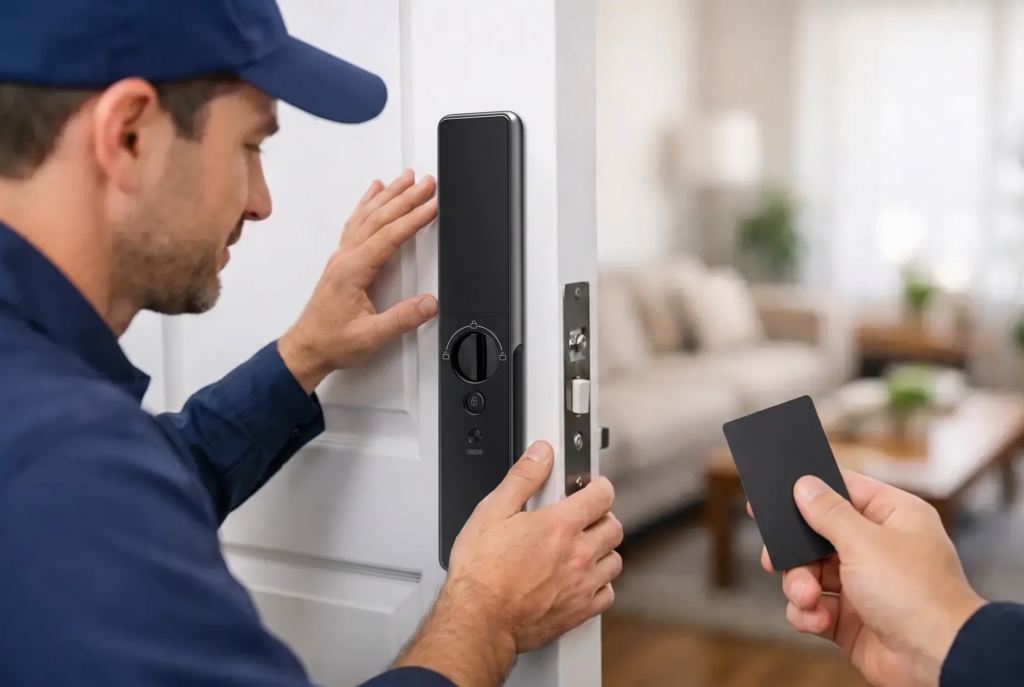
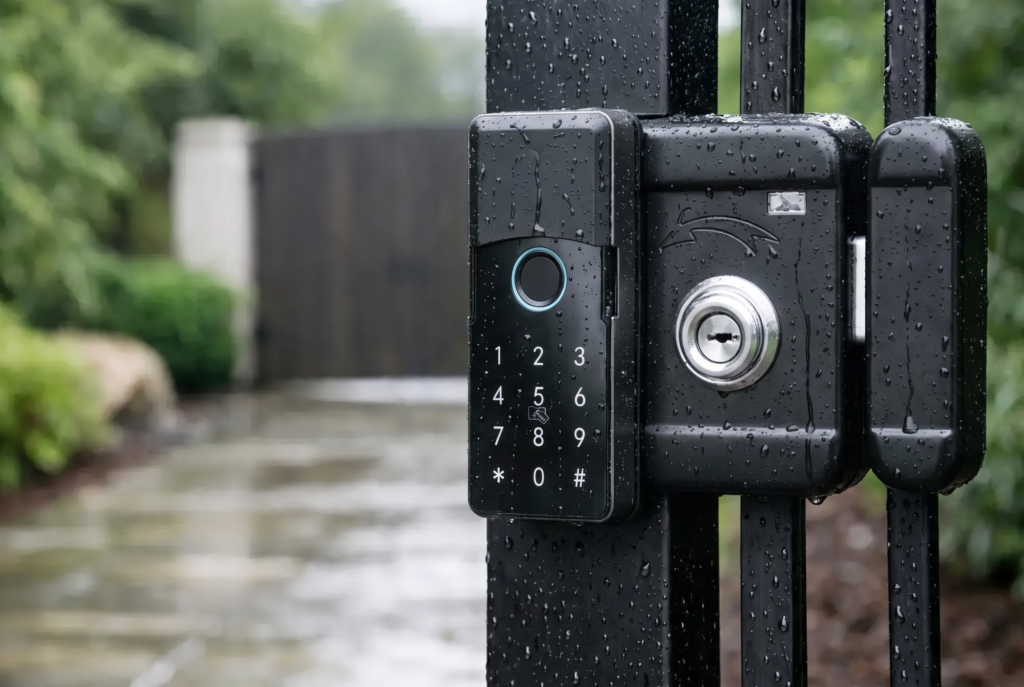
A mortise lock is not simply mounted onto a door surface. Its lock body sits inside a precisely cut pocket in the door edge, which is why the answer to which doors support mortise locks starts with construction, not appearance. A door may look substantial from the front yet lack the solid material, thickness, or edge clearance needed for a secure installation.
For homeowners upgrading to a smart mortise lock, the good news is that many residential doors are compatible. The key is confirming the door can safely hold the lock case, handle assembly, strike plate, and any smart-lock components without weakening the door or affecting how it closes.
Which Doors Support Mortise Locks Most Reliably?
Solid wood doors are among the best candidates for mortise locks. Their dense construction provides enough material for the internal lock pocket, while also holding screws and handle hardware securely. A solid timber front door, bedroom door, or apartment entry door can often support a mechanical or smart mortise lock when its thickness and existing cutouts match the selected model.
Solid-core engineered wood doors can also be a strong option. These doors typically have a dense composite center beneath a veneer or finished surface. Unlike hollow-core doors, they offer meaningful resistance around the lock area and are commonly used for residential entry points. Still, solid-core construction varies by manufacturer, so an installer should inspect the door edge before cutting.
Metal security doors can support mortise locks when they are designed with an appropriate internal frame or reinforced lock section. Steel and metal-clad doors are popular at main entrances because they pair physical strength with keyless access, fingerprint verification, PIN codes, and mobile control. Installation requires the right tools and hardware, since poorly drilled metal can leave sharp edges, reduce corrosion resistance, or compromise the door finish.
Some aluminum doors support mortise locks as well, particularly doors with sufficiently wide and reinforced stiles. The stile is the vertical section at the side of the door where the lock is installed. Slim aluminum profiles may not provide enough space for a standard mortise case, even when the door itself feels sturdy. A narrow-profile lock or another access-control format may be the better fit.
Doors That Need Extra Evaluation
A door is not automatically compatible just because it is thick or heavy. Several common door types need a closer assessment before choosing a mortise smart lock.
Hollow-core interior doors
Most hollow-core doors are poor candidates for a full mortise lock. They are built with thin outer skins and a lightweight internal structure, leaving little material to support a lock body cutout. Cutting a deep cavity can weaken the door, cause the skin to crack, or leave the lock loose over time.
For a light-duty interior door, a smart lever lock or another surface-compatible option may be more practical. If privacy and access control are priorities, replacing the hollow-core door with a solid-core model can create a safer foundation for a mortise lock.
Glass doors
Frameless glass doors generally do not support traditional mortise locks because the lock requires a deep pocket in the door edge. Glass-specific patch locks and electronic glass-door locks use a different mounting method. They are designed around the glass panel, not carved into it.
Glass doors with a substantial metal frame may support certain narrow mortise configurations, but the frame dimensions must be verified. This is especially relevant for office-style partitions, patio enclosures, and modern interior doors.
Composite, fiberglass, and specialty entry doors
Fiberglass and composite doors can be compatible, but their internal structure differs widely. Some have reinforced lock blocks for standard handle sets, while others may not have enough material at the edge for a mortise case. Door manufacturer guidance and an on-site assessment matter here.
Fire-rated doors deserve particular care. Modifying a rated door without approved hardware and proper installation can affect its fire rating and compliance. For apartment entrances, condo corridors, or any door that forms part of a fire barrier, choose hardware specifically suited to that door assembly and check applicable building requirements before proceeding.
The Measurements That Decide Compatibility
Door material is only the first check. A professional installation team will also measure the lock area to confirm that the selected mortise lock operates correctly every day.
Door thickness is critical. Many smart mortise locks are built for a specific thickness range. A door that is too thin may not hold the lock body securely, while a door that is too thick may prevent the spindle, cylinder, or connecting cables from reaching correctly. Never assume a lock will fit based on a product photo or a similar-looking door.
Backset is the distance from the door edge to the center of the handle or key cylinder. It determines where the handle sits on the door face and whether the internal lock body aligns with the existing cavity. If a replacement lock has a different backset, it may require new drilling or visible refinishing work.
Door edge depth and height determine whether the mortise case can sit fully inside the door. Smart mortise locks can have larger internal bodies than basic mechanical locks because they combine latching, deadbolting, motorized functions, and cable routing. There must be enough uninterrupted solid material around the pocket to preserve door strength.
Stile width matters on paneled doors, glass-frame doors, and doors with decorative grooves. The lock should sit in a flat, structurally sound area rather than overlap a panel edge, molding, or thin section of material.
Frame and strike alignment matter just as much as the door itself. The lock bolt must enter the strike plate cleanly, without rubbing, forcing, or excessive gaps. A door that sags, swells with humidity, or closes out of alignment can reduce battery life on motorized locks and place unnecessary stress on the mechanism.
Can an Existing Mortise Cutout Be Reused?
Often, yes, but only when the old and new lock specifications are close enough. Existing mortise doors are attractive upgrade candidates because the main cavity may already be present. However, lock bodies vary in width, depth, backset, handle position, cylinder placement, and bolt configuration.
A new smart mortise lock may fit within an existing cutout with minor adjustments. In other cases, the cavity must be enlarged, relocated, or covered with an appropriate trim plate. Reducing a cutout is more difficult than enlarging one, particularly on finished wood or metal doors. That is why measuring the existing lock case before selecting a replacement prevents surprises on installation day.
It is also worth checking the door condition around the old lock. Loose screws, cracked timber, rusted metal, or enlarged holes are signs that the area may need repair or reinforcement. A premium smart lock deserves a stable mounting surface, especially when it will be used multiple times a day by the whole household.
Smart Mortise Locks for Main Doors and Interior Doors
For a main entry door, a mortise smart lock can provide a refined, integrated look alongside practical everyday access. Depending on the model, homeowners may use fingerprint recognition, PIN codes, RFID cards, mechanical backup keys, or app-based controls. This makes it easier to manage entry for family members, trusted visitors, cleaners, or short-term occupants without handing out multiple physical keys.
The door itself should match the level of security expected at the entrance. A solid timber, reinforced metal, or properly engineered solid-core door is usually a better partner for a smart mortise lock than a lightweight interior slab. The frame, hinges, and strike area should also be in good condition. A high-performance lock cannot compensate for a weak door frame.
For bedrooms, home offices, and internal storage rooms, the decision may be more about privacy and convenience than heavy-duty perimeter security. A mortise lock can still be suitable on a solid-core interior door, but a compact smart lever lock may be preferable where a deep lock pocket is unnecessary.
Why Professional Assessment Makes the Difference
Mortise lock installation is a precision job. The lock needs accurate cutting, clean alignment, secure fastening, and testing of every access method. With smart models, installers also need to protect wiring, confirm battery access, calibrate handing and bolt direction, and ensure the door closes naturally after setup.
Genesis Singapore helps homeowners assess compatibility before fitting smart access hardware, so the chosen lock complements the actual door rather than forcing an unsuitable installation. This approach is particularly valuable for older doors, metal security doors, custom finishes, and entry doors with existing mortise hardware.
Before choosing a model, take clear photos of both sides of the door, the door edge, the existing lock case, and the frame strike plate. Record the door thickness and any visible lock measurements. Those small details make it far easier to identify a smart lock that delivers keyless convenience while preserving the strength, finish, and daily reliability of your door.