A front door lock has one job that cannot be compromised: it must protect the people and property behind it. But for busy households, a good lock should also remove the daily friction of digging for keys, coordinating access for family, or wondering whether the door was secured after everyone left. This smart mortise lock review looks at what separates a worthwhile keyless upgrade from a feature list that sounds impressive but does little for real-life security.
A smart mortise lock replaces or integrates with a traditional mortise lock body installed within the edge of the door. Unlike a surface-mounted deadbolt, its main mechanical components sit inside a pocket cut into the door. That construction can create a clean, premium appearance while combining a handle, latch, deadbolt, and smart access panel in one coordinated system.
What a Smart Mortise Lock Should Deliver
The best smart mortise locks are designed around both access convenience and dependable mechanical security. You should be able to enter using the method that suits the moment, whether that is a fingerprint after a grocery run, a PIN code when a child comes home from school, or an app command when you are away.
The most useful models provide multiple access methods rather than relying on one technology. Fingerprint recognition is often the fastest option for residents. A keypad gives household members and approved visitors a code-based alternative. Mobile-app access can help owners check status, manage permissions, and receive activity notifications when connected through the appropriate Wi-Fi setup or gateway. Some systems also retain an emergency mechanical key or external emergency-power option for added reassurance.
That flexibility matters because every household has different needs. A family may prioritize fingerprints and temporary visitor codes. A landlord may value the ability to change access credentials between tenants without collecting physical keys. A homeowner with frequent deliveries may prefer app-based access control and door activity records. The right lock makes those routines easier without asking everyone to depend on a single method of entry.
Smart Mortise Lock Review: Features That Matter Most
It is easy to compare smart locks by counting access methods. A more useful review considers how each feature performs at the door, under normal household pressure.
Biometric Entry Needs Consistent Performance
Fingerprint access feels like a meaningful lifestyle upgrade when it reads quickly and accurately. Look for a lock that allows multiple fingerprint registrations, especially if it will be used by a family, domestic helper, or trusted relative. The sensor should be positioned where users can reach it naturally, not in a location that forces an awkward grip or requires the handle to be held at a precise angle.
No fingerprint reader is perfect in every condition. Very dry skin, wet fingers, minor cuts, or hurried placement can affect recognition. That is why a keypad and app credential are more than backup features. They are practical alternatives that keep the household moving when biometric verification does not work on the first attempt.
PIN Codes Should Support Better Access Control
A keypad is valuable when it does more than replace a key. The ability to create separate codes for residents, guests, service providers, or short-term visitors gives owners more control over who can enter and when. Temporary or scheduled codes can be particularly helpful when someone needs access during a limited time window.
Privacy features also deserve attention. Some locks allow users to enter extra digits before or after the real PIN, helping reduce the chance of a code being guessed by someone watching nearby. This does not replace sensible habits, such as shielding the keypad while entering a code, but it is a thoughtful layer of everyday protection.
App Control Is Most Useful When It Is Practical
Remote access is often a deciding feature, but homeowners should look beyond the phrase “app-enabled.” Ask what the app can actually do. Useful functions include viewing lock status, reviewing access records, creating user credentials, receiving door-open notifications, and controlling the lock remotely when supported by the correct connection setup.
There is a trade-off. Remote control depends on stable power, a compatible network arrangement, and proper configuration. If your priority is simple keyless entry at the door, Bluetooth or offline credential management may be enough. If you want to monitor access while traveling, coordinate contractors, or manage a second property, Wi-Fi-connected functions become far more valuable.
The Lock Body Still Comes First
Smart features cannot compensate for weak hardware. A mortise lock should have a solid, properly fitted lock case, reliable latch and deadbolt operation, and a handle that feels secure under normal use. The door, frame, strike plate, and alignment all influence real-world performance.
This is where a professional site assessment can make a visible difference. Door thickness, backset, existing cutouts, frame condition, and opening direction must be confirmed before installation. A lock that is excellent on paper can perform poorly if the mortise pocket is incorrectly prepared or the bolt does not align cleanly with the strike.
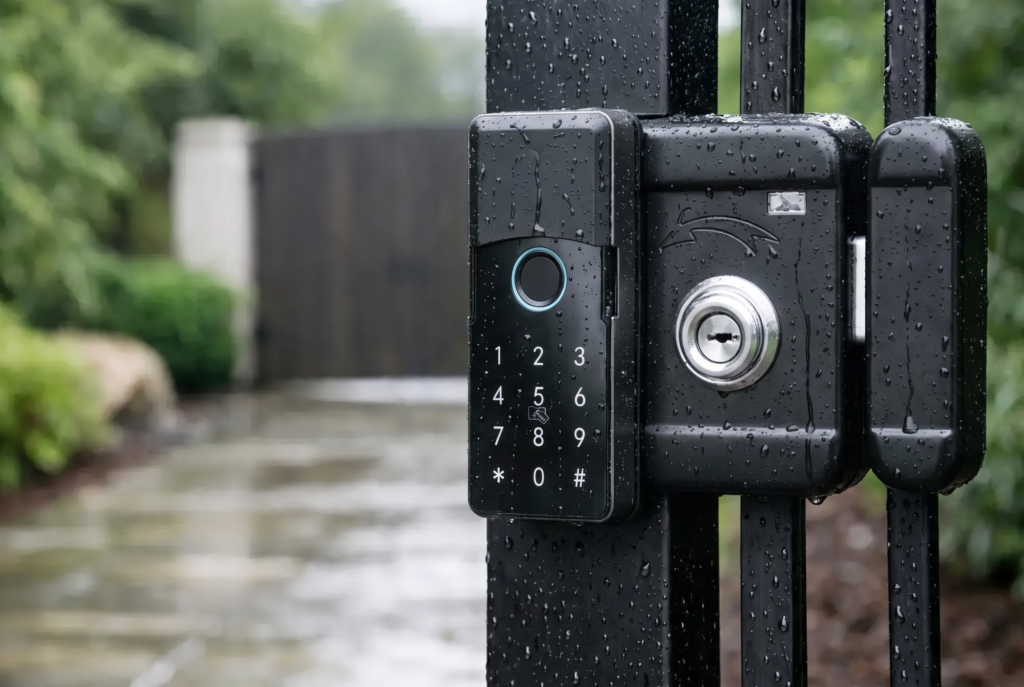
For exterior doors, also consider the environment. Covered apartment corridors have different exposure from a landed-home entrance or a gate-facing door. If moisture, dust, direct sun, or rain are regular concerns, choose a model with an appropriate weather-resistance rating and ensure the installation position supports that protection.
Safety Features Worth Checking Before You Buy
A smart lock should make household security easier to manage, not harder to understand. Start with the basics: auto-lock behavior, inside-handle operation, emergency access provisions, low-battery warnings, and privacy controls.
Auto-lock can offer peace of mind for households where someone occasionally leaves in a rush. However, it must be configured carefully. A very short timer may become frustrating when people are moving bags, strollers, or groceries through the doorway. A door-position sensor, if included, can be useful because it helps the lock respond to whether the door is actually closed rather than simply assuming it is.
Inside access is equally important. Residents should be able to exit quickly and intuitively from the interior side of the door. Review the lock’s indoor handle and any privacy or double-lock settings with the installer, particularly in homes with young children, elderly family members, or caregivers.
Battery management is another practical consideration. Most smart mortise locks use batteries, so alerts and a clear replacement process matter. Do not wait until a warning becomes urgent. Keep the recommended batteries available and understand the lock’s emergency-power procedure before you need it.
Installation Is Part of the Product Experience
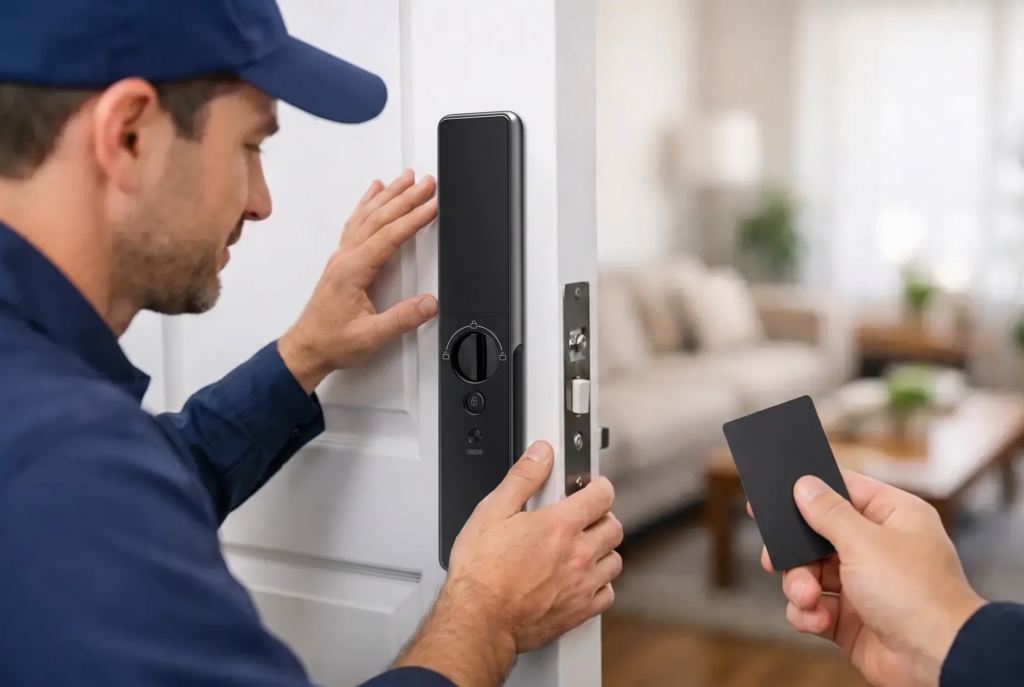
A mortise lock is not typically a casual do-it-yourself replacement. It requires accurate door preparation, careful alignment, and correct setup of the smart functions. Professional installation helps protect the appearance of the door while ensuring the latch, deadbolt, handles, sensors, and strike plate operate as intended.
The installer should also guide the homeowner through enrollment. That includes registering resident fingerprints, setting administrator credentials, testing PIN codes, explaining battery alerts, and confirming app controls when applicable. A lock is only convenient when the people who use it know what to do from day one.
After-sales support matters just as much. Connected hardware occasionally needs troubleshooting, firmware guidance, replacement parts, or service after years of daily use. Choosing a provider that offers installation, warranty coverage, and local servicing can be more reassuring than selecting a lock based only on its initial price.
Who Should Choose a Smart Mortise Lock?
Smart mortise locks suit homeowners who want a polished, integrated front-door solution rather than a separate smart device attached to an existing deadbolt. They are particularly appealing for new homes, renovation projects, and doors that already use a mortise-style mechanical lock.
They may be less suitable when a door has limited thickness, unusual framing, serious alignment issues, or a structure that cannot be modified easily. In those cases, a smart lever lock, rim lock, or another access-control format may be a better fit. The best choice depends on the door as much as the features you want.
For families, the strongest setup is usually simple: fingerprint entry for everyday use, PIN codes for reliable backup, app controls for oversight, and professional support when help is needed. When the lock body fits the door correctly and the access options fit the household, keyless entry stops feeling like a gadget and starts feeling like a better way to come home.