A lock that sticks when you are carrying groceries, rushing to work, or trying to get children inside is more than an inconvenience. If you have asked, “what causes door lock jamming,” the answer is usually a small issue that has been building over time: a misaligned door, worn hardware, debris, moisture, or a power-related problem in a smart lock. Recognizing the signs early can protect your door, avoid a lockout, and keep daily access dependable.
What Causes Door Lock Jamming?
Door lock jamming happens when the locking mechanism cannot move freely between its locked and unlocked positions. On a traditional lock, the issue may involve the key, cylinder, latch, deadbolt, or strike plate. On a smart lock, the mechanical parts still matter, but batteries, motor operation, sensors, and installation alignment can also affect performance.
A jam does not always mean the lock has failed. Sometimes the key turns but the deadbolt will not retract. In other cases, the lock works perfectly when the door is open but resists when closed. Those differences provide useful clues and help determine whether a simple adjustment is appropriate or professional service is the safer choice.
1. Door and strike plate misalignment
Misalignment is one of the most common answers to what causes door lock jamming. The strike plate is the metal plate fixed to the door frame that receives the latch or deadbolt. If the door shifts slightly, the bolt may press against the edge of that opening instead of entering it cleanly.
Doors can shift because of loose hinges, settling in the building, seasonal expansion, swelling from humidity, or repeated closing pressure. Even a few millimeters can create resistance. You may notice that lifting, pushing, or pulling the door slightly allows the lock to work. That is a strong indication that alignment, rather than the lock cylinder itself, is the problem.
Forcing the thumbturn, key, or smart-lock handle in this situation can wear the internal mechanism or strain a motorized lock. A technician can assess hinge condition, door gaps, and strike placement, then make a precise adjustment that lets the bolt engage without pressure.
2. Dirt and debris inside the keyway or bolt opening
Dust, grit, old lubricant, and small fragments can collect inside a lock cylinder or the strike opening over time. Exterior doors and gates are particularly exposed to airborne dirt, rainwater, and debris carried in by keys.
A keyway clogged with debris may feel rough when inserting or turning the key. A dirty strike opening can prevent the latch or deadbolt from traveling its full distance. In both cases, the problem often becomes worse gradually rather than appearing overnight.
Use a lock-specific dry lubricant if the manufacturer permits it. Avoid household oils, cooking oil, or heavy grease. These may make a stiff lock feel better briefly, but they attract more dirt and can turn into a sticky residue. If the keyway is severely obstructed or a broken key piece is inside, do not probe it with improvised tools. That can push debris deeper or damage the pins inside the cylinder.
3. Worn, bent, or damaged keys
A worn key can be easy to overlook because it may still work occasionally. As the grooves on a key become rounded, it may no longer lift the lock pins to the exact height needed for smooth rotation. A bent key can also bind inside the cylinder and may snap if excessive force is applied.
Try a spare key that has seen less use. If the spare works normally, replace the worn key and avoid using the damaged one. Do not force a key that will not turn, and never use pliers to gain leverage. A broken key creates a more urgent access problem and may require cylinder repair or replacement.
For households moving toward keyless access, a biometric or PIN-enabled smart lock reduces daily wear on physical keys while still providing an emergency backup method where required.
4. Moisture, rust, and changing temperatures
Metal components can corrode when exposed to moisture. This is especially relevant for gate locks, outdoor-facing doors, and homes in humid or rainy climates. Rust inside a cylinder, latch assembly, or bolt channel increases friction and may eventually seize moving parts.
Temperature and humidity can affect the door itself as well. Wood may expand when damp, while some materials contract or shift as conditions change. If jamming appears only after heavy rain, during very humid periods, or at certain times of year, inspect both the lock and the door alignment.
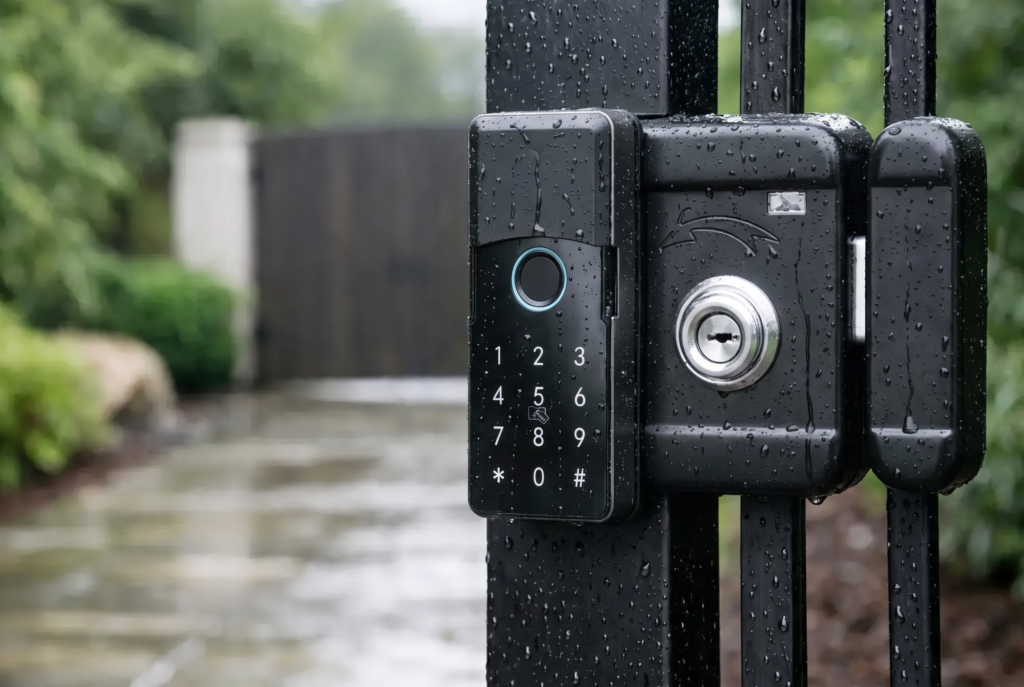
Outdoor access points need hardware suited to their environment. A weather-resistant smart gate lock or properly rated exterior lock can offer better long-term performance than using an indoor-focused device at an exposed entrance. Installation quality still matters: even a durable lock needs a correctly aligned door and protected wiring or mounting points.
5. Loose screws or internal wear
A lock contains several moving parts that must remain correctly positioned. Over years of use, screws around the handle, escutcheon, strike plate, or internal mounting assembly can loosen. The lock may begin to sag, feel unstable, or require extra movement before it engages.
Internal springs, cams, and pins can also wear down. Common signs include a handle that does not return smoothly, a latch that retracts slowly, a key that turns without operating the bolt, or a deadbolt that feels inconsistent. These are not ideal do-it-yourself repairs, particularly on a main entry door where security and fire-safety requirements matter.
A professional assessment can identify whether the lock needs tightening, recalibration, replacement parts, or a full upgrade. Replacing a severely worn lock is often more dependable than repeatedly repairing aging hardware.
Smart Lock Jamming: Mechanical or Electronic?
Smart locks bring valuable conveniences such as fingerprint access, passcodes, mobile-app control, temporary user permissions, and activity records. But they are still installed on a physical door, so mechanical resistance remains the first thing to rule out.
If a smart lock recognizes your fingerprint or code, makes a motor sound, but cannot complete the lock or unlock cycle, door alignment is a likely cause. The motor is trying to move the deadbolt against pressure from the frame. Test it with the door open. If it works smoothly open but jams when closed, the strike plate or door position needs attention.
If the lock is completely unresponsive, has a dim display, delayed voice prompts, or intermittent operation, low batteries may be responsible. Replace all batteries with fresh, matching batteries of the recommended type. Do not mix old and new batteries or different brands, since uneven output can affect performance. Many smart locks provide low-battery alerts, so act on them early rather than waiting for a full shutdown.
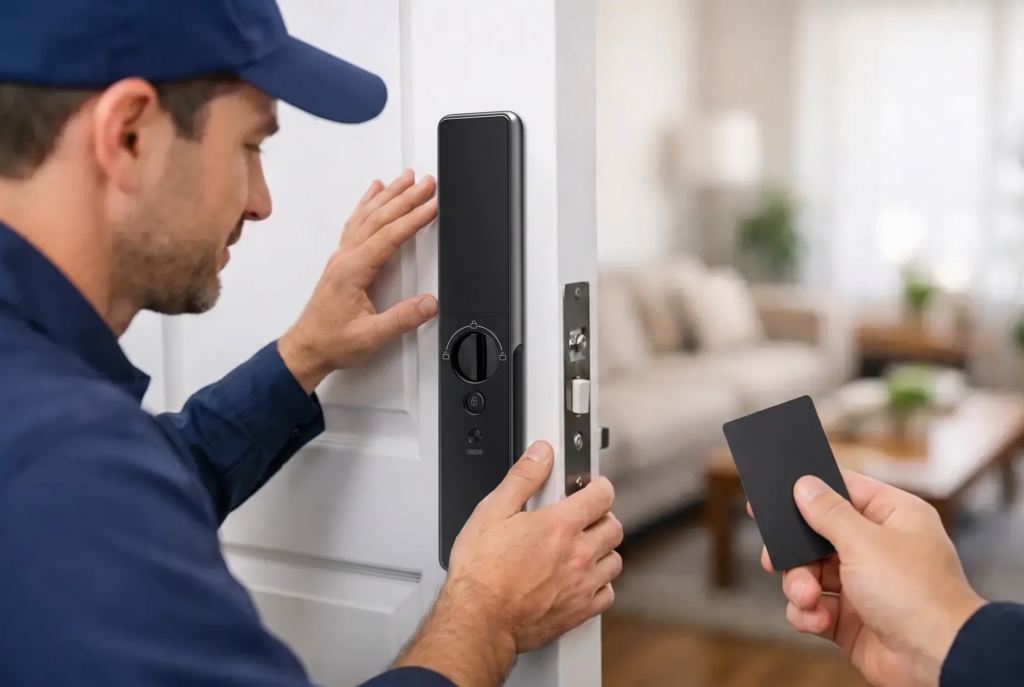
A loose interior mounting plate, incorrect spindle position, or an installation that was not calibrated after fitting can also create problems. Smart locks should be installed according to the door thickness, handing, backset, and mortise requirements of the specific model. A lock that looks fitted correctly can still experience motor strain if its internal components are not aligned precisely.
When the app works but the door does not
An app connection issue and a lock jam are separate problems. If the app shows the lock as online but the deadbolt cannot move, focus on the physical door and lock alignment. If manual thumbturn operation is stiff too, the issue is mechanical.
If the thumbturn is smooth but app, fingerprint, or keypad access fails, check battery level, user permissions, connectivity, and the lock’s status indicators. Avoid repeatedly sending lock commands while the bolt is obstructed. Repeated motor operation against resistance can drain batteries and place unnecessary stress on the mechanism.
What to Do When Your Door Lock Is Jammed
Start gently. Do not kick, slam, drill, or force the door, especially if it is your primary security barrier. Try relieving pressure by lightly pushing or pulling the door while turning the key or operating the thumbturn. If the lock works only with this pressure, stop there and arrange an alignment check.
For a smart lock, confirm whether the door is fully closed and inspect the battery warning indicator. Use the approved emergency power or backup entry method for your model if the batteries are depleted. Keep mechanical backup keys, where supplied, accessible to authorized household members but never hidden in an obvious location outside the home.
Call a qualified locksmith or smart-lock service provider when the key is stuck, the cylinder is damaged, the bolt will not retract, the lock has a broken internal part, or you are locked out. For smart locks, specialist support is especially valuable because the technician can evaluate the door mechanics, hardware installation, battery condition, and electronic settings together.
Preventing Future Lock Jams
A little maintenance can prevent most recurring lock problems. Check that the door closes without scraping, tighten visibly loose hardware, and keep the keyway and strike area clean. Use only approved lubricant and follow the lock manufacturer’s care guidance.
For smart locks, replace batteries proactively, keep fingerprint sensors clean, and respond promptly to low-battery or abnormal-operation alerts. If you are replacing an older mechanical lock, professional installation helps ensure the smart lock is matched to the door type and aligned for smooth, quiet operation. Genesis Singapore provides this kind of installation and after-sales support so homeowners can enjoy keyless entry with confidence rather than treating home security as a complicated DIY project.
A door lock should close with a controlled, effortless movement. If yours needs force, works only under pressure, or becomes less reliable week by week, address it before a busy morning turns a small mechanical warning into a lockout.