A front door key is easy to misplace, copy, lend, or forget. Effective home security begins by replacing that everyday uncertainty with clear control over who can enter, when they can enter, and what happens at your door while you are away. For modern households, a connected lock and video-enabled entry point can turn the busiest part of the home into one of the most manageable.
The right setup is not about filling a house with gadgets. It is about solving real routines: children arriving home after school, deliveries left at the door, a cleaner scheduled for a weekday visit, relatives staying over, or a gate that needs to stay secure without becoming inconvenient. Smart access control gives each of those moments a safer, simpler path.
Home Security Begins With the Entry Points
Most residential security decisions should start at the places people actually use: the main door, side door, garage access, and front gate. A traditional mechanical lock can provide a basic physical barrier, but it cannot tell you whether the door was accessed, allow you to change credentials quickly, or help you verify a visitor before opening up.
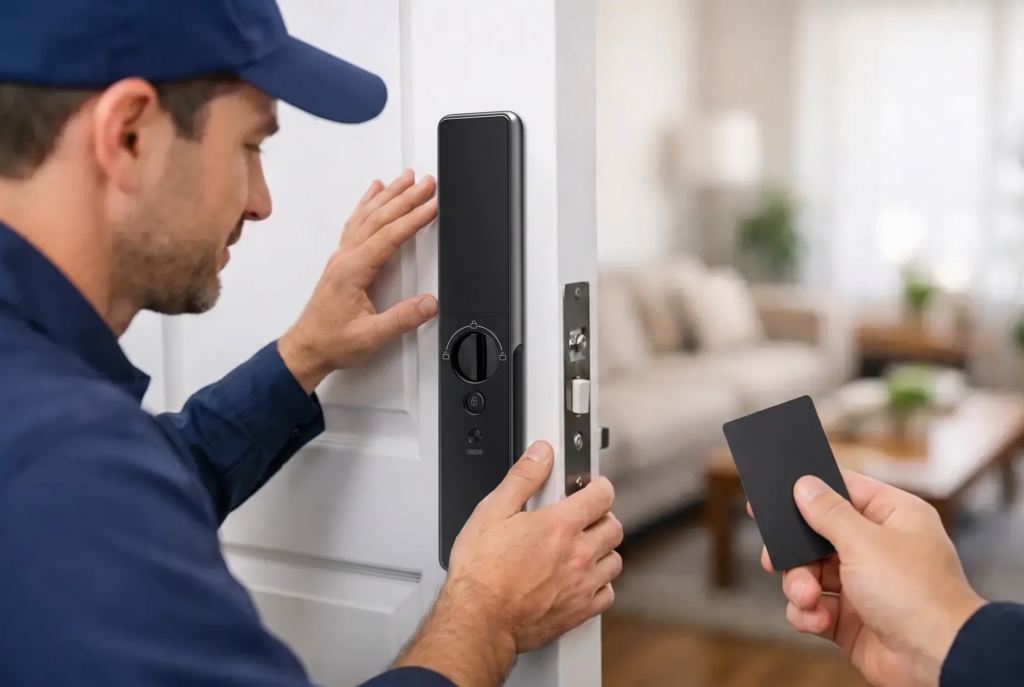
A smart door lock adds options that suit different households. Fingerprint access is fast for family members who come and go throughout the day. PIN codes can be assigned to trusted visitors without handing over a physical key. Mobile app access gives an owner more control when they are away from home. Depending on the model, face recognition, RFID cards, mechanical backup keys, and temporary passcodes may offer additional ways to enter.
This flexibility matters because convenience and protection should work together. A lock that is difficult to use may be left unlatched, propped open, or bypassed with a spare key hidden outside. A well-selected smart lock makes the secure choice the easy choice.
Choose the Lock Type for Your Door, Not Just Its Features
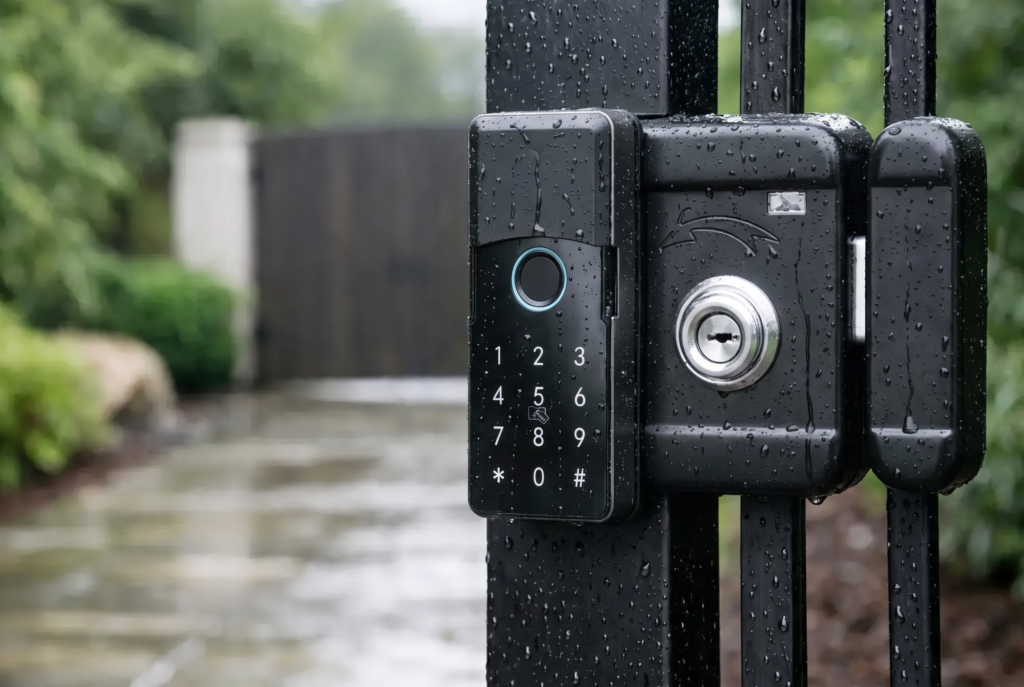
The best lock is one that fits your door construction, household needs, and preferred access method. Mortise locks are often selected for main entry doors because they integrate a substantial lock body into the door itself. Smart lever locks can be a practical choice for compatible interior or secondary doors. For homeowners with gates, a purpose-built smart gate lock should be designed to handle outdoor exposure and the physical demands of gate use.
Do not choose solely by the number of functions on a specification sheet. A biometric lock with reliable fingerprint recognition may be more valuable to a family than a complicated system with features no one uses. For a landlord or property manager, the ability to remove an old access code and issue a new one may be the priority. For a landed home, gate compatibility and weather resistance can matter as much as app control.
Professional assessment and installation help prevent common issues such as poor alignment, incorrect handing, insufficient clearance, or a lock body that does not suit the door. Security hardware performs best when the device, door, frame, strike plate, and installation quality all work as one system.
See Who Is There Before You Open the Door
A smart lock controls access. A video doorbell viewer adds context.
When someone rings the bell, live video and two-way audio let you check who is outside before deciding whether to respond. This is useful for deliveries, service providers, unexpected visitors, and times when a child or older family member is home alone. If the device supports recording, it can also provide a useful record of activity at the entrance.
Video entry is not a replacement for sensible habits. It should support them. Avoid sharing sensitive access details over intercom audio, position the camera for a clear view of visitors, and make sure household members understand how to use it. A camera aimed only at the ground or installed too high to capture a face will not deliver the reassurance you expect.
For many homes, the strongest combination is a smart lock at the main door and a video doorbell at the approach. One manages entry, while the other helps you decide whether entry should be granted.
Make Access Easy to Manage, Harder to Misuse
Physical keys create an access problem that is easy to overlook. Once a key is copied or loaned out, you cannot be certain where it is or who has used it. Changing the lock may be the only way to restore control.
Digital access can be managed more precisely. Create unique credentials instead of sharing one household PIN with everyone. Use temporary codes for guests, contractors, or pet sitters, then remove them when they are no longer needed. If a household member loses a phone, review app access promptly. These small habits preserve the value of a connected entry system.
A practical access plan might include permanent fingerprint enrollment for immediate family, individual PINs for regular users, and time-limited credentials for visitors. This approach is more accountable than a key hook full of copies, but it should still be simple enough for everyone in the household to understand.
Keep emergency access in mind as well. Battery-powered smart locks need a clear power routine. Check battery alerts, replace batteries before they are depleted, and know how the emergency power or backup entry method works on your model. Security should not create stress during a late-night battery warning.
Build Layers Instead of Relying on One Device
A smart lock is a powerful first upgrade, but home security works best in layers. Start with secure doors and frames, then add visibility and access management where they make the biggest difference. Good exterior lighting, a properly latched gate, and clear sight lines near the entrance all support the performance of your smart devices.
For gated properties, the gate deserves the same attention as the front door. It is the first boundary visitors encounter, and it is often exposed to rain, heat, and frequent opening cycles. Choose gate hardware with an appropriate weather-resistance rating and make sure the installation accounts for the gate material, movement, and surrounding structure.
Inside the home, set expectations for the people who use the system. Children should know not to open the door for an unverified visitor. Family members should avoid sharing codes through casual messages. If someone moves out or a service arrangement ends, remove their access immediately. Technology can make these actions quick, but only if they become part of the household routine.
Connected Features Need Good Digital Habits
App-connected devices bring meaningful convenience, especially when you want to check lock status or manage access from another location. They also require responsible account management. Use a strong, unique password for the lock or doorbell account, enable available account protections, and keep the associated mobile app updated.
It is also wise to discuss notifications before turning every alert on. Some households want immediate alerts for every door event. Others may prefer notifications only when a temporary code is used or when the door has been left open. The right setting is the one that provides useful awareness without creating so many alerts that they are ignored.
Wi-Fi coverage is another practical consideration. A connected device near a front gate or external door may be farther from the router than expected. Test signal strength at the installation location, especially in larger homes or properties with concrete walls. If the connection is unreliable, app functions and video viewing may not perform as intended.
Invest in Setup and Support You Can Rely On
Smart security is a long-term home system, not a one-time box purchase. Correct installation protects the finish of your door, supports smooth lock operation, and helps ensure that features such as auto-locking, biometric access, and video viewing are configured properly from day one.
This is why many homeowners value a full-service experience that includes product guidance, installation, warranty coverage, and after-sales support. Genesis approaches connected access as an everyday home upgrade, pairing smart locks and video entry devices with the expertise needed to make them practical for real households.
Before installation, consider who needs access, which entry points need attention first, and whether the device will be used indoors, at a main door, or at an exposed gate. Ask how battery alerts work, what backup access is available, and how credentials can be added or removed. Those answers matter far more than a flashy feature you may never use.
Your front door is where daily life begins and ends. Choose home security that fits the way your household actually moves, and every arrival can feel a little more certain.